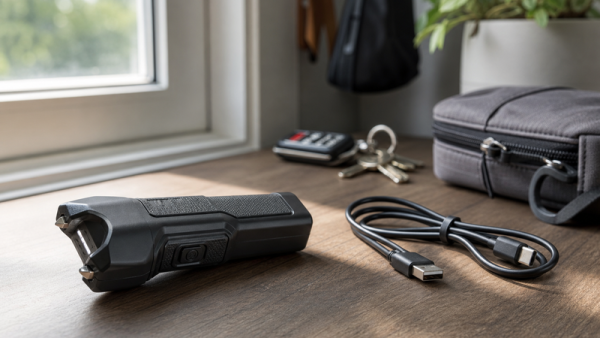
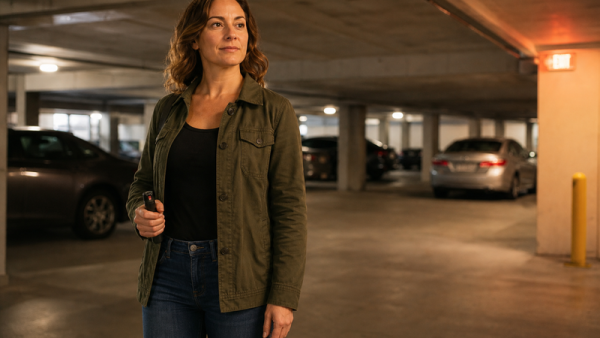
Most real estate agents can legally carry a stun gun for personal protection during showings, open houses, and property walkthroughs, but the rules vary by state and sometimes by city. In general, stun guns are legal for civilian use in the majority of states, though a handful restrict or ban them outright, and some cities layer on their own ordinances. The smartest move is to choose a compact, professional-looking device, confirm your state and local laws before you carry, and treat that verification as part of your due diligence — the same way you’d verify a listing’s title or zoning.
Why does a real estate agent need to think about stun gun laws at all?
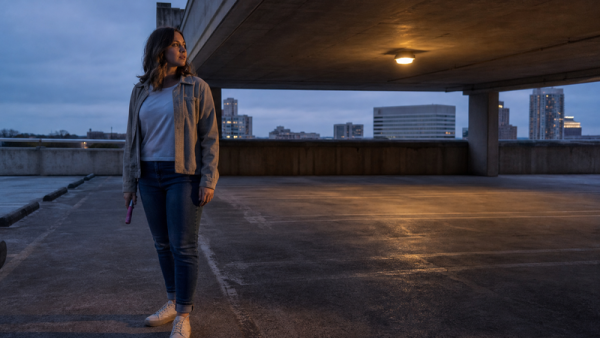
Because your job puts you in a position almost no other profession requires: alone, in an empty house, with a stranger you just met online. You hand out your name, your photo, and your schedule to anyone who fills out a lead form. That’s the job. It’s also the exposure.
The agents who last in this business — the ones building real books and real reputations — treat personal safety with the same discipline they bring to contract law and market analysis. They don’t leave it to chance, and they don’t wing it. A stun gun is one of the more discreet, effective options available for exactly this scenario, but carrying one without understanding the law isn’t discernment. It’s a liability you didn’t need to take on.
This isn’t about fear. It’s about being the kind of professional who’s covered every angle — the same instinct that makes you double-check a survey line or confirm HOA restrictions before a client makes an offer.
Are stun guns legal for real estate agents to carry?
In most states, yes. Stun guns and Tasers are legal for civilian self-defense use in the large majority of the country, and there’s no special carry permit required in most of those states — unlike a firearm. That accessibility is part of why so many agents choose one over other options.
A short list of states impose tighter restrictions, and a small number effectively prohibit civilian possession of stun devices altogether. On top of state law, certain cities — most notably a few major metros — have their own municipal codes that layer on additional restrictions, even in states where stun guns are otherwise legal statewide. If you work in or near a major city, that local layer matters as much as the state law itself.
The responsible approach isn’t guesswork. Before you add a stun gun to your daily carry, verify your specific state statute and check whether your city or county has its own ordinance. This is a five-minute search that separates agents who are genuinely prepared from those who assume they are.
Where can I actually carry a stun gun during a showing?
This is where most agents get tripped up — not on whether it’s legal to own one, but on where you’re legally allowed to bring it.
Certain properties come with their own restrictions layered on top of general carry law. Schools and school zones are almost universally off-limits for any self-defense device, which matters if you’re showing a home near a campus or hosting an open house during school pickup hours. Federal buildings, courthouses, and airports are non-negotiable no-carry zones. If a listing happens to be inside a gated community, HOA, or commercial property with its own security policy, check whether that policy addresses self-defense devices — some do.
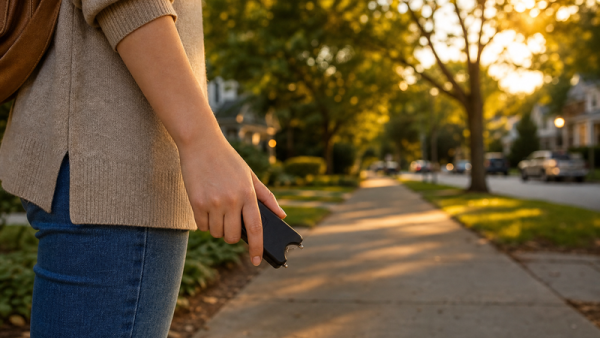
For the vast majority of residential showings — single-family homes, condos, townhomes — you’re carrying in a private space with a client who invited you there, or in your own vehicle traveling between appointments. That’s the environment a stun gun was designed for, and it’s where most agents will actually use one, if ever: in transition, walking a stranger through an unfamiliar or vacant property.
The distinction worth understanding is the difference between carrying a stun gun and using one. Even in states where carry is unrestricted, using force — any force — is governed by separate self-defense statutes that vary by jurisdiction. Know that these are two different legal questions before you ever need to answer either one.
What kind of stun gun actually makes sense for this job?
Not every stun gun on the market was built with a professional in mind, and that distinction matters more than people realize. An agent needs something that disappears into a daily routine — into a blazer pocket, a bag, a belt — without looking like a tool built for a different job entirely.
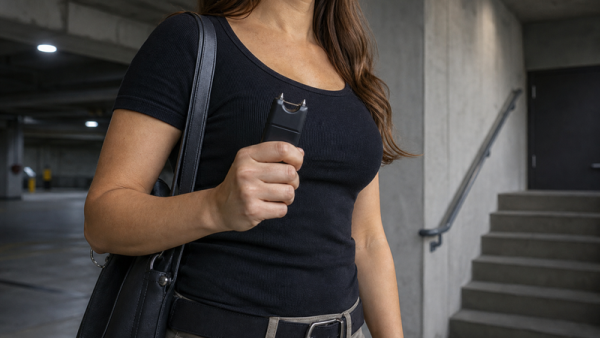
A lipstick-shaped stun gun is worth serious consideration precisely because it doesn’t read as a self-defense device at a glance. It sits in a bag or clutch the way any other cosmetic item would, which matters when you’re greeting a client at the door and don’t want your first impression to be “armed.” For agents who prefer something with more retention security, a stun gun with a wrist strap stays secured to your hand during a walkthrough — useful if you’re touring a property alone and want it accessible without a bag or pocket in reach.
If you’re commuting between listings and want something that clips onto a belt or bag strap for quick access, a stun gun with a nylon holster gives you that without sacrificing a professional look. And if your day involves a lot of driving between appointments and public parking lots, the considerations that apply to commuters carrying stun guns apply just as directly to agents moving from listing to listing.
Brands like Streetwise, ZAP, and SMART make compact models specifically designed around this kind of discretion — small enough to disappear into a professional wardrobe, not built to look tactical. That’s the standard worth holding your gear to: does it do the job without announcing itself?
How do I carry a stun gun without it undermining my professional image?
This is the part most safety advice skips entirely, and it’s the part that actually matters to someone in your position. You’re not choosing gear for a range day. You’re choosing gear that has to coexist with a blazer, a listing presentation, and a client’s first impression of you.
The agents who do this well treat their self-defense carry the same way they treat their business cards or their car — as an extension of how they present themselves. A device that’s discreet, well-made, and easy to access without fumbling says something about how seriously you take your own preparation. A device that looks like it belongs on a tactical vest says something else entirely, and not to your benefit.
This is where the choice of product actually reflects on you. A refined, well-designed stun gun that a client never notices is a mark of someone who’s thought this through carefully. It’s not about the loudest option — it’s about the one that fits seamlessly into a life built on trust and first impressions.
What else should I be doing beyond carrying a stun gun?
A stun gun is one layer, not the whole strategy. Agents who take personal safety seriously tend to build a small system rather than rely on a single tool.
A compact personal alarm is worth keeping alongside your stun gun — a 130dB alarm clipped to a bag can draw immediate attention in a way that de-escalates a situation before it goes further, and it requires zero legal consideration in any state. Verifying a prospective client’s identity before a private showing, sharing your location with someone during solo appointments, and meeting first-time buyers at the office before a private walkthrough are all practices worth building into your routine regardless of what you carry.
If you want to go deeper on technique, our guide on how to defend yourself with a stun gun walks through proper use in more detail than we can cover here.
Frequently Asked Questions About Stun Gun Laws for Real Estate Agents
Can real estate agents carry stun guns while showing houses?
In most states, yes. Stun guns are legal for civilian self-defense use in the majority of the country without requiring a special permit, unlike a firearm. A small number of states restrict or prohibit them, and some cities add their own ordinances. Confirm your specific state and local law before carrying one professionally.
Do I need a permit to carry a stun gun as a real estate agent?
Most states that allow stun gun possession do not require a separate carry permit for civilian use, which is part of why they’re a popular choice among agents. A few states or municipalities may have registration or age requirements. Always verify your specific jurisdiction rather than assuming national rules apply uniformly.
Are stun guns allowed at open houses?
Generally, yes, if stun gun possession is legal in your state and the property isn’t located within a restricted zone, such as near a school. Open houses are private events on private property, which puts them squarely within the environment stun guns are legally designed for in most jurisdictions.
What’s the difference between a stun gun and a Taser for legal purposes?
Both are typically governed by the same state statutes regarding electronic self-defense devices, though a few states distinguish between contact stun guns and projectile devices like Tasers. Our comparison of Tasers versus stun guns breaks down the practical and legal differences in more depth.
Can I bring a stun gun into a client’s HOA community?
Generally yes, since HOA and community rules typically govern shared amenities and architectural standards rather than personal self-defense items. That said, some private communities or commercial listings have their own security policies, so it’s worth a quick check if you’re unsure before a showing.
What’s the most discreet stun gun option for professional settings?
A lipstick-shaped or compact keychain-style stun gun tends to work best for agents who need something that doesn’t disrupt a professional appearance. Our lipstick stun gun is designed specifically around that kind of discretion, blending into a bag or clutch without drawing attention.
Should I tell clients I carry a stun gun?
There’s no legal requirement to disclose it, and most agents don’t. A well-chosen device is discreet enough that it never comes up. The goal is to be prepared, not to make personal safety part of the sales conversation.
Is a stun gun better than pepper spray for real estate agents?
Both have advantages depending on the scenario — a stun gun requires direct contact, while pepper spray works at a distance but can be affected by wind indoors versus outdoors. Our breakdown of pepper spray versus stun guns covers the tradeoffs in detail so you can decide what fits your routine.
The Bottom Line
Knowing the law isn’t a formality — it’s the difference between being genuinely prepared and just carrying something that feels like preparation. The agents who handle this well don’t guess. They verify their state statute, check their city’s ordinances, and choose a device that fits the professional standard they’ve built everything else in their career around.
That’s the real distinction. Anyone can buy a stun gun. Carrying one with the same discernment you bring to a listing agreement — legally informed, well-chosen, and quietly confident — is what separates a prepared professional from someone hoping nothing goes wrong. Browse our selection of stun guns built for everyday carry to find the one that fits how you actually work.