
Disguised Knives — Backup Blades That Hide in Plain Sight
You already carry a pen, a comb, or a wallet everywhere you go — so why not have one of them actually work for you when things go sideways? Most people who want a backup blade don’t want to advertise it. They’re not looking for something tactical-looking that draws attention at the office or makes people uncomfortable on the subway. They want something that passes as ordinary until it isn’t. These are knives built for exactly that — the person who thinks ahead, carries light, and wants a last-resort option that nobody sees coming.
Our Top Disguised Knives for Covert Everyday Carry



What to Look for in a Disguised Knife for Everyday Carry
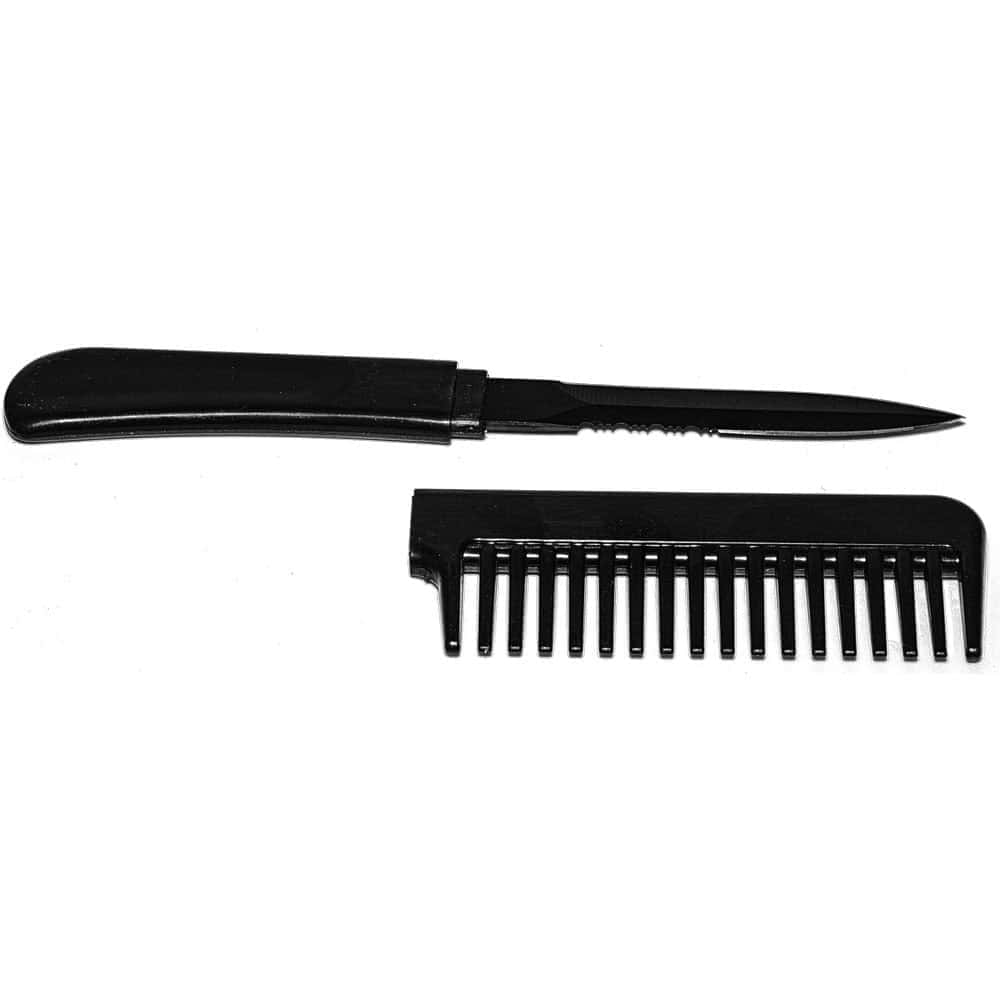
The disguise has to actually work. A disguised knife that looks like a cheap prop defeats the whole point. The Credit Card Knife and Multi-Function Survival Card both slide into a wallet exactly like a real card — nobody doing a casual bag check is going to flag them. The Pen Knife goes in your shirt pocket and passes as a ballpoint. The Comb Knife looks like something you’d find on any bathroom shelf. If the disguise is convincing in real life, you’ll actually carry it. If it looks like a gag item, it’ll end up in a drawer.
Blade length matters more than people think. These knives range from the Pen Knife’s 2.13-inch blade up to the Comb Knife’s 3.5-inch blade. A 2-inch blade is useful — it can cut, it can deter, it can handle utility tasks. A 3.5-inch blade is a serious tool. Know what you’re getting before you buy, and check your state’s blade length laws before carrying any fixed or folding knife.
Carry method should match your lifestyle. If you carry a wallet everywhere, the Credit Card Knife or Multi-Function Survival Card makes obvious sense — zero extra carry burden. If you’re someone who already keeps a comb in a back pocket or purse, the Comb Knife adds nothing to your routine. The Pen Knife works for anyone in a professional environment where a tactical-looking blade would raise eyebrows.
A locking blade is worth paying attention to. The Credit Card Knife has a blade lock — meaning once it’s deployed, it doesn’t fold back on your fingers under pressure. Not every small folding knife offers this. If you’re buying a disguised knife for anything beyond light utility use, a blade lock is a feature you’ll want.
Understand what this is and what it isn’t. A disguised knife is a backup option — the thing you have when you have nothing else. It’s not a substitute for distance tools like pepper spray, and it’s not meant to be drawn first. It’s for worst-case situations where you need something and it’s all you’ve got. That framing matters when you’re choosing which one to carry.
How to Choose and Carry a Disguised Knife
Pick one that actually fits your routine. The best disguised knife is the one that’s genuinely on your person every day — not the one that sits in your bag because you keep forgetting it. Go through your typical day: What do you always have? A wallet? A bag with a front pocket? A shirt with a pen slot? That’s where your knife should live. Forcing a new carry habit is how backup tools end up unused.
Practice the deployment before you need it. This is the part most people skip. The Credit Card Knife requires an unfolding motion that’s intuitive once you’ve done it twenty times — and slow the first time you try it under pressure. The Pen Knife requires a different grip and draw than a standard folder. Spend ten minutes with it at home before you rely on it anywhere else.
Check your laws before you leave the house. Concealed blade laws vary more than most people realize. Some states restrict any concealed knife. Some cities have blade-length limits that affect even a 2-inch blade. This isn’t a reason not to carry — it’s a reason to be informed. See our Laws & Restrictions page at https://reveresecurity.com/law-and-restrictions/ before ordering.
Consider pairing it with a non-contact option. A disguised knife is a close-contact, last-resort tool. Most self-defense situations can be resolved before things get that close — either by leaving the area, using a personal alarm to draw attention, or deploying pepper spray to create distance. Carrying a small keychain pepper spray alongside a backup blade covers more situations than either one does alone.
Frequently Asked Questions
A: Laws vary by state, city, and sometimes even by the type of disguised blade. Some states restrict concealed knives or blades over a certain length regardless of how they look. Before carrying any disguised knife, check your local laws — a good starting point is our Laws & Restrictions page.
A: A standard folding knife is visible — anyone who sees it knows what it is. A disguised knife like the Pen Knife or Credit Card Knife looks like an ordinary object until you need it. The tradeoff is blade size: disguised knives typically have shorter blades (2 to 3.5 inches) compared to purpose-built EDC knives. For most people, that’s a reasonable tradeoff for the low profile they provide.
A: The key is choosing the right carry method for the disguise. The Credit Card Knife rides in a wallet slot and deploys by unfolding — practice the motion until it’s smooth before you need it under stress. The Comb Knife clips or stows wherever you’d carry a comb. The Pen Knife goes in a shirt pocket or bag. Whatever you choose, handle it enough at home that accessing the blade is second nature.
A: They serve different purposes. Pepper spray creates distance — you can stop a threat before they’re close enough to touch you. A knife is a last-resort contact weapon that requires the threat to already be on top of you. Many people carry both: pepper spray as the primary option and a small backup blade as a last resort. If you’re choosing just one, pepper spray is generally the better first-line option for most situations.
A: The honest answer is that it depends on the specific product. The Comb Knife has a 3.5-inch steel blade that functions as a real cutting tool. The Credit Card Knife folds into a rigid, lockable blade. These aren’t toy knives. That said, a 2-inch blade is a 2-inch blade — it’s a backup tool, not a primary weapon, and should be treated that way.
Not Sure Which Disguised Knife Is Right for You?
It's a fair question — blade length, carry style, and legal restrictions all factor in. Give us a call at 800-859-5566 and we'll help you figure out which option actually fits your situation.
Shop All Knives