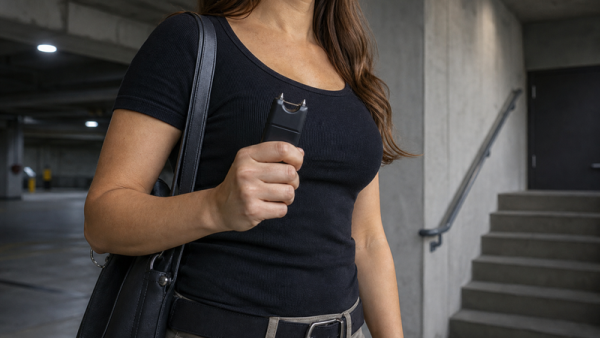
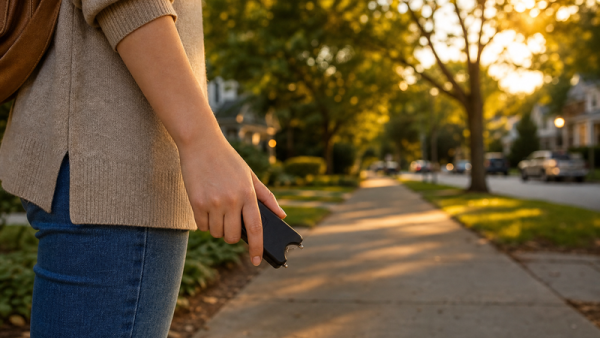
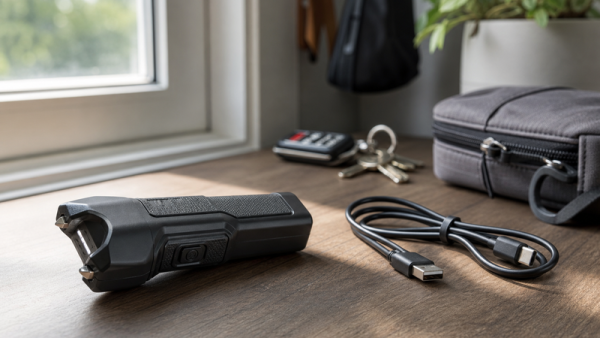
A kubaton keychain is a small, cylindrical striking tool — typically 5 to 6 inches long and about a half-inch in diameter — designed to concentrate the force of a closed-fist grip into a single focused point. It attaches to your keys, rides in your hand as you walk, and gives you a meaningful mechanical advantage in a close-range defensive situation. Simple in design, serious in purpose.
Most people who carry one never need to use it. That’s exactly the point. The decision to carry a kubaton is the decision to be someone who thinks ahead — who understands that personal safety isn’t about fear, it’s about preparation. There’s a reason this tool has been a quiet staple among law enforcement professionals, personal protection instructors, and discerning everyday carriers for decades. It doesn’t look dramatic. It doesn’t require batteries. It simply works.
What exactly is a kubaton and where did it come from?
The kubaton was developed in the 1970s by Soke Takayuki Kubota, a Japanese martial arts master who designed it as a training and defensive tool for the Los Angeles Police Department. Kubota wanted something that officers — particularly female officers — could carry unobtrusively and deploy effectively in a close-range confrontation without escalating to lethal force. The design was elegant in its simplicity: a rigid cylinder, short enough to conceal in a closed fist, long enough to generate real striking power.
The name “kubaton” is technically a trademarked term derived from Kubota’s name, though it has since become the common descriptor for the entire category of palm-sized striking tools. You’ll also see these referred to as kubatons, koppos, pocket sticks, or keychain self-defense tools. The mechanics are the same regardless of the label.
What made Kubota’s design endure is that it requires no special strength, no extensive training to use at a basic level, and no technology that can fail you. It works the same way it did fifty years ago — and that kind of proven reliability is its own form of quality.
How does a kubaton keychain actually work in a self-defense situation?
The physics are straightforward. When you close your fist around a kubaton with the tip protruding from the bottom of your grip (called the “ice pick” carry) or from between your fingers, you concentrate the force of your strike into a dramatically smaller surface area. A punch lands across the whole width of your knuckles. A kubaton strike lands on a point roughly the size of a pencil eraser. The pressure multiplies accordingly.
Effective target areas include bony prominences — the back of the hand, the wrist, the collarbone, the shin, the bridge of the nose — and pressure point locations that trained instructors teach in formal courses. Even without formal training, a sharp strike to the hand, forearm, or knee during a grab attempt creates pain compliance that buys you the seconds you need to disengage and move.
The keychain attachment isn’t incidental — it’s functional. Having your keys attached means the kubaton is in your hand before you reach your car, before you walk into a parking garage, before you unlock your front door at night. It’s already deployed, already gripped, without any additional thought or action required. That’s the kind of quiet preparation that distinguishes a well-considered carry from a reactive one.
Who is a kubaton keychain best suited for?
The kubaton is an excellent primary tool for people who want something non-mechanical, non-chemical, and always-on. It suits people who prefer not to carry pepper spray due to proximity concerns in shared spaces — close quarters, crowded commutes, or environments where wind drift or blowback would be a real issue. It’s also a strong secondary tool for people who carry pepper spray or a personal alarm but want a backup option that functions in absolute zero distance.
It works particularly well for people with smaller hands, people who commute regularly in urban environments, and people who want a self-defense option that carries on a keychain without adding bulk or requiring a separate pouch. If you’ve already looked at options like a self-defense keychain with pepper spray, a kubaton pairs naturally with that approach — or can stand on its own if you prefer a chemical-free option.
It’s also worth noting that the kubaton rewards those who take it seriously enough to invest a few hours in basic instruction. You don’t need years of martial arts training to use one effectively. But someone who has practiced basic grip, carry position, and a handful of strike combinations will get substantially more value from this tool than someone who simply attached it to their keys and hoped for the best. The tool is simple. The commitment to using it well is where the real investment lies.
What should you look for when choosing a quality kubaton keychain?
Material matters more than most buyers realize. The best kubatons are machined aluminum or high-grade steel — dense enough to withstand real impact, smooth enough to grip cleanly under stress, and corrosion-resistant enough to survive years on a keychain without degrading. Plastic versions exist, and while they’re not useless, they’re not what you want if you’re serious about this as a defensive tool.
Look for a design with a textured grip surface — knurling, ridges, or raised bands — that prevents the tool from slipping in a wet or stressed grip. A pointed tip adds striking utility, while a flat or rounded tip is typically what you’ll find on tools sold for general use and general carry. Both have their advocates; the pointed tip concentrates force more precisely, while the flat tip is slightly more forgiving of imperfect aim.
Length and diameter are also real considerations, not just specifications on a product page. A tool that’s too wide for your hand won’t seat properly in your grip. A tool that’s too short doesn’t give you enough purchase. Most people find that a standard 5.5-inch length with a half-inch diameter is a comfortable fit across a range of hand sizes, but it’s worth holding one before you commit.
Finally, consider how the keyring attachment is integrated. A loose or poorly-seated ring that shifts in your grip is a problem. A solidly fixed attachment point that keeps your keys from flapping against your hand during use is what you actually want. If you’re exploring self-defense keychain designs that balance aesthetics and function, the same standard applies — the carry has to be practical before it can be stylish.
Is a kubaton legal to carry?
In most U.S. states, a kubaton keychain is legal to carry as a personal safety tool. However, a handful of states and some municipalities include them in broader restrictions on impact weapons or concealed weapons, so you should always verify the rules for your specific location before you carry. California, New York, and a few other states have historically applied broader definitions that may affect legality — but this varies and changes over time, so checking current local statutes is your responsibility.
Internationally, the kubaton is restricted or prohibited in several countries where striking implements of any kind fall under weapons laws. If you travel, check the destination’s regulations before packing one.
It’s also worth understanding the distinction between carrying for lawful self-defense and carrying a weapon. A kubaton is a defensive tool. How and when you use it — and whether that use is legally justified in your jurisdiction — is governed by the self-defense laws of your state. That’s not a legal disclaimer designed to hedge; it’s information that a responsible carrier takes seriously.
How does a kubaton compare to other keychain self-defense tools?
The landscape of keychain self-defense options has grown considerably, and the kubaton occupies a specific and defensible niche within it. Compared to keychain pepper spray, the kubaton requires direct physical contact — there’s no standoff distance. That’s a limitation in some scenarios and an advantage in others. In absolute close quarters where spray would coat you as well as an attacker, the kubaton is the more precise instrument.
Compared to a personal alarm, the kubaton is a physical deterrent rather than an auditory one. Alarms are excellent for drawing attention and disrupting an attacker’s composure; they don’t stop a committed grab the way a focused strike to the wrist can. Many experienced carriers pair the two — a personal alarm for the auditory deterrent layer, a kubaton for the physical contact layer.
Compared to a tactical pen, the kubaton is simpler and more purpose-built. A tactical pen is a dual-use tool that writes and functions as a striking instrument. If you prefer to carry one item rather than two, it’s a reasonable choice. If you want something with no ambiguity about its purpose on your keychain, the kubaton is the cleaner answer.
For a deeper comparison of how different personal protection tools stack up in real scenarios, the breakdown of pepper spray vs. stun gun on this site offers a useful framework for thinking through what role each tool plays in a layered approach to personal safety.
Frequently Asked Questions About Kubaton Keychains
What is the difference between a kubaton and a tactical pen?
A kubaton is a purpose-built striking tool with no secondary function. A tactical pen writes and can also function as a striking instrument. Both rely on similar mechanics — concentrating grip force into a focused point — but the kubaton is simpler, often more robust, and carries no ambiguity about its role. If you want one tool for one purpose, a kubaton is the cleaner choice.
Do I need self-defense training to use a kubaton keychain?
Basic use — gripping it correctly and delivering a strike to an accessible target — doesn’t require formal training. However, a few hours with a qualified personal protection instructor will substantially improve your effectiveness, your confidence, and your ability to respond under stress. The kubaton rewards practice. You don’t need years of martial arts background, but some instruction is always worth the time.
Can I take a kubaton keychain on an airplane?
No. The TSA prohibits kubatons and similar striking tools in carry-on baggage. They may be packed in checked luggage, though you should verify current TSA guidelines before traveling. If you rely on your kubaton for daily carry, plan accordingly when flying — check your bag or leave it at home and source what you need at your destination.
What is the best material for a kubaton keychain?
Machined aluminum is the most practical choice for most carriers — dense enough to deliver real force, lightweight enough for daily keychain carry, and resistant to corrosion. Solid steel options are heavier and more durable but add noticeable weight to a keychain. Avoid plastic or resin versions if you want a tool that will perform and last over years of real-world carry.
Is a kubaton considered a concealed weapon?
In most U.S. states, a kubaton is not classified as a concealed weapon and is legal to carry. However, some states and municipalities define impact weapons broadly, which can include palm-sized striking tools. Always check the laws for your specific state and city before carrying. Lawful carry is your responsibility — and worth confirming before you clip one to your keys.
How do I hold a kubaton correctly?
The two most common carry positions are the hammer grip, where the tip protrudes from the bottom of your closed fist, and the ice pick grip, where the tip faces upward between your index and middle finger. The hammer grip is more natural for most people and delivers strong downward strikes. Both are effective; practice each one to determine which seats most securely in your hand.
Can a kubaton keychain be used by someone with small hands?
Yes — the kubaton’s half-inch diameter and compact length make it one of the more accessible striking tools for people with smaller hands. A proper fit means the tool seats fully in your closed fist with the tip protruding cleanly. If you find standard-sized options too wide, some slimmer machined options exist. The key is finding a diameter that lets you close your grip firmly without straining.
Should I carry a kubaton instead of pepper spray, or in addition to it?
For most people, carrying both is the smarter approach. Pepper spray gives you a standoff option — effective at several feet without requiring contact. A kubaton is your close-quarters option when distance isn’t available. They cover different scenarios and complement each other well. If you’re exploring keychain options that combine both functions, a keychain pepper spray alongside a kubaton is a practical and well-considered pairing.
The kubaton has been around for fifty years because it solves a real problem without requiring complexity. It doesn’t need to be charged, refilled, or activated. It goes where your keys go. In a world full of personal safety products that promise more than they deliver, there’s something to be said for a tool that has quietly done exactly what it’s supposed to do for half a century — and continues to earn its place on the keychains of people who take their safety seriously.
If you’re building out a thoughtful personal safety kit, browse the keychain self-defense options at Revere Security to find what fits your carry style, your environment, and the level of preparation you’re committed to. The best tool is always the one you’ll actually have with you.