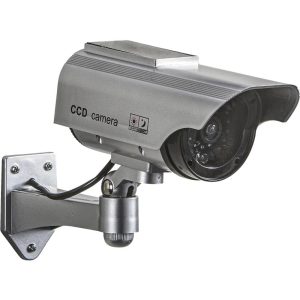
How Dummy Cameras Are Typically Used
Most people use dummy cameras to fill gaps in an existing security setup or to cover areas where running cable for a real camera isn't practical. A blinking LED and a realistic housing positioned at an entry point, parking area, or storefront sends a clear signal without requiring a full installation. They're common in rental properties, small businesses, garages, and storage areas where deterrence matters more than footage.
What to Think About When Choosing a Dummy Camera
The more realistic the dummy camera looks, the better it works. Look for models with a weighted housing, a blinking LED indicator, and a design that matches real cameras you might see on a commercial property. Dome-style dummy cameras tend to blend in well indoors, while bullet-style models read as more convincing in outdoor settings. Mounting hardware and adjustability matter too — a camera that's positioned realistically is more convincing than one that looks slapped up in a hurry.
Buying With Confidence
These are simple, low-tech products — and that's exactly what makes them reliable. There's nothing to malfunction, no software to update, and no subscription required. Every dummy camera in this selection uses quality housing materials built to hold up in the conditions they're rated for. If you're supplementing an existing system or just want something visible at a specific entry point, you're not overpaying for features you don't need.
Frequently Asked Questions About Dummy Cameras
- Do dummy cameras actually deter crime?
- Research on visible surveillance consistently shows that the presence of cameras — real or not — influences behavior. Dummy cameras work best against opportunistic situations where someone is weighing risk before acting. They're not a complete security solution, but as part of a layered approach, they hold their own.
- Can people tell a dummy camera from a real one?
- Most people can't tell the difference at a glance, which is the whole point. Quality dummy cameras replicate the housing, mounting style, and LED behavior of real units. Avoid cheap plastic models that look hollow or lightweight — a convincing dummy camera needs to look like it belongs there.
- Are dummy cameras legal to use?
- Yes, placing dummy cameras on your own property is legal in all U.S. states. Where laws get more specific is around recording — since dummy cameras don't record anything, that concern doesn't apply. Just avoid positioning them in ways that could be considered deceptive in a commercial or legal context, and you're fine.
- Where's the best place to put a dummy camera?
- Entry points and visible chokepoints — front doors, driveways, parking areas, loading docks — are where dummy cameras have the most impact. Mount them at realistic angles, at the same height you'd see a real camera, and make sure the LED is visible in low light if the model includes one.
- Do dummy cameras need batteries or wiring?
- Most dummy cameras with a blinking LED require a couple of AA batteries to power the indicator light. Beyond that, there's no wiring needed and nothing to connect. That's one of the reasons they're so easy to install — most people have them up in under ten minutes.
Related Categories and Guides