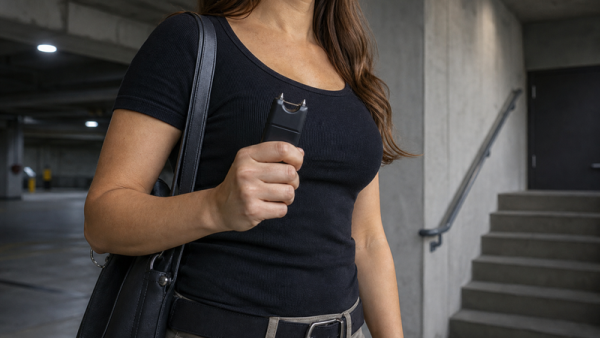
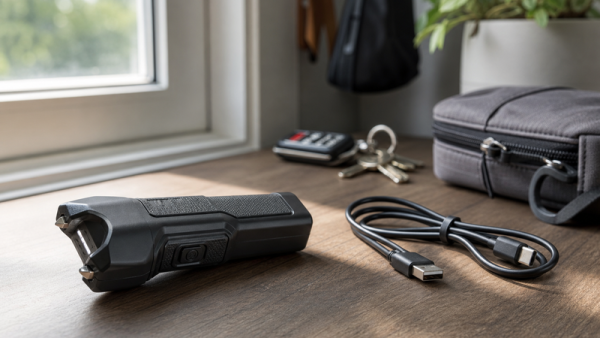
The best non-lethal weapon for home protection depends on your specific layout, who lives with you, and how quickly you can realistically access a defensive tool under stress. For most households, a layered approach works best: a loud alarm or siren near entry points, a quality pepper spray on the nightstand, and a high-voltage stun gun for close-quarters backup. No single tool covers every scenario — but the right combination covers most of them.
Here’s what most people get wrong: they buy one product, put it somewhere “safe,” and assume they’re covered. Then they spend three seconds fumbling for it in the dark while their heart is pounding. That gap between having a tool and being able to use it is where home protection plans fall apart. This post walks through exactly what works, what to put where, and how to make sure your defenses are actually ready when it matters — not just purchased and forgotten.
What makes a non-lethal weapon effective for home protection specifically?
Home defense has different requirements than carrying something on your person in public. When you’re in your own space, you usually have slightly more time to react — but you also have family members who could be exposed to crossfire, pets, and tight indoor spaces that change what’s practical. An effective non-lethal home defense tool needs to meet four specific criteria: it must be immediately accessible, it must work reliably in low light, it must be usable under serious stress without fine motor precision, and it must not create collateral risk to people you’re protecting.
Pepper spray checks all four boxes for most people. A stream formula with a 12–15 foot range lets you keep distance from a threat in a hallway or living room without saturating the air the way a fogger would. A stun gun is a strong secondary option for the same reasons — it doesn’t require aim, it works in the dark, and high-voltage models incapacitate fast. What typically fails these criteria? Anything that requires assembly, unlocking, or extended thought at 2am.
Personal alarms deserve more credit than they get for indoor use. A 130dB alarm mounted near your bedroom door doesn’t just wake the neighborhood — it disorients an intruder and signals that this house is not an easy target. Pair that with a motion-activated indoor alarm and you’ve created an early warning layer that gives you time to get to your primary defensive tool. That time is everything.
How does pepper spray perform as a home defense weapon?
Pepper spray is the most versatile non-lethal defensive option for home use, and not just because it’s effective. It requires almost no training to use, it works in total darkness, and it can stop a threat at a distance before physical contact happens. For a hallway confrontation — which is the most common home intrusion scenario — a canister with a stream delivery and a 15-foot range gives you a serious tactical advantage.
For home use specifically, look at larger-format canisters rather than the keychain sizes designed for carrying. Brands like Wildfire and Mace offer higher-capacity home defense formulas with stronger OC concentrations and stream patterns that reduce the risk of blowback in enclosed spaces. Some formulas also include UV marking dye, which helps law enforcement identify an intruder after the fact — a detail worth having.
Placement matters as much as the product. A canister in a drawer is almost useless in a real emergency. Keep one on the nightstand, one in a mounted holder near the main entry point, and if you have a larger home, consider one per floor. If you want to go deeper on formulas and sizing, the post on pepper spray for home defense and why the right size and formula changes everything covers this in detail.
Are stun guns practical for defending yourself inside a home?
Yes — with one important condition. A stun gun requires close contact, which means you need to be within arm’s reach of a threat. In a home setting, that’s more realistic than it sounds. Hallways are narrow, stairwells are confined, and many home intrusions happen in spaces where a 10-foot distance isn’t possible. A stun gun used decisively in those spaces is highly effective.
The voltage and amperage numbers matter more than most buyers realize. High-voltage models from brands like Streetwise and ZAP deliver incapacitation fast — we’re talking 2–3 seconds of contact to fully disable most people, even through heavy clothing. The Stun Bat and BashLite formats give you additional reach, which is a meaningful advantage indoors. A baton-style stun device lets you make contact before a threat closes the distance completely.
Look for models with a disable pin or wrist strap. If a stun gun is grabbed away from you in a struggle, the disable pin makes it inoperable in the attacker’s hand. That feature alone is worth prioritizing. For a full breakdown of the best current options, the best stun guns for non-lethal self-defense in 2026 is a solid starting point.
What role do personal alarms and sirens play in home protection?
This is where most home protection plans have a gap. People focus entirely on tools that require active use — something you grab and deploy. But a layered home defense system starts before you ever have to grab anything. That’s where alarms do their work.
A loud alarm at a point of entry — a door or window sensor that triggers 130dB when breached — does two things simultaneously. It notifies you with certainty that something is happening, and it creates a disorienting, attention-drawing situation for anyone who didn’t expect it. Most residential intrusions are crimes of opportunity. The noise alone causes a significant percentage of intruders to abort immediately.
Door stop alarms, window alarms, and motion-activated alert systems fit under beds, behind doors, and in window frames without any installation. They’re passive — they work while you’re asleep, while you’re in the back of the house, while your kids are home alone. Think of them as the tripwire layer of your defense system. They buy you time. And in a home defense scenario, time is what makes the difference between reacting and being reactive.
What’s the most overlooked piece of a home protection plan?
Secure storage of valuables and secure concealment of your defensive tools. Most people don’t connect these two things, but they’re directly related. If you have cash, medication, or important documents accessible in obvious places, you give an intruder more reason to move through your home — and more time in it. If your defensive tools are buried in a closet or locked in a case, you’ve neutralized your own preparation.
Diversion safes solve both problems at once. A diversion safe looks exactly like an ordinary household item — a book on a shelf, a can of soup in the pantry, a cleaning product under the sink — but holds valuables or even a small defensive tool out of sight. An intruder doing a quick sweep of a home won’t find it. You know exactly where it is. That combination of concealment and accessibility is genuinely valuable, and it’s underused. If you haven’t considered this layer, it’s worth reading about the best diversion safe options and where they fit into a home security setup.
The same logic applies to your defensive tools more broadly. Know where they are. Practice reaching for them in the dark. The muscle memory of finding your pepper spray on the nightstand without turning on the light is not a trivial thing — it’s the difference between using it and not.
How should you layer non-lethal defenses for maximum home protection?
Think in three rings. The outer ring is early warning — door and window alarms, motion sensors, anything that alerts you before a threat reaches your living space. The middle ring is deterrence and delay — visible security measures, a dog, adequate outdoor lighting. The inner ring is your active defensive tools — what you can put your hands on in the dark, within reach, in under three seconds.
Here’s a practical layered setup for a typical household:
- Outer ring: Door and window contact alarms on all ground-level entry points. A loud alarm here isn’t about catching anyone — it’s about waking you up with enough lead time to get to your inner ring tools.
- Middle ring: Motion-activated lights on exterior, a door reinforcement bar on the primary entry, and clear sightlines to your front and back doors from your main living area.
- Inner ring: Pepper spray on the nightstand or in a mounted bedside holder. A stun gun within reach in the same location. A personal alarm that you can trigger to summon help if you’re unable to reach a phone.
This isn’t complicated or expensive to set up. What it requires is intention — deciding in advance what goes where and making sure every person in the household knows the plan. That last part is the piece most people skip, and it matters more than the tools themselves.
Frequently Asked Questions About Non-Lethal Weapons for Home Protection
Is pepper spray safe to use indoors?
Yes, with the right formula and delivery type. Stream or gel formulas are significantly safer for indoor use than foggers or sprays, because they project a concentrated stream rather than dispersing particles into the air. Gel formulas in particular reduce airborne contamination. You’ll still want ventilation after use, but a stream-delivery canister used in a hallway won’t incapacitate an entire floor the way a fogger might.
Can a stun gun seriously injure someone?
Stun guns are designed to temporarily incapacitate — they cause immediate pain, muscle disruption, and disorientation, but effects typically resolve within a few minutes without lasting injury to healthy individuals. The risk increases for people with certain heart conditions or those who fall and hit their head as a result. They are considered non-lethal defensive tools, but responsible use means understanding that they are not completely without risk.
What’s the loudest personal alarm for home use?
Most effective personal and door alarms operate at 120–130dB, which is roughly equivalent to a jet engine at close range. At that volume, the alarm is disorienting to anyone nearby and audible at significant distance outdoors. For home use, prioritize alarms with an immediate trigger mechanism — magnetic separation or a simple pull pin — so there’s no delay in activation when you need it.
Should I keep my defensive tools locked up if I have children at home?
This requires honest judgment about your specific situation. A stun gun or pepper spray accessible on a nightstand is a real consideration in a home with young children. Options include bedside safes with quick-access keypads that keep tools secure but reachable within seconds, or mounting holders placed at adult height in locations children can’t easily access. The goal is accessibility for you and inaccessibility for children — both matter.
Do I need a permit or license to own pepper spray or stun guns at home?
Laws vary significantly by state and sometimes by city. Most states allow adults to own pepper spray and stun guns for lawful self-defense without a permit, but some have restrictions on concentration levels, voltage, or specific delivery types. It’s your responsibility to check the laws in your state and municipality before purchasing. We can’t give legal advice, but your state attorney general’s website is a reliable starting point for current regulations.
What is the best non-lethal weapon for someone who has never used one before?
Pepper spray is generally the best starting point for someone new to non-lethal self-defense. It requires no close contact with a threat, almost no training to use effectively, and is available in formulas and sizes appropriate for home use. A 130dB personal alarm as a secondary layer adds early warning with zero learning curve. From there, a stun gun is a straightforward addition once you’re comfortable with the basics. Start simple, learn your tools, then layer.
How often should I replace or check my non-lethal home defense tools?
Pepper spray canisters have an expiration date — typically 2–4 years — and should be replaced on schedule because OC concentration degrades over time. Stun guns should be tested periodically (a brief one-second discharge into the air) and recharged according to the manufacturer’s schedule. Battery-powered alarms need battery checks every 6–12 months. Set a calendar reminder for annual reviews of all your tools — treat it the same way you’d treat checking smoke detector batteries.
Is it worth having more than one type of non-lethal weapon at home?
Absolutely. No single tool is ideal for every scenario, and a single point of failure in a home defense plan is a real vulnerability. Pepper spray handles distance; a stun gun handles close-quarters; a personal alarm handles early warning and help-summoning. Each tool covers a gap the others don’t. The combination doesn’t have to be elaborate — even two well-placed, well-maintained tools in the right locations is meaningfully better than one tool that may or may not be within reach.