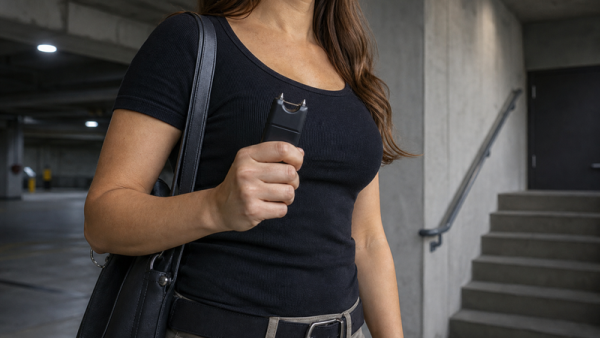
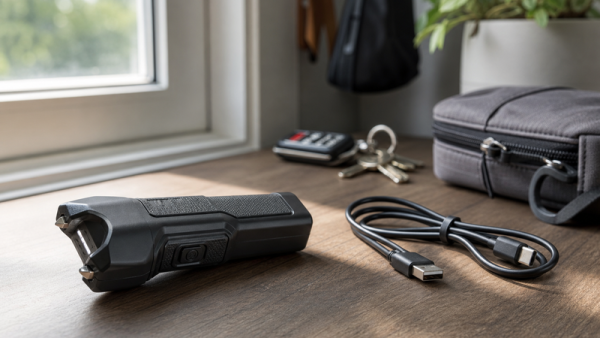
Pepper spray is generally the better choice for most women because it stops a threat from a distance—before an attacker gets close enough to grab you. A stun gun only works at contact range, which means you have to let someone get close first. The most reliable answer, though, is that many women carry both: pepper spray as the first line of defense, and a stun gun as backup if someone closes the distance anyway.
If you’ve spent any time comparing self-defense products, you’ve probably noticed that pepper spray and stun guns get pitted against each other constantly—like you have to pick a side. You don’t. But you do need to understand what each one actually does, because the differences matter more than most product pages let on.
This isn’t about hype or fear. It’s about giving you the real information so you can make a decision you’ll actually trust when it counts. Let’s walk through it honestly.
What’s the real difference between pepper spray and a stun gun?
The core difference comes down to distance. Pepper spray is a range weapon—it works from several feet away, which means you can stop someone before they ever get close enough to touch you. A stun gun is a contact weapon. It has to physically touch the attacker’s body to work, which means someone has to already be within arm’s reach.
That distance gap is the single most important thing to understand before you buy either one. Pepper spray gives you a buffer zone. A stun gun requires you to close that buffer yourself, or for the attacker to have already closed it on you. Neither is wrong—but they solve different parts of the same problem.
Products like belt clip pepper spray are built around that range advantage—quick access, deploy from a safe distance, no need for physical contact at all.
Which one is easier to use in a real moment of panic?
Pepper spray tends to win here, and it’s worth being honest about why. Spraying a canister toward a threat is a gross motor skill—the kind of movement your body can do even when adrenaline is running high and fine motor control goes out the window. Point, spray, create distance.
A stun gun requires you to make contact, hold it against the attacker’s body, and maintain that contact for a few seconds for it to be effective. Under real stress, with someone moving and grabbing at you, that’s a harder task to execute cleanly. It’s not impossible—plenty of people carry stun guns confidently and effectively—but it does ask more of you in the moment.
This is exactly why so many safety-conscious buyers—commuters, retail workers, people walking to their cars after dark—lean toward spray as their primary option. If you look at how stun guns for commuters are typically positioned, they’re almost always recommended as a backup layer, not the first line of defense.
Is pepper spray more reliable than a stun gun?
Reliability depends on what you mean by it. Pepper spray is chemically reliable—if it’s not expired and it’s aimed correctly, it works on nearly everyone, including people who are intoxicated or on drugs, which can sometimes make them less responsive to pain-based deterrents like a stun gun.
A stun gun’s effectiveness depends on maintaining contact long enough, and on the attacker not being under the influence of something that dulls the pain response. That’s not a knock against stun guns—it’s just a fact worth knowing so you’re not caught off guard by unrealistic expectations.
Both tools also require you to actually maintain them. Pepper spray canisters have expiration dates and need occasional replacement. Stun guns need charged batteries. Neither one helps you if it’s sitting dead in a drawer. This is the kind of maintenance habit that separates people who are prepared from people who think they’re prepared.
Which one is legal to carry where I live?
Both pepper spray and stun guns are legal in most states, but restrictions vary by location—some states limit canister size, some restrict stun gun voltage, and a few cities have their own local rules layered on top of state law. This is genuinely one of those situations where you need to check your own state and local regulations before you buy, since laws change and this isn’t something we can advise on directly.
What we can tell you is that both product categories are widely legal and widely carried by everyday people—students, night shift workers, delivery drivers, retail employees. You’re not doing anything unusual by looking into either one.
Can I carry both pepper spray and a stun gun at the same time?
Yes, and honestly, this is what a lot of experienced safety-conscious people actually do. The logic is simple: pepper spray handles the threat at a distance, and a stun gun becomes your backup if someone still manages to get close. You’re not choosing one tool to do everything—you’re building a layered approach, the same way people carry a spare phone charger even though their phone usually works fine.
This layered thinking shows up across a lot of professions where personal safety is part of the daily routine. Take a look at how stun guns for parking attendants are often paired with other tools, or how pepper spray for convenience store workers gets recommended alongside other precautions like visible security cameras. It’s rarely just one tool doing all the work.
What size and strength should I actually look for?
For pepper spray, a smaller canister in the 0.5 to 0.75 ounce range is usually enough for personal carry and fits easily on a keychain or in a bag. Look for a formula with at least 10% OC concentration, and pay attention to spray pattern—stream sprays give you more distance and accuracy in wind, while fog sprays cover a wider area but can drift back toward you.
For stun guns, higher voltage isn’t automatically better—what matters more is amperage, which is what actually delivers the incapacitating effect, along with a design that’s comfortable to grip firmly under stress. Compact models built for pocket or purse carry, like those made for maintenance workers who need something rugged and reliable, tend to be a solid middle ground between size and power.
How do I decide which one is right for me?
Start with your daily routine. If you’re walking through parking lots, waiting at bus stops, or moving through spaces where distance matters, pepper spray’s range advantage is hard to beat. If you’re in situations where someone might already be close—like working alone in a small space or dealing with unpredictable customers—a stun gun’s contact-based stop can be the better fit.
Honestly, the “right” answer is the one you’ll actually carry and actually feel confident using. A stun gun sitting in a glove box does nothing. Pepper spray buried at the bottom of a bag does nothing. Whichever tool fits your daily habits and your comfort level is the one that will actually protect you when it matters.
Frequently Asked Questions About Pepper Spray vs. Stun Guns for Women
Which is more effective, pepper spray or a stun gun?
Neither is universally “more effective”—they work differently. Pepper spray stops someone from a distance using chemical irritation, while a stun gun stops someone at contact range using an electrical pulse. Pepper spray tends to be more reliable under stress because it doesn’t require sustained contact, but both are effective when used correctly and maintained properly.
Can a stun gun be used through clothing?
Yes, most stun guns are designed to work through moderate clothing like a t-shirt or thin jacket, though very thick winter coats can reduce effectiveness. This is one reason many people prefer targeting exposed skin like the neck, hands, or lower torso when possible.
Does pepper spray work on someone who is high or drunk?
Pepper spray generally works on intoxicated individuals because it triggers an involuntary inflammatory response in the eyes and airways that’s hard to override, even when pain tolerance is altered. This is one reason many people consider it more reliably effective than pain-based tools in unpredictable situations.
Is it legal to carry both pepper spray and a stun gun?
In most states, yes, but rules vary by location and you should always confirm your local and state laws before carrying either product. Some states have restrictions on stun gun voltage or pepper spray canister size, so it’s worth a quick check before you buy.
How long does pepper spray last before it expires?
Most pepper spray canisters are rated for about two to four years, and the expiration date is usually printed on the canister itself. After that point, the chemical concentration can weaken, so it’s worth replacing it on a schedule rather than assuming it’ll work when you need it.
What’s the best self-defense option for someone who’s nervous about using force?
Pepper spray tends to feel more approachable for first-time carriers because it doesn’t require close contact and the action—spray and create distance—is simple and intuitive. Many people also pair it with a loud personal alarm, which can startle an attacker and draw attention without requiring any physical contact at all.
Can I carry pepper spray and a stun gun on a keychain?
Yes, many compact pepper spray and stun gun models are designed specifically for keychain carry, which makes them easy to access quickly without digging through a bag. This kind of accessible, everyday carry is exactly what makes the difference between a tool that helps you and one that’s sitting forgotten in a drawer.
Should I choose one or carry both?
Many people choose to carry both, using pepper spray as their first response from a distance and a stun gun as backup if someone closes the gap. It’s not about overpreparing—it’s about having layered options so you’re not relying on a single tool to handle every possible scenario.
Choosing between pepper spray and a stun gun isn’t about picking the “winner”—it’s about being honest with yourself about your routine, your comfort level, and the situations you’re actually likely to face. Both tools have earned their place in personal safety for real reasons, and neither one is a gimmick. If you want a place to start, look at what fits naturally into your daily carry, whether that’s a personal alarm and pepper spray combination or a compact stun gun that clips right onto your keys. The best choice is simply the one you’ll trust enough to carry every single day.