Bear spray is an EPA-registered aerosol deterrent made from capsaicin — the same active compound found in hot peppers — formulated specifically to stop aggressive bears. It deploys as a wide fog cloud that irritates a bear’s eyes, nose, and respiratory system, causing it to retreat without causing lasting harm. Most canisters reach 25 to 35 feet and give you 7 to 9 seconds of spray time, which is enough to stop a charge and create the space you need to get safe.
If you spend any real time outdoors — hiking, camping, hunting, fishing in bear country — this is information worth knowing cold. Not because you should spend your trail time worrying about bears, but because understanding your tools means you can carry them with confidence and use them correctly if the moment ever comes. Let’s go through it carefully, piece by piece.
How does bear spray actually work to stop a bear?
The active ingredient in bear spray is capsaicin, derived from chili peppers. When sprayed at close range, it causes immediate and intense irritation to a bear’s mucous membranes — the eyes, nose, mouth, and upper respiratory tract. A bear’s sense of smell is estimated to be seven times stronger than a bloodhound’s. That’s exactly why capsaicin affects them so powerfully. What causes discomfort in a human causes overwhelming sensory overload in a bear.
When deployed correctly, bear spray causes a bear to stop, turn away, and retreat. The effect is temporary — bears recover fully within about 45 minutes — and that’s intentional. This is a deterrent, not a weapon. The goal isn’t to harm the animal. It’s to interrupt the attack, break the bear’s focus, and give you a window to move to safety.
The delivery matters as much as the chemistry. Bear spray releases as a wide expanding fog, not a narrow stream. That wide cone means you don’t have to be a perfect marksman under pressure. You aim toward the charging bear and sweep slightly to create a barrier it has to pass through to reach you. Most confrontations end before a bear makes it through that cloud.
Is bear spray more effective than a firearm for bear encounters?
This is a fair question and one worth answering honestly. Studies — including research published by the U.S. Fish & Wildlife Service — have consistently found that bear spray stops aggressive bears in over 90% of documented encounters. Firearms, used under actual field conditions against a charging bear, have a significantly lower success rate. A bear charging at full speed covers 44 feet per second. That doesn’t leave much time for accurate shooting under stress.
That said, this isn’t an argument against firearms for people who carry them legally for other reasons. The honest answer is: for stopping a bear encounter, bear spray has a better track record. It’s also non-lethal, legal everywhere that bears are found in North America, and doesn’t require the same level of calm precision under extreme duress. For hikers, campers, and backcountry travelers, bear spray is the most practical and most reliable option available.
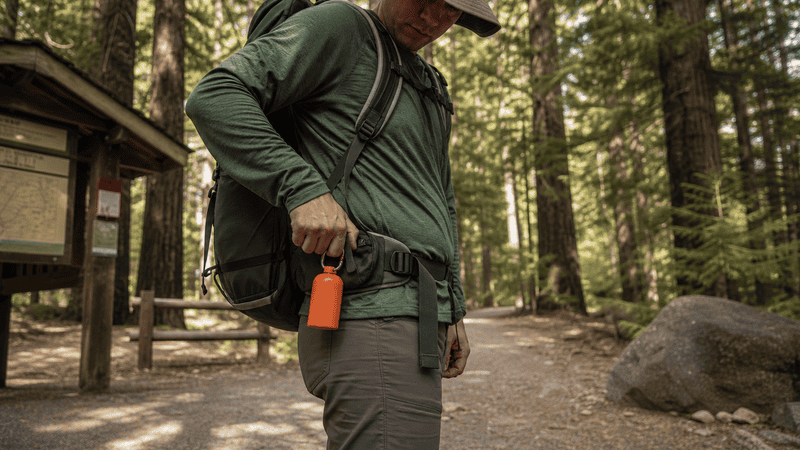
A few important caveats: bear spray only works if you can deploy it in time. That means carrying it where you can grab it in under two seconds — clipped to a hip belt or chest strap, not buried in your pack. And it works best in still air. Strong wind can push the spray back toward you, so wind direction matters when you deploy.
What’s the difference between bear spray and regular pepper spray?
This distinction matters, and it’s one of the most common points of confusion. Regular pepper spray designed for human threats is not the same as bear spray, and using the wrong one in the wrong situation is a serious mistake.
Bear spray is EPA-registered specifically as a bear deterrent. It contains a higher volume of capsaicin — typically 1% to 2% major capsaicinoids — and deploys from a much larger canister (at least 7.9 ounces, per EPA requirements) with a wider spray pattern and longer range. A standard personal-defense pepper spray canister is much smaller, has a shorter range, and isn’t formulated to stop a 400-pound animal in a full charge.
Conversely, bear spray should never be used as a substitute for personal defense pepper spray against human threats. The formulation, range, and delivery pattern are different. Each product is designed for a specific purpose. Carrying bear spray when you’re in bear country and having personal-defense pepper spray for everyday carry are two separate tools for two separate situations — and it’s worth having both if your life puts you in environments where each might be needed.
How far does bear spray shoot and how long does it last?
Most quality bear spray canisters have an effective range of 25 to 35 feet and a total spray duration of about 7 to 9 seconds. That might not sound like a lot, but a 7-second continuous burst is substantial when you’re creating a chemical fog barrier between yourself and a charging animal.
The range matters because you want to start deploying before the bear closes all the distance. Most wildlife experts recommend starting to spray when a charging bear is about 60 feet out — the cloud expands and hangs in the air, so by the time the bear reaches where you are, it’s running through a concentrated capsaicin barrier. Waiting until the bear is right on top of you significantly reduces the effectiveness and your reaction time.
Don’t test or practice-fire your canister. Every second of spray time is valuable, and partial discharge can also cause the safety mechanism to malfunction. Check the pressure gauge periodically — most canisters have a simple indicator — and replace any canister that has been discharged even partially, or any that’s more than four years old. Propellant degrades over time and affects both range and spray pattern.
When should you use bear spray — and when shouldn’t you?
Bear spray is designed for surprise encounters and aggressive or charging bears. It is not a deterrent to spray around your campsite like an insect repellent. Bears are attracted to scent, and some research suggests that bears are actually drawn to investigate residual capsaicin on surfaces. Spraying your tent or gear is not protective — it could have the opposite effect. This is a tool you deploy at a bear, in motion, in the moment of an encounter.
There are three types of bear encounters that play out differently, and it’s worth knowing the distinction. A surprise encounter at close range — where a bear is startled and charges defensively — is when bear spray is most effective and most appropriate. A predatory attack, which is rarer but more dangerous, may call for different responses entirely, including fighting back. A curious or food-conditioned bear approaching your camp is best handled by making noise, making yourself large, and backing away calmly — bear spray held ready, but not deployed unless the bear charges.
The best resource for understanding bear behavior specific to the area you’re visiting is the local ranger station or wildlife management office. They know what species are active, what behavior patterns are typical in that region, and what additional precautions make sense. Bear spray is your last line of defense. Understanding bear behavior is your first.
How should you store and carry bear spray safely?
Accessibility is everything. A bear spray canister buried at the bottom of your pack is effectively useless. Carry it in a hip holster clipped to your belt or pack’s hip strap so it can be drawn with one hand in under two seconds. Most canisters come with a holster — use it.
When you’re not on trail, store bear spray away from heat sources and out of direct sunlight. Don’t leave it in a hot car. Propellant expands with heat, and canisters can rupture at high temperatures. This is not something you want going off in an enclosed vehicle — even a fraction of a can deployed in a car cabin has sent people to the emergency room. Keep it cool, dry, and secure.
If you’re traveling by air, bear spray is not permitted in carry-on or checked baggage. Purchase it when you arrive at your destination or rent it from outfitters in bear country — many offer canister rentals specifically for this reason. Purchasing on arrival also means you’re starting with a fresh canister rather than one that’s been sitting for a year.
Frequently Asked Questions About Bear Spray
Is bear spray legal to carry everywhere in the United States?
Bear spray is legal in all 50 states when used as a wildlife deterrent. However, some states restrict or prohibit carrying it in national parks or other protected areas — and a few states have restrictions on aerosol defense sprays generally. Always check the specific regulations for the state and public lands you’re visiting before you go. When in doubt, contact the land management agency directly.
Can bear spray be used against mountain lions or other aggressive wildlife?
Yes. The same capsaicin-based formula that stops bears is also an effective deterrent against other aggressive wildlife, including mountain lions, wolves, and moose. The delivery principle is the same: spray toward the charging animal to create a chemical barrier it has to pass through. Bear spray’s range and wide spray pattern make it practical for large animals at close range.
How do I know if my bear spray canister is still good?
Check the expiration date printed on the canister — most have a 4-year shelf life. Also check the pressure gauge if your canister has one; it should show pressure in the green zone. If the safety clip is missing, the nozzle is damaged, or the canister has been partially discharged, replace it. Don’t trust a compromised canister in the field.
What should I do after using bear spray?
Move away from the area immediately — don’t wait to see if the bear recovers. Report the encounter to local wildlife authorities or park rangers as soon as you can. If you were sprayed yourself or received secondary exposure, flush your eyes and skin with large amounts of cool water and get to fresh air. Do not rub the affected area — it spreads the compound. Seek medical attention if symptoms are severe.
Does wind affect how bear spray works?
Yes, significantly. Spraying into a headwind can push the cloud back toward you and reduce the effective range. Ideally, aim slightly downwind or crosswind so the cloud carries toward the bear rather than back at you. In a real encounter, you may not have control over wind conditions — deploy anyway, but be aware you may receive some exposure yourself. That’s still a better outcome than not deploying.
Should I carry bear spray even in areas with low bear activity?
If you’re in habitat where bears have been documented — even occasionally — carrying bear spray is a reasonable precaution. Bears range widely and encounters can happen in areas with no recent sightings. The weight of a canister is modest compared to the reassurance it provides. Think of it the way you think of a first aid kit: you hope you never need it, and you’re very glad it’s there if you do.
Is one canister enough for a multi-day backpacking trip?
One canister per person is the standard recommendation for multi-day trips. Hiking in a group doesn’t mean one canister covers everyone — if an encounter happens, only the person who has the spray can deploy it, and they need to be able to reach it immediately. Each person in your group who could be separated from others at any point should carry their own canister.
Can I use bear spray that’s past its expiration date?
Not reliably. The propellant in aerosol canisters degrades over time, which can reduce both the range and the spray duration — two of the most critical factors in a bear encounter. An expired canister might still deploy, but you can’t count on it performing as labeled when it matters most. Replace expired canisters before any trip into bear country. It’s a small cost compared to the stakes.
Understanding bear spray — what it is, how it works, and how to carry it properly — isn’t about living in fear of the outdoors. It’s about going into the backcountry with accurate information and the right tools. The wilderness is worth exploring, and being prepared is what lets you enjoy it fully. If you’re heading into bear habitat, carrying bear spray is one of the most straightforward, well-documented safety decisions you can make. Take the time to learn your canister before you hit the trail — and then go enjoy the outdoors with your head up and your mind at ease.