The most powerful stun gun available isn’t the one with the biggest number on the package — and that’s exactly what most people never find out until it’s too late to matter. True stopping power in a stun gun comes down to amperage, not voltage, combined with how the device is built, how it fits in your hand, and whether you’ll actually have it with you when something goes wrong. A well-designed stun gun in the 4–6 milliamp range, with solid contact area and a reliable charge, will outperform a “90 million volt” novelty unit every single time.
Here’s the thing most stun gun listings quietly gloss over: voltage moves electricity through resistance — clothing, skin, muscle — but amperage is what the body actually responds to. The numbers most manufacturers advertise are peak output figures measured under ideal lab conditions, not what hits an attacker when you press that contact against a heavy jacket on a cold night. Understanding what’s behind the spec sheet reveals a completely different picture of which stun guns actually belong in the conversation about real power.
Why does voltage alone not determine how powerful a stun gun is?
Voltage is what most buyers look at first, and it’s the figure manufacturers know how to make sound impressive. 50 million volts. 80 million volts. 100 million volts. Those numbers trigger something instinctive — bigger sounds better. But here’s what those numbers actually represent: voltage is the pressure that pushes electricity through a material. High voltage is necessary to penetrate clothing and skin, yes. But once it’s inside the circuit, what counts is current — measured in milliamps.
Think of it this way. Water pressure gets water out of a nozzle. But the volume of water that actually comes through determines what it can do when it arrives. Voltage gets the electricity in. Amperage determines the effect. Even a fraction of an amp — properly delivered — disrupts neuromuscular function enough to drop a person to their knees. A stun gun with 4.5 milliamps of output and “only” 20 million volts will outperform a 100 million volt unit with 2 milliamps in a real-world scenario.
The reason this matters: many stun guns sold at the lower end of the market inflate voltage figures while quietly delivering minimal amperage. When you’re evaluating how many amps a stun gun actually delivers, you start to see why the spec sheet and the real-world result can be very different things.
What specifications actually matter when comparing the most powerful stun guns?
Three things separate a stun gun that works from one that sounds like it should work. Milliamp output. Contact spread. And sustained discharge time.
Milliamp output — sometimes listed as microamps in cheaper units — is the actual delivered current. Look for stun guns rated at 4 milliamps or higher. Some of the better units in this range come from brands like Streetwise and Police, both known for publishing honest amperage figures alongside voltage. When a manufacturer only lists voltage and leaves amperage off the spec sheet entirely, that should tell you something.
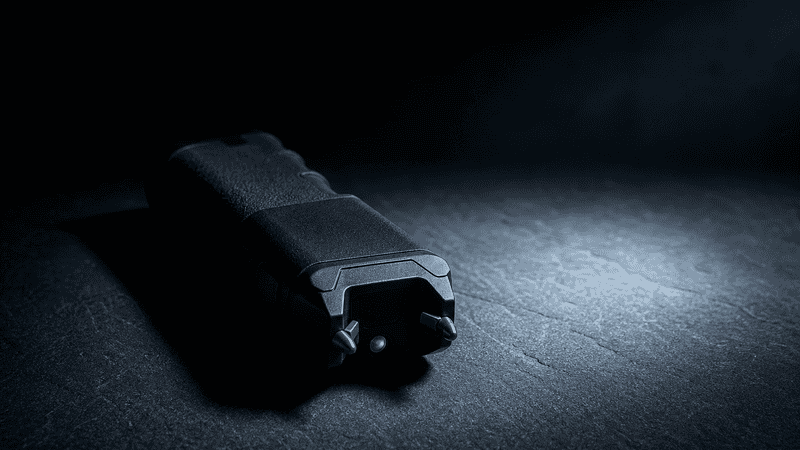
Contact spread refers to the distance between the two metal prongs that complete the electrical circuit on the target. A wider spread increases the chance of effective contact and affects how deeply the current reaches through layers of clothing. Units with prongs too close together may struggle to penetrate thick fabric. This is a subtle detail most listings never mention, but it matters considerably in cold weather states where attackers are wearing winter gear.
Sustained discharge time — how long the stun cycle runs and whether it stays consistent — determines whether you can deliver a full effective contact or whether the unit fades partway through. Rechargeable lithium battery units tend to hold voltage more consistently across a discharge cycle than alkaline-powered units. That consistency in a real confrontation is the difference between effective incapacitation and a device that only partially delivers.
Which stun gun brands are actually known for high power output?
Not all brands approach power the same way, and the honest answer is that what’s considered “most powerful” has less to do with name recognition than with the engineering behind specific models. That said, a few brands have built a reputation for publishing real specifications and delivering on them.
Streetwise consistently produces stun guns in the higher milliamp range and tends to be transparent about output figures. Their higher-end models have been among the most frequently recommended by people who test these devices against their advertised specs. Police brand stun guns similarly fall into the higher-output category, with some models specifically designed for maximum neuromuscular effect over a short contact window.
ZAP devices are engineered with a particular focus on discharge reliability, making them worth attention for buyers who want consistent output rather than peak-only figures. Bad Ass — a brand whose name is arguably more honest than most marketing copy in this category — builds stun guns designed around actual use scenarios rather than retail shelf appeal.
What you won’t find among those names: brands that lead with absurd voltage claims and hide amperage entirely. The most powerful stun guns available are the ones whose manufacturers are willing to tell you both numbers.
Does the form factor of a stun gun affect how powerful it is in practice?
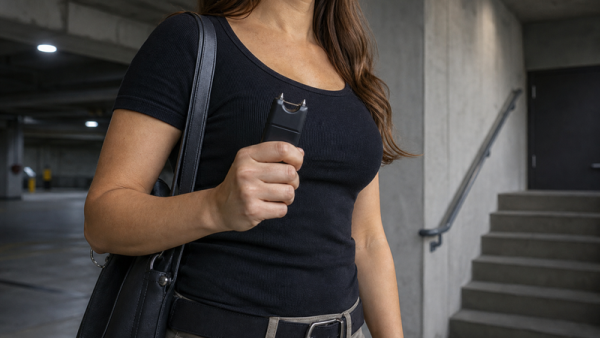
Here’s something that doesn’t show up on any specification sheet: the most powerful stun gun in the world does nothing in your glove compartment. Practical power includes portability. A device you’ll actually carry is infinitely more effective than one you won’t.
This is why form factor matters as much as voltage and amperage when you’re trying to answer this question honestly. A full-size stun baton may deliver exceptional output, but if you’re commuting through a city and your bag is already full, you won’t carry it. A compact unit — even one with slightly lower stated output — worn in a nylon holster on your hip or attached to your wrist with a wrist strap stun gun — is accessible when the moment arrives.
For people who navigate urban environments regularly, there’s a reason stun guns designed for commuters focus on carry comfort and accessibility alongside power output. A 5 milliamp unit in your hand beats a 7 milliamp unit in a bag you had to dig through. The most powerful stun gun, practically speaking, is the one that’s with you.
How does a stun gun compare to a TASER for stopping power?
TASER devices occupy their own category for one reason: they work at distance. A stun gun requires direct physical contact. A TASER fires probes that deliver current across a gap — typically 15 feet in consumer models — meaning the user never has to be within arm’s reach. That structural difference changes the entire equation of what “powerful” means.
TASER devices also deliver what’s called neuromuscular incapacitation, causing involuntary muscle lockup rather than just pain compliance. A stun gun’s effect depends heavily on contact quality, duration, and the individual’s pain threshold. TASER’s effect is more consistent across subjects because it interrupts motor signals rather than relying on sensory response. The tradeoff is size, cost, and the one-shot nature of the probe cartridge.
If you’re trying to understand where these two tools actually stand relative to each other — not just in power output but in practical application — the breakdown of TASER vs. stun gun for self-defense covers the distinctions that most comparison articles leave out.
What features separate a high-quality stun gun from a cheap imitation?
The market for stun guns contains a range that goes from genuinely effective tools to devices that make a convincing sound and deliver very little. Knowing the difference requires looking past the obvious.
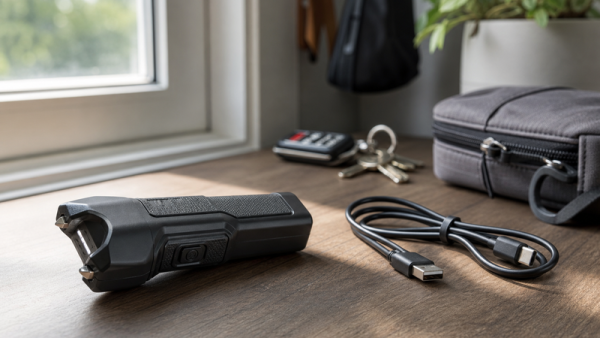
Build quality starts with the housing. Quality units use reinforced ABS plastic or aircraft-grade aluminum for the casing, not thin plastic that flexes under hand pressure. The contacts should be stainless steel or nickel-plated — not bare metal that corrodes and increases resistance over time. The charging system should be integrated (internal rechargeable battery) or use a standard battery type that’s easy to replace, not a proprietary format that becomes unavailable after six months.
Disable features matter more than most buyers realize. A wrist strap disable pin — standard on quality units — means that if the device is grabbed from your hand during a struggle, pulling away disables it instantly. It won’t be turned against you. This is not a minor feature. It’s a fundamental safety design element that cheap units typically omit entirely.
The arc test — firing the stun gun into open air to see and hear the discharge — tells you something, but less than people assume. A bright, loud arc looks impressive and sounds reassuring. What it doesn’t tell you is sustained milliamp delivery under resistance. A device that arcs dramatically in open air but fades quickly when pressed against resistance (clothing, skin) is a product designed to perform in a retail demonstration, not in actual use.
Is a stun gun that fits in a pocket or bag less powerful than a larger model?
Not necessarily — and this is one of the more interesting places where the mystique around “bigger equals stronger” quietly falls apart. Compact stun guns have improved dramatically in terms of output efficiency. Engineering that once required a device the size of a flashlight now fits into units small enough to pass for a lipstick stun gun or a standard key fob.
The tradeoff in very small units is typically battery capacity, which affects how many full discharge cycles you get before recharging — not the output per cycle. A compact rechargeable stun gun in the 4+ milliamp range will deliver the same practical incapacitation effect as a larger unit. It may cycle fewer times before needing a charge. For a personal defense tool that most people never need to fire more than once in a lifetime, that’s rarely a meaningful disadvantage.
What compact units can sacrifice is contact spread. Smaller housing means less distance between the prongs. For everyday carry in a temperate climate, this is rarely a problem. In cold weather regions where attackers wear heavy coats, a wider-contact unit may warrant the additional size.
Frequently Asked Questions About the Most Powerful Stun Guns
What is the highest voltage stun gun legally available?
Consumer stun guns are sold with voltage claims ranging from around 10 million up to 100 million volts or more. However, these figures are largely marketing — actual delivered voltage under real conditions is far lower. There is no federal legal ceiling on stun gun voltage in the U.S., though state and local regulations vary. Check your jurisdiction before purchasing any stun gun regardless of stated output.
Is 100 million volts actually more powerful than 50 million volts?
Not necessarily. Voltage figures on stun guns are peak ratings under ideal conditions, and manufacturers calculate them differently. What matters more is delivered amperage — typically in the 3–6 milliamp range for quality consumer units. A 50 million volt stun gun with 5 milliamps will outperform a 100 million volt unit with 2 milliamps in actual use. Focus on milliamps, not voltage numbers.
How many milliamps does a stun gun need to be effective?
Research on human response to electrical current suggests that milliamp levels starting around 3–5 milliamps cause significant neuromuscular disruption when delivered through direct contact. Most quality consumer stun guns operate in the 4–6 milliamp range. Anything below 3 milliamps may produce pain compliance without reliable incapacitation, particularly against larger individuals or those under the influence of substances.
Can a stun gun be used through clothing?
Yes — that’s a core requirement for any effective defensive stun gun. Quality units with sufficient voltage can penetrate up to about an inch of clothing, including denim, hoodies, and light winter layers. Thicker insulated jackets or multiple layers can reduce effectiveness. Contact spread between the prongs plays a role here: wider-spaced contacts penetrate layered clothing more reliably than closely spaced ones.
What is the difference between a stun gun and a TASER?
A stun gun requires direct physical contact to deliver its charge — you press it against an attacker’s body. A TASER fires probes on wires that deliver current from a distance, typically up to 15 feet in civilian models. TASERs cause neuromuscular incapacitation regardless of pain tolerance; stun guns rely more on pain compliance and close contact quality. TASERs are significantly more expensive and typically fire one shot before reloading.
Are stun guns legal to carry in all states?
No. Stun gun legality varies by state and sometimes by city or county. Most U.S. states permit civilian possession with few restrictions, but several states have historically banned or heavily restricted them. Laws also change. Always verify the current stun gun regulations in your specific state and locality before purchasing. We recommend checking your state attorney general’s website or a local attorney for current guidance.
Does a stun gun lose power if the battery isn’t fully charged?
Yes. Battery charge level directly affects output consistency. A partially depleted battery may still produce an arc and an audible discharge, but sustained milliamp delivery under resistance — against clothing and skin — will be reduced. For any stun gun you carry as a primary defense tool, keeping the battery at or near full charge is not optional maintenance. Rechargeable units should be topped off regularly, not just when the charge runs low.
What should I look for in a stun gun if I want maximum stopping power?
Prioritize milliamp output (4+ milliamps), wide contact spread between prongs, a rechargeable lithium battery with reliable charge retention, a disable wrist strap, and a form factor you will actually carry daily. A stun gun rated slightly lower that you carry consistently is more effective in practice than the highest-output unit sitting in a drawer or a glove box. Real stopping power includes the device being in your hand when it matters.
The most powerful stun gun isn’t a single product — it’s the right combination of genuine output, honest specs, dependable build quality, and the form factor that fits your actual life. The question isn’t which number is biggest on the packaging. It’s which device delivers when the moment is no longer hypothetical. If you want to understand how these tools compare side by side, knowing how to use a stun gun effectively is the other half of the equation that most buyers skip entirely. That knowledge, combined with the right device, is where real confidence comes from.