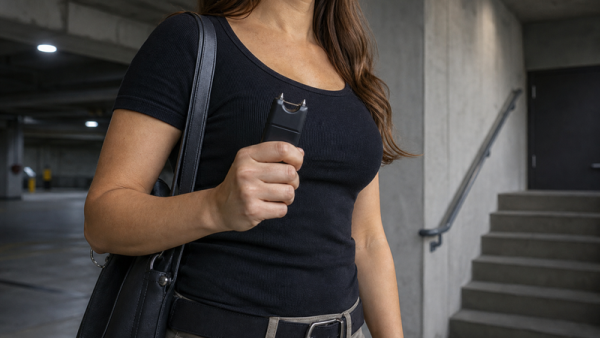
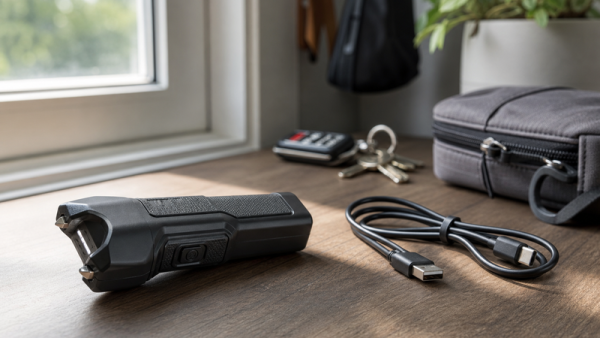
The best stun guns for everyday carry balance compact size with effective stopping power, ranging from 2-6 inch models that fit easily in pockets or purses. Top choices include mini flashlight stun guns (dual-purpose with 200-800 lumens), compact keychain models (3-4 inches, 2-6 ounces), and tactical units (5-7 inches for maximum output). Effective models deliver 50,000V to 3,000,000V, but actual stopping power depends on current (measured in milliamps), pulse duration, and electrode spacing—not voltage alone. Key priorities: one-handed activation, safety switch to prevent accidental discharge, rechargeable battery, and legal compliance in your jurisdiction. Most effective EDC stun guns weigh under 8 ounces, recharge quickly via USB, and include LED battery indicators. Always verify local laws before purchase—some areas restrict possession or require permits.
You’re walking to your car after an evening class. The parking lot is poorly lit, and you’re alone. You reach into your pocket and feel your stun gun—a simple device that could make the difference between a close call and a dangerous encounter.
Stun guns have become practical personal defense tools for millions of people who want non-lethal protection they can carry every day. Unlike firearms, they require no permits in most states, cause no permanent injury when used correctly, and demand minimal training to operate effectively under stress.
This guide examines the most effective stun guns for everyday carry (EDC)—focusing on compact designs, realistic stopping power, legal compliance, and practical features that matter when seconds count. We’ll cut through marketing claims about voltage and help you choose a device you’ll actually carry consistently.
What Makes a Stun Gun “Best” for Everyday Carry
The “best” stun gun isn’t necessarily the one with the highest voltage rating or the most intimidating appearance. The most effective EDC stun gun is one you’ll carry consistently, deploy confidently, and rely on to create an escape opportunity during a threat.
True effectiveness comes from a combination of measurable performance factors and practical usability. Marketing materials often emphasize multi-million volt ratings, but actual incapacitation depends on current (measured in milliamps), pulse duration, and how well the device delivers that energy through clothing to an attacker’s body.
Core Performance Criteria
Understanding these technical factors helps you evaluate stun guns objectively rather than falling for advertising hype:
Current output (milliamps): The actual electrical current that flows through the attacker’s body, typically 3-5mA for effective models. This determines neuromuscular disruption far more than voltage.
Pulse duration and frequency: Measured in milliseconds and Hertz respectively, these determine how effectively the electrical signal interferes with voluntary muscle control.
Electrode spacing: Wider spacing (measured in millimeters) creates a stronger electrical field between contact points, improving effectiveness through thick clothing.
Contact surface area: Larger or specially designed electrodes maintain better skin contact during a struggle, ensuring energy transfer isn’t interrupted.
Practical EDC Requirements
Technical specifications matter little if your stun gun stays at home because it’s too bulky or complicated. Everyday carry demands specific practical features:
Size and weight: Must fit comfortably in a pocket, purse, or on a belt without causing discomfort. Ideal EDC models weigh 2-8 ounces and measure 3-6 inches.
One-handed operation: You need to activate the device with your dominant hand while your other hand may be occupied or defending.
Intuitive controls: Under extreme stress, fine motor skills deteriorate. Activation must be simple—no complex sequences or hard-to-find buttons.
Safety features: A visible safety switch prevents accidental discharge in your pocket or bag while remaining quick to disengage when needed.
Reliability and Build Quality
Your EDC stun gun must function immediately when needed, potentially after months of being carried without use. Quality devices demonstrate:
Reliability Factor
What to Look For
Why It Matters
Drop resistance
Reinforced casing, protected electrodes
Survives accidental drops without damage
Battery performance
Holds charge 30+ days, visual indicator
Ready when needed after weeks unused
Weather resistance
Sealed electronics, corrosion-resistant contacts
Functions in rain, humidity, temperature extremes
Consistent output
Stable arc on repeated uses, fast recharge
Delivers full power on second/third activation
Premium models include warranties of 1-3 years and offer replacement parts—indicators of manufacturer confidence in long-term reliability.
Compact Stun Guns: Balancing Size and Stopping Power
Compact stun guns represent the sweet spot for most everyday carriers—small enough to disappear in a pocket or small purse, yet powerful enough to incapacitate an attacker long enough for you to escape to safety.
These devices typically measure 3-4 inches in length and weigh 2-6 ounces. Despite their reduced size, modern compact units deliver effective electrical pulses through optimized electrode placement and efficient circuitry that maximizes battery output.
Typical Compact Specifications
Most quality compact EDC stun guns share these characteristics:
Dimensions: 3-4 inches long, 1-1.5 inches wide, 0.5-1 inch thick—comparable to a smartphone but lighter
Weight: 2-6 ounces, light enough to carry all day without noticing
Power source: Rechargeable 3.7V lithium-ion battery with USB charging, full charge in 2-4 hours
Output ratings: Advertised voltage 50,000V to 1,000,000V, actual effective current 3-5mA
Battery life: 30-90 day charge retention when unused, 50-100 activations per charge
Design Features That Matter
Compact models succeed through thoughtful design rather than raw power. Look for these practical features:
Textured grip: Rubberized or grooved surfaces prevent the device from slipping during high-stress deployment or if your hands are sweaty.
Built-in clip or holster: Allows secure attachment to belt, waistband, or bag strap for instant access without fumbling through contents.
LED battery indicator: Shows charge status at a glance—critical for maintaining readiness without constantly testing the device.
Positive safety mechanism: A clearly visible and tactile switch that requires deliberate action to disengage, preventing pocket activation.
Wrist strap attachment point: Helps retain the device during a struggle and prevents it from being taken by an attacker.
Performance Trade-Offs
Compact size inevitably means some compromises compared to larger tactical models. Understanding these helps set realistic expectations:
Aspect
Compact Model
Full-Size Model
Continuous discharge
3-5 seconds maximum
10-20 seconds sustained
Electrode spacing
1-2 inches typical
2-4 inches for stronger field
Recharge frequency
Every 30-45 days with testing
Every 60-90 days
Concealability
Fits front pocket easily
Requires bag or belt holster
For most users, these trade-offs are worthwhile—a compact stun gun you carry every day beats a powerful unit left at home because it’s too bulky.
Ideal Users for Compact Models
Compact stun guns excel for specific use cases and user profiles:
Urban commuters: Walking between parking lots, transit stops, and buildings in populated areas where quick access matters more than maximum power
Students: Campus environments where discretion is important and the device needs to fit in small bags or jacket pockets
Runners and walkers: Exercise routes where lightweight, non-burdensome protection increases the likelihood of consistent carry
Professionals in low-threat environments: General personal safety backup rather than high-risk security work
High-Voltage Options: When Maximum Output Matters
High-voltage stun guns prioritize maximum incapacitation capability over compact size. These devices suit users who face higher-risk environments, need to stop larger or potentially drug-affected attackers, or work in security roles where carrying a larger device is acceptable.
Despite marketing claims about multi-million volt outputs, the key advantage of these units isn’t voltage alone—it’s the combination of higher sustained current, wider electrode spacing, and larger battery capacity that delivers more reliable and prolonged neuromuscular disruption.
When to Choose High-Voltage Units
These larger devices make sense in specific circumstances:
High-risk occupations: Security guards, property managers in challenging areas, or late-night workers in isolated locations where threats may be more determined
Rural or isolated environments: Where help is distant and you may need to create more time to reach safety or summon assistance
Physical size disadvantages: Smaller individuals facing potential attackers with significant size, strength, or weight advantages
Vehicle or bag carry: When you don’t need pocket portability and can dedicate space to a larger defensive tool
Extended discharge duration: Larger batteries support 10-20 seconds of continuous output versus 3-5 seconds for compact models, allowing repeated applications if needed
Wider electrode spacing: Typically 2-4 inches between contact points creates a stronger electrical field that penetrates thick clothing more effectively
Higher effective current: Despite “voltage” branding, the real advantage is sustained current delivery (4-6mA) that more reliably disrupts voluntary muscle control
Robust construction: Reinforced housings and electrode mounts withstand impacts and rough handling better than compact units
Intimidation factor: Visible arcing and audible snap can de-escalate situations before physical contact becomes necessary
Physical Specifications
High-voltage EDC stun guns typically feature these dimensions:
Specification
Typical Range
Impact on Use
Length
5-7 inches
Requires holster or bag carry
Weight
6-12 ounces
Noticeable on belt, manageable in bag
Battery capacity
1500-3000mAh
Longer runtime, slower charging
Advertised voltage
1,000,000V – 10,000,000V
Marketing metric, not performance indicator
The increased size means these devices won’t disappear in a pocket, but the trade-off delivers significantly more stopping capability when needed most.
Important Considerations
Before choosing a high-voltage model, account for these factors:
Legal restrictions: Some jurisdictions limit maximum voltage output or electrode length. Always verify local statutes before purchase—higher-output devices face stricter regulation in certain areas.
Carry method: Plan how you’ll carry the device daily. Larger units require dedicated belt holsters, bag compartments, or vehicle storage rather than pocket carry.
Training needs: Bigger devices require more practice to deploy smoothly, especially grip transitions and targeting under stress.
Overkill scenarios: In some low-threat environments, maximum power may be unnecessary and the bulk reduces carry consistency.
Multi-Function Flashlight Stun Guns: Two Tools in One
Multi-function stun guns combine LED flashlight capability with electroshock defense in a single device. This integration addresses a fundamental EDC principle—you’re far more likely to carry one dual-purpose tool than two separate items.
The flashlight function provides legitimate everyday utility for navigation, finding items, and checking surroundings, while the stun capability remains available if a situation escalates. This combination particularly suits night commuters, evening exercisers, and anyone who regularly navigates poorly lit environments.
Dual-Function Advantages
Combining illumination with defense creates several practical benefits:
Everyday utility increases carry likelihood: When a device serves a regular non-defensive purpose (lighting your path, finding keys), you naturally carry it more consistently
Situational awareness: The flashlight lets you identify potential threats from a distance, avoid hazards, and project confidence that deters opportunistic attackers
Temporary disorientation: A bright LED beam (200-800 lumens) directed at someone’s face causes temporary vision impairment, buying crucial seconds
Non-escalation option: You can use the light to assess situations without immediately deploying a defensive tool
Reduced carry burden: One device replaces both a flashlight and stun gun, freeing pocket or bag space
Key Specifications to Evaluate
When choosing a flashlight stun gun combination, assess both functions independently:
Feature Category
What to Look For
Why It Matters
Lumen output
200-800 lumens (higher is better)
Adequate illumination and effective disorientation capability
Beam pattern
Adjustable focus or balanced flood/spot
Versatility for close navigation and distance scanning
Light runtime
2-4 hours continuous on full charge
Functions as practical flashlight, not just token feature
Shock output
Similar specs to standalone stun guns
Defensive capability isn’t compromised by dual design
Mode switching
Separate buttons or clear tactile differences
Prevents accidental shock when wanting light only
Premium models include multiple light modes (high, low, strobe) and emergency SOS functions that add versatility without complexity.
Form Factor Options
Flashlight stun guns come in two primary designs, each suited to different preferences:
Tactical flashlight body (5-7 inches): Resembles a professional flashlight with electrodes at the bezel end. Provides excellent grip, maximum lumen output, and familiar handling for those experienced with tactical lights. Requires holster or bag carry.
Compact torch design (3-4 inches): Shorter profile fits pockets while maintaining dual functionality. Lower lumen output (typically 120-300) but adequate for most EDC needs. Often includes belt clip for immediate access.
Operational Considerations
Using a dual-function device effectively requires understanding mode transitions:
Separate activation controls: Best designs use different buttons for light versus stun, preventing accidental discharge when you only need illumination
Grip positioning: Practice holding the device to quickly transition from light mode to contact-ready stun position without fumbling
Light-then-stun sequence: In threatening situations, the light allows assessment and may de-escalate before stun becomes necessary
Training for transitions: Spend time practicing switching between modes to build muscle memory for stress situations
Ideal User Scenarios
Multi-function units particularly suit these situations:
Night shift workers: Regular need for illumination plus defensive backup during late commutes
Dog walkers: Lighting for evening walks plus protection from aggressive animals or people
Urban commuters: Navigation through parking structures, alleys, and transit areas where lighting is poor
Travelers: Hotel stays, unfamiliar cities, and rental property environments where both functions provide security
Minimalists: Those who prefer carrying fewer items and value multi-purpose tools
How Stun Guns Incapacitate Attackers: Realistic Expectations
Understanding exactly how stun guns affect an attacker helps set realistic expectations and informs effective deployment. Unlike Hollywood portrayals, stun guns don’t render attackers unconscious or cause instant collapse—they create a window of opportunity for escape through temporary neuromuscular disruption.
This section explains the actual physiological mechanism and helps you understand what to expect when deploying a stun gun in a real defensive situation.
The Electroshock Mechanism
Stun guns deliver high-voltage, low-current electrical pulses that interfere with the body’s nervous system:
Peripheral nerve disruption: The electrical pulse overwhelms the attacker’s peripheral nerves with unintended signals, causing involuntary muscle contractions and intense localized pain at the contact point
Voluntary motor control interference: The electrical signal temporarily interrupts the attacker’s ability to coordinate voluntary movements, creating confusion and loss of muscle control
Sensory overload: The intense electrical stimulation floods sensory pathways, causing disorientation and making it difficult for the attacker to focus on continuing the assault
No permanent damage: The low current (typically 3-5 milliamps) causes no lasting tissue damage when devices function as designed, unlike higher amperage that can affect cardiac function
Immediate Effects During Contact
When properly applied, a stun gun produces these immediate responses:
Contact Duration
Typical Effects
Tactical Outcome
0.5-1 second
Intense pain, muscle contraction at contact point
Attacker startled, may pause or recoil
1-2 seconds
Increased pain, loss of balance, confusion begins
Creates opportunity to break free and retreat
3-5 seconds
Significant muscle control loss, disorientation, possible falling
Maximum recommended contact time for escape
Most experts recommend 2-3 second applications—enough to create an escape opportunity without excessive exposure that might raise legal questions about proportional response.
Post-Contact Recovery Time
After stun gun contact ends, recovery varies significantly based on several factors:
Contact quality and duration: Solid electrode contact for 3-5 seconds produces effects lasting several minutes; brief or poor contact may cause only momentary disruption
Individual physiology: Body composition, nervous system sensitivity, and pain tolerance vary considerably between individuals
Substance influence: Drugs or alcohol significantly reduce effectiveness—some stimulants can nearly negate stun gun effects
Clothing thickness: Heavy coats, leather, or multiple layers reduce electrical transfer and diminish neuromuscular disruption
Attacker determination: Highly motivated or enraged attackers may push through effects that would stop others
Typical recovery ranges from immediate (under poor contact conditions) to 5-30 minutes for maximum exposure with good contact. Plan for the low end of this range—assume you have seconds to create distance, not minutes.
What Stun Guns Don’t Do
It’s equally important to understand the limitations and myths:
Don’t cause unconsciousness: Stun guns don’t “knock out” attackers or render them completely incapacitated like in movies
Don’t work through air: Contact with the attacker’s body is required—there’s no “stun at a distance” capability
Don’t guarantee stopping every attacker: Some individuals, particularly under substance influence, may continue attacking despite stun gun application
Don’t replace situational awareness: Your best defense remains avoiding dangerous situations when possible and maintaining awareness of your surroundings
Maximizing Effectiveness in Real Scenarios
To optimize your stun gun’s stopping capability:
Target large muscle groups: Torso, shoulders, upper legs offer larger contact areas and more nerve density than extremities
Maintain firm contact: Press the electrodes solidly against the attacker—don’t just tap or make glancing contact
Hold for 2-3 seconds: This duration balances effectiveness with the need to immediately create distance
Escape immediately: The instant you create an opportunity, disengage and move to safety while calling for help
Be prepared for multiple applications: If the attacker recovers and pursues, you may need to apply the stun gun again
Mini Stun Guns: Maximum Discretion for Daily Carry
Mini stun guns represent the smallest category of EDC electroshock devices, prioritizing ultimate concealability and accessibility over maximum power output. These devices typically measure 2-3 inches and weigh under 3 ounces—small enough to attach to keychains, disappear in small pockets, or hide completely in your palm.
Despite their diminutive size, quality mini models still deliver effective neuromuscular disruption through optimized electrode design and efficient pulse circuitry that maximizes output from compact batteries.
Why Choose Mini Models
The smallest stun guns offer unique advantages for specific users and situations:
Zero carry burden: So lightweight and compact you genuinely forget they’re present until needed
Maximum discretion: Don’t create visible bulges in tight clothing or draw attention in social situations
Keychain accessibility: Always attached to something you already carry, eliminating the chance of leaving it behind
Reduced intimidation perception: Less likely to escalate situations through visible presence of defensive tools
Secondary backup: Can supplement a larger primary defensive tool without adding significant weight or bulk
Design Features Specific to Mini Models
Manufacturers optimize mini stun guns through specialized design approaches:
Keychain integration: Built-in attachment rings or clips that secure to key rings, bag clips, or belt loops for instant access
Palm-concealable grips: Ergonomic shapes that fit naturally in your hand while keeping electrodes exposed for contact
Simplified controls: Single-button activation or slide-switch operation—no complex sequences when fine motor skills deteriorate under stress
Rechargeable micro-USB: Charging ports that use universal cables for convenience, though battery capacity remains limited by size
LED indicators: Visible battery status and activation confirmation despite minimal surface area for displays
Performance Reality Check
Mini stun guns involve clear performance trade-offs that buyers must understand:
Performance Factor
Mini Model Reality
Full-Size Comparison
Discharge duration
1-3 seconds per application
10-20 seconds sustained output
Electrode spacing
0.5-1 inch (minimal)
2-4 inches for stronger field
Battery capacity
20-40 activations per charge
50-150 activations typical
Charge retention
15-30 days unused
60-90 days standard
Effectiveness through clothing
Reduced through thick layers
Better penetration capability
The core principle remains valid: a mini stun gun you carry constantly is infinitely more useful than a powerful unit left at home because it’s too bulky.
Optimal Use Cases for Mini Models
Mini stun guns excel in specific scenarios where discretion outweighs maximum power:
Runners and fitness enthusiasts: Exercise wear with minimal pockets where even compact models feel burdensome
Formal event attendance: Business meetings, date nights, or dressy occasions where visible defensive tools seem inappropriate
Supplementary protection: Adds an additional defensive layer for those already carrying pepper spray or other tools
Travel convenience: Minimal size and weight for luggage, though always verify airline and destination laws
Everyday errands: Quick trips where grabbing keys automatically means defensive capability comes along
Special Considerations for Women’s EDC
Mini stun guns particularly appeal to women due to design factors that address specific carry challenges:
Purse accessibility: Small enough to keep in a dedicated purse pocket with reliable access, unlike larger units that sink to the bottom of bags
Small hand ergonomics: Grip sizes proportioned for smaller hands ensure confident control during deployment
Fashion compatibility: Won’t create obvious bulges in fitted clothing or formal wear where concealed carry is challenging
Reduced stigma: Keychain attachment makes the device appear more innocuous in social or professional settings
Color and finish options: Some manufacturers offer less tactical aesthetics that reduce the “aggressive tool” perception
Maintenance and Reliability
Mini models require more frequent attention due to limited battery capacity:
Weekly charge checks: Battery indicators should be verified more frequently than full-size units
Monthly function tests: Brief test activations confirm the device remains operational
Electrode inspection: Smaller contact points are more susceptible to corrosion or debris buildup
Keychain wear monitoring: Attachment points and case integrity deserve regular inspection if the device experiences constant movement
Maintenance Requirements and Legal Considerations
Effective stun gun ownership extends beyond the initial purchase decision. Regular maintenance ensures your device functions when needed, while understanding legal requirements keeps you compliant and protects you from criminal liability.
Essential Maintenance Schedule
Maintain your stun gun’s reliability through consistent upkeep:
Monthly function tests: Activate the device briefly (0.5-1 second arc) in a safe environment to confirm it produces a visible arc and audible snap. Do this away from people, pets, and flammable materials.
Battery health monitoring: Check the charge indicator monthly. Most stun guns should maintain charge for 30-90 days depending on model. Recharge when the indicator shows low or yellow status.
Electrode inspection: Every 3-6 months, examine electrode contacts for corrosion, carbon buildup, or physical damage. Clean gently with rubbing alcohol and a cotton swab if needed.
Physical casing checks: Inspect the housing for cracks, loose components, or damage that might expose internal electronics to moisture or compromise structural integrity.
Safety mechanism verification: Test that the safety switch engages and disengages properly. A safety that doesn’t reliably prevent activation creates a pocket discharge risk.
Proper Storage Practices
Where and how you store your stun gun affects reliability and safety:
Storage Factor
Best Practice
Why It Matters
Safety position
Always store with safety engaged
Prevents accidental activation and injury
Temperature range
40-85°F ideal; avoid extreme heat/cold
Protects battery life and electronic components
Moisture protection
Dry environment, not in bathrooms
Prevents corrosion and electrical shorts
Child access prevention
Secured location or locked container
Legal requirement in many jurisdictions
Carrying compartment
Separate from keys, coins, metal objects
Prevents damage to electrodes and accidental bridging
Never store stun guns in vehicles long-term—extreme temperature fluctuations degrade batteries and can warp plastic housings.
Battery Replacement and Lifespan
Most modern EDC stun guns use rechargeable lithium-ion batteries with finite lifecycles:
Expected lifespan: 300-500 charge cycles over 2-5 years depending on usage frequency and care
Degradation signs: Reduced charge retention (needs recharging more frequently), longer charging times, or visible battery swelling
Replacement options: Some manufacturers offer battery replacement services; others require purchasing a new unit when the battery fails
Disposal: Lithium-ion batteries require proper recycling—never throw them in regular trash. Check local electronics recycling facilities.
Legal Compliance: Critical Requirements
Stun gun laws vary dramatically by location. Non-compliance can result in criminal charges, even if you never use the device.
Jurisdictional Restrictions
Before purchasing or carrying a stun gun, verify regulations at multiple levels:
State laws: Some states prohibit civilian stun gun possession (Hawaii, Rhode Island, U.S. Virgin Islands historically restricted). Others allow possession but regulate carry methods or require permits.
Municipal ordinances: Cities and counties may impose stricter rules than state law. Major metropolitan areas often have additional requirements.
Federal property restrictions: Stun guns are typically prohibited in federal buildings, airports beyond security checkpoints, and on aircraft regardless of local laws.
Private property rights: Businesses, employers, and property owners can prohibit stun guns on their premises regardless of state law.
Common Legal Requirements
In jurisdictions where stun guns are legal, you may encounter these typical regulations:
Age minimums: Usually 18 or 21 years old for legal possession
Prohibited persons: Felons, those convicted of assault or domestic violence, and individuals with certain mental health adjudications often cannot possess stun guns
Concealed carry rules: Some states require permits for concealed carry even when open carry is permitted
Notification requirements: Certain jurisdictions require notifying law enforcement if you carry a stun gun
Use of force standards: Deploying a stun gun must meet legal self-defense criteria—reasonable fear of imminent harm and proportional response
Documentation to Maintain
Protect yourself legally by keeping proper records:
Purchase receipt: Proves legal acquisition and provides date of ownership if questioned
Product manual: Contains manufacturer specifications and safety warnings that may be relevant if use is questioned
Serial number record: Note and store separately in case the device is stolen or lost
Permit or license: If your jurisdiction requires one, carry it whenever you have the stun gun
Legal Use Principles
Understanding when stun gun use is legally justified protects you from criminal and civil liability:
Reasonable fear standard: You must have genuine belief that you face imminent physical harm
Proportional response: Stun gun use must be proportional to the threat—not justified for verbal confrontations or property disputes
Duty to retreat: Some jurisdictions require attempting to escape before using defensive force if safely possible
Immediate cessation: Stop using the stun gun once the threat ends or you can safely escape
Report to authorities: In most cases, you should report defensive stun gun use to police to establish your version of events
Conclusion
Selecting the best stun gun for everyday carry requires balancing multiple factors: concealability, stopping power, reliability, legal compliance, and most importantly—whether you’ll actually carry it consistently. The most powerful device is worthless if it stays at home because it’s too bulky or complicated.
For most everyday carriers, compact models (3-4 inches) or multi-function flashlight stun guns provide the ideal combination of discretion and effectiveness. These devices fit easily in pockets or small bags, deliver sufficient neuromuscular disruption for most defensive scenarios, and include practical features like USB charging and LED indicators that make them easy to maintain.
Remember that stun guns serve one purpose: creating an escape opportunity, not subduing an attacker indefinitely. The moment you create distance, your priority shifts immediately to reaching safety and contacting authorities. Regular maintenance, legal compliance, and realistic expectations about what these devices can accomplish will ensure your stun gun serves as a reliable defensive tool when you need it most.
Disclaimer: This article provides general information about stun guns for educational purposes. Laws governing stun gun possession, carry, and use vary by jurisdiction. Always verify current local, state, and federal regulations before purchasing or carrying any electroshock device. The information provided does not constitute legal advice. Consult with a qualified attorney regarding specific legal questions. Stun guns are intended only for lawful self-defense purposes.
Frank Masters
Frank Masters has spent the last 20 years in the self-defense industry after leaving the corporate world to pursue a passion he discovered while working gun shows on weekends. For five years, he traveled the country meeting customers face-to-face at gun and trade shows, learning what people truly wanted to feel safer and more prepared. Fifteen years ago, he brought that experience online by launching his own self-defense website. Today, Frank combines decades of hands-on industry knowledge with a genuine passion for helping people protect themselves and their loved ones.