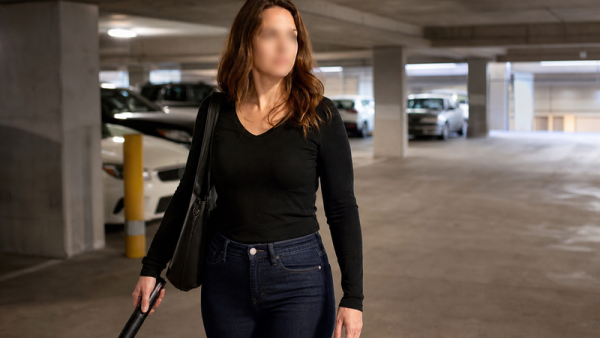
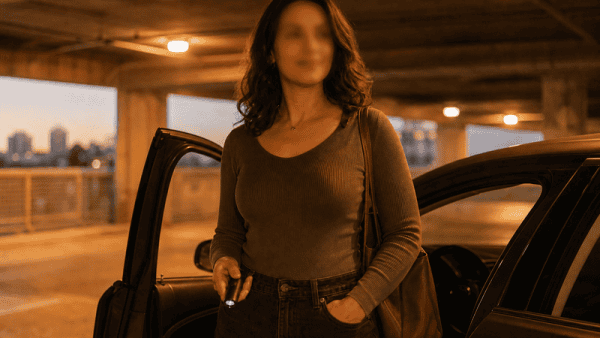
The safety habits that actually make a difference when walking alone at night aren’t the ones most articles mention. It’s not just “stay aware” or “trust your gut” — it’s specific, testable habits like varying your route unpredictably, positioning your phone as a communication tool instead of a distraction, and carrying a tool you’ve actually practiced using under stress. Awareness matters, but awareness without a plan is just anxiety. The real difference comes from combining predictable habits (route planning, lighting choices) with unpredictable ones (varying timing, carrying tools an attacker can’t anticipate).
Here’s something almost nobody says out loud: most night-safety advice is recycled from the same five bullet points, repeated on every blog since 2015. Walk with confidence. Stay off your phone. Trust your instincts. Good advice, technically. But it’s incomplete — and in some cases, it’s actually backwards.
The habits that make a real difference when you’re walking alone at night in a city aren’t the ones that sound good in a listicle. They’re the ones built around how threats actually behave, not how we assume they behave. This post breaks from the script. If you’ve read the standard safety tips a hundred times and still feel like something’s missing, that’s because something is.
Why doesn’t “just be aware” actually work as safety advice?
“Be aware of your surroundings” is the most common night-safety tip — and it’s almost useless on its own. Awareness without a specific behavior attached to it is just background anxiety. It doesn’t change what you do; it just makes you feel like you’re supposed to be doing something.
Real awareness has to convert into action before it matters. That means deciding in advance: if I see someone matching my pace from half a block back, I cross the street here, not there. If a car slows near me, I turn and walk toward lit businesses, not deeper into a quiet block. These are pre-made decisions, not in-the-moment awareness — because in the moment, adrenaline narrows your thinking. The innovation here isn’t a new gadget. It’s shifting from vague vigilance to specific, rehearsed responses.
What’s the one habit almost nobody mentions that actually throws off predators?
Unpredictability. Most safety content focuses on what to do during an incident. Almost none of it focuses on making yourself a harder target before anything starts — and the single most overlooked way to do that is breaking your own patterns.
People who study predatory behavior consistently point to one thing: opportunistic threats look for predictability. Same route, same time, same distracted posture every night. If you walk the same path home from the train at 11:15 every night, you’ve unintentionally published a schedule. Varying your route, even slightly, and varying your timing by ten or fifteen minutes removes the one thing that makes you an easy, “safe” target to plan around. This costs nothing and takes no gear — it’s just a mental habit most people never think to build.
Is your phone actually helping you or making you more vulnerable at night?
Both, depending on how you use it — and this is where most advice gets it backwards. “Put your phone away” is common advice, but a phone used correctly is one of the most effective safety tools you own. The problem isn’t the phone. It’s using it as a distraction instead of a tool.
A phone held in your hand, unlocked, with a location-sharing app already open to a trusted contact, is a completely different object than a phone buried in a bag while you scroll social media. The innovation isn’t ditching your phone — it’s changing the relationship you have with it during a walk. Share your live location before you start walking, not after something feels wrong. Keep it visible and ready, not stashed. Treat it like a tool you’re actively using, not a distraction you’re passively consuming.
That said, a phone alone isn’t a complete plan. Pairing it with a physical deterrent — something loud, something that doesn’t rely on cell signal or a charged battery — closes the gap a phone can’t. A personal alarm or pepper spray gives you a backup that works even if your phone doesn’t.
What self-defense tool actually makes sense for walking alone, versus what sounds impressive?
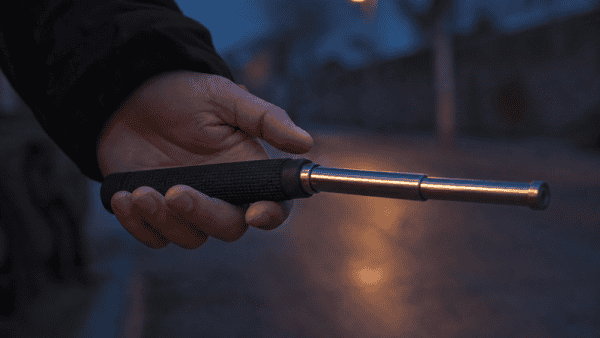
This is where most recommendations fail. People gravitate toward whatever sounds the most powerful, not what’s actually usable at 11 PM with cold hands and adrenaline running. A tool you haven’t practiced with, buried at the bottom of a bag, isn’t a safety tool — it’s a false sense of one.
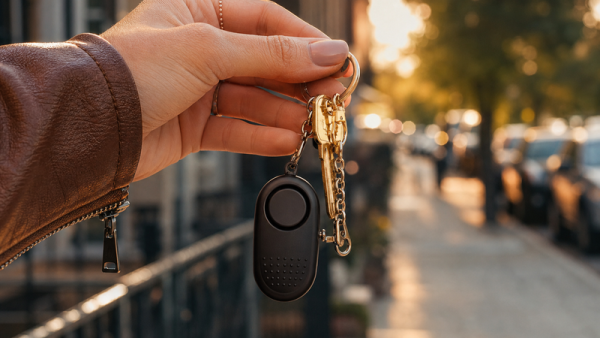
The more useful question isn’t “what’s the strongest option” — it’s “what can I access and use in under two seconds, without thinking.” For a lot of people walking alone at night, that’s a compact self-defense tool built for real-world use, not a drawer. A keychain-sized 130dB personal alarm works because it requires zero aim and zero decision-making under pressure — you just pull it. A compact pepper spray like Wildfire pepper spray works for people comfortable with a slightly more involved response. And for some, a discreet stun device like a Streetwise Strikelight 2 makes sense because it doubles as a flashlight — something you’d already be carrying anyway, which means it never looks out of place in your hand.
The unconventional insight here: the best tool isn’t the most powerful one. It’s the one that matches how you’ll actually be holding your hands, your bag, and your attention on a real night, not a practice range.
Does carrying a visible deterrent actually change anything, or is that outdated advice?
It depends entirely on what “visible” means — and this is another spot where old advice hasn’t caught up. Overt, obvious self-defense posturing (holding pepper spray out like a weapon the whole walk) can actually escalate tension rather than prevent it. But quiet, confident visibility — a personal alarm clipped where it’s noticeable, a posture that signals awareness — works differently than aggression. It signals “not an easy target” without signaling confrontation.
This same logic shows up in home and property security, and it’s worth borrowing from. Just like visible security cameras deter differently than hidden ones, visible personal safety tools deter differently than concealed ones. A clip-on alarm in plain sight changes the calculation for someone sizing you up. It’s not about looking armed — it’s about looking prepared, which is a completely different signal.
What’s a night-safety habit that sounds unnecessary but actually matters?
Pre-deciding your “no” moments. Most people never think through, in advance, the specific situations where they’ll say no without negotiating — someone asking for directions who gets too close, someone offering a ride, someone insisting on walking you “for safety.” Without a pre-made decision, these moments get processed in real time, and real-time processing under social pressure almost always defaults to politeness over instinct.
The fix is oddly simple and almost nobody teaches it: decide now, in a calm moment, exactly which situations get an immediate, unapologetic “no” — and what your body does next. Cross the street. Head toward a lit business. Activate an alarm. Deciding in advance removes the hesitation gap where most bad outcomes actually happen.
Frequently Asked Questions About Walking Alone at Night
Is it actually safer to walk with headphones in or completely without them?
Completely without them, or with only one ear in at low volume. Headphones reduce your ability to notice footsteps, approaching vehicles, or verbal warnings from others. If you want music or a podcast, keep one ear free and volume low enough that ambient street sound still comes through clearly.
What’s the most overlooked safety habit for walking alone at night?
Varying your route and timing. Most safety advice focuses on in-the-moment reactions, but predictability is what makes someone an easy target in the first place. Breaking your pattern — different streets, different times — removes the ability for anyone to plan around your routine.
Should I keep my phone in my hand or in my pocket while walking at night?
In your hand, unlocked, with location sharing already active — not buried in a bag or pocket. A phone you have to dig for during an incident is far less useful than one you’re already holding and actively using as a tool.
Is pepper spray or a personal alarm better for walking alone at night?
They serve different roles, and many people carry both. A personal alarm requires no aim, creates immediate noise, and often ends a situation before it escalates. Pepper spray offers a more direct response but requires a clear shot and calm hands. This comparison breaks down which fits your situation.
Does walking with confidence actually reduce risk, or is that a myth?
It’s not a myth, but it’s incomplete advice. Confident posture and steady pace do signal “not an easy target” to opportunistic threats. But confidence alone isn’t a plan — pairing it with a real tool and pre-decided responses is what actually changes outcomes.
What’s a realistic self-defense tool for someone who’s never carried one before?
A compact personal alarm is the easiest starting point — no aim, no training required, just pull the pin and it’s loud. From there, many people add a compact pepper spray once they’re comfortable. This guide walks through options by comfort level and situation.
Should I always share my location with someone when walking alone at night?
Yes, and do it before you start walking, not partway through if something feels off. Live location sharing with a trusted contact costs nothing, takes ten seconds, and means someone already knows where you are if your plans change unexpectedly.
Is it better to stick to well-lit main streets even if the route is longer?
In almost every case, yes. A longer, well-lit, populated route is safer than a shorter, dark shortcut. Lighting and visibility reduce opportunity for anyone looking to act unnoticed, and a slightly longer walk is a small tradeoff for that reduced risk.
Most night-safety advice hasn’t changed in a decade, even though it was never quite complete to begin with. The habits that actually matter aren’t complicated — they’re just different from what gets repeated. Vary your patterns. Use your phone as an active tool, not a distraction. Carry something you’ve actually practiced with, not something that just sounds strong. And decide your responses before you need them, not in the moment you do.
If you’re ready to build a kit around habits that actually work, take a look at personal alarms and pepper spray options built for real carry, not just a drawer.