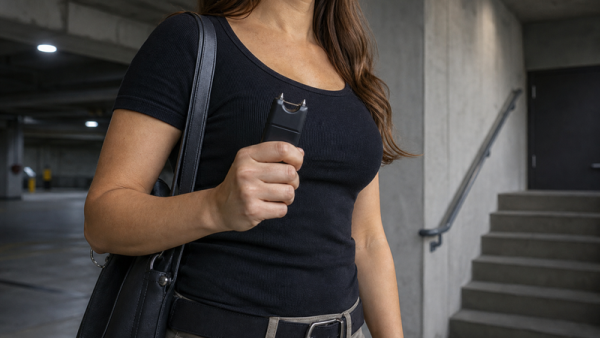
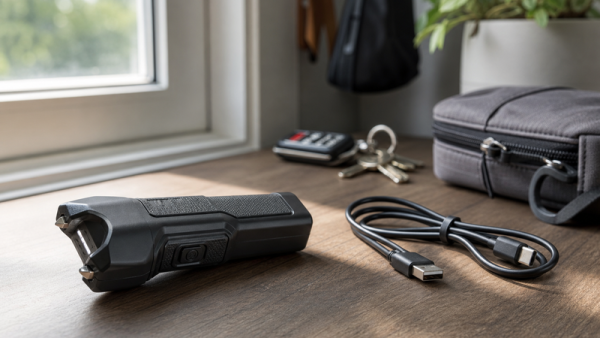
For most people, a rechargeable stun gun is the better long-term choice — it costs less to own over time, it’s always ready to go without a last-minute battery run, and it removes one of the most common reasons people find their stun gun dead when they actually need it. That said, battery-powered stun guns have real advantages in specific situations, and the honest answer is that the best one for you depends on how you carry, where you go, and how much you’ll realistically stay on top of maintenance.
Why does the power source on a stun gun actually matter?
It matters more than most people expect — not because one type is dramatically more powerful than the other, but because of reliability. A stun gun that’s out of power when you need it isn’t a safety tool. It’s just something taking up space in your bag.
The voltage and amperage a stun gun delivers determine how effective it is at stopping a threat. But whether it delivers that charge at all comes down to how well the power source has been maintained. This is where the rechargeable vs. battery debate gets practical. A rechargeable unit plugs into the wall, charges like your phone, and stays ready. A battery-powered unit depends on you remembering to swap out batteries before they die — ideally before you actually need the thing.
Neither system is inherently flawed. But one of them requires more ongoing attention, and for a lot of people, that difference is what determines whether their stun gun is actually functional on any given Tuesday night when they’re walking to their car.
What are the real advantages of a rechargeable stun gun?
The most honest advantage is cost over time. Batteries add up. If you’re testing your stun gun regularly — which you should be — you’re burning through power constantly. A rechargeable unit eliminates that expense after the initial purchase. Plug it in, top it off, and you’re done.
The second advantage is convenience. There’s no trip to the store for the right battery size, no discovering mid-reach that you’re out of AA’s, and no putting it off because you’ll “do it later.” With a rechargeable, keeping it ready is as easy as charging your phone at night.
Third — and this one matters — many of the more capable stun guns on the market today are rechargeable by design. The stun guns with holsters that people actually carry daily, the slim models built for everyday carry, the ones with solid grip and a safety switch — a lot of them are built around a built-in rechargeable battery because manufacturers know that’s what keeps them functional in the real world.
Rechargeable stun guns also tend to hold a more consistent charge over their lifespan. You’re not dealing with the gradual fade you get from alkaline batteries as they drain. A fully charged rechargeable delivers full power every time you need it, until the charge runs low — and that’s something you can monitor and control.
When does a battery-powered stun gun make more sense?
Here’s where I’ll give you the straight answer most people won’t: battery-powered stun guns are genuinely better in certain situations, and it’s worth being honest about that.
If you travel frequently — especially internationally — a rechargeable stun gun creates complications. Voltage differences, outlet adapters, and regulations around what you can carry through airports make battery-powered units more practical for people who are constantly moving between locations. Pop in fresh batteries wherever you are, and you’re good to go.
Battery-powered units also make sense for backup or shared-use situations. If you’re keeping a stun gun in a cabin, a vacation property, or somewhere you visit infrequently, a fresh set of batteries will hold a charge in storage far longer than a rechargeable unit that’s been sitting uncharged for six months. Lithium batteries in particular hold their charge in storage for years.
Finally, some people simply prefer not to worry about whether something is charged. If you have a track record of forgetting to charge devices — your phone dies constantly, your earbuds go dead mid-run — a battery-powered stun gun with a reminder to swap batteries every few months might actually serve you better in practice. Knowing yourself matters here.
If budget is a starting point for you, there are solid stun guns available for less than $30 in both rechargeable and battery-powered formats. Cost alone shouldn’t be the deciding factor between power source types — think about your lifestyle first.
How do rechargeable and battery-powered stun guns compare in actual effectiveness?
This is a fair question, and the answer might surprise you: in terms of raw stopping power, there is no meaningful difference tied to the power source itself. A stun gun’s effectiveness comes from its voltage and amperage — not from whether it runs on a built-in battery or replaceable ones.
What does vary is consistency. A fresh set of high-quality batteries and a fully charged rechargeable unit will perform comparably. The difference shows up at the edges — a partially drained battery-powered unit may underperform, and a rechargeable unit that hasn’t been charged in a few weeks will too. This is why testing your stun gun regularly matters regardless of which type you own. A quick one-second test fire every few weeks tells you everything you need to know about its current readiness.
If you want to understand more about what actually affects whether a stun gun works in a real situation, this breakdown of stun gun effectiveness for self-defense covers the factors that matter most — including contact, placement, and duration.
What should someone who carries daily actually choose?
For daily carry — walking to your car, commuting, running errands, going to work — a rechargeable stun gun is almost always the better fit. The routine builds naturally. You charge it when you charge your phone. You don’t think about it. It’s ready.
Teachers, healthcare workers, and people who carry as part of a structured daily routine tend to do well with rechargeables for exactly this reason. There’s a predictable pattern to their day, and plugging in at the end of it becomes second nature. If you’re looking at options designed with that kind of daily-carry lifestyle in mind, the stun guns built for teachers and similar everyday users are worth a look — most of them are rechargeable for exactly this reason.
Parents — especially moms who are constantly on the move — benefit from the same logic. When you’re managing a full day and your bag is already packed with everything else, you don’t want to add “check the batteries” to the mental load. A rechargeable unit that’s part of your nightly routine takes that off the list. The stun gun options built with moms in mind reflect that — convenience and reliability aren’t luxuries, they’re the point.
Brands like Streetwise, Runt, BashLite, and Gator offer solid rechargeable options at different price points and sizes. If you’re newer to carrying, starting with something compact and rechargeable from a trusted name keeps things simple without cutting corners on reliability.
How often do you need to charge a rechargeable stun gun?
Most rechargeable stun guns hold their charge well — many can sit for several weeks without needing to be plugged back in, assuming you’re not firing them regularly. The practical answer is to charge it fully once a month if you’re not using it, and charge it after any extended test or use. Treat it like a backup flashlight: check it, top it off, put it back.
Some models have a charge indicator light that makes this easy. If yours doesn’t, a monthly charge cycle is a reliable rule of thumb. Set a phone reminder if that helps. The goal is simple: it should be full the day you need it, and you should never have to wonder.
Frequently Asked Questions About Rechargeable vs. Battery-Powered Stun Guns
Are rechargeable stun guns as powerful as battery-powered ones?
Yes. The power source doesn’t determine a stun gun’s strength — voltage and amperage do. A fully charged rechargeable stun gun delivers the same output as a fresh set of batteries. The difference comes down to maintenance and consistency, not the type of power source itself. Both are effective when properly maintained.
How long does a rechargeable stun gun hold its charge?
Most rechargeable stun guns hold a charge for several weeks to a few months without use. The rate of drain depends on the model and how often you test fire it. A good practice is to charge it fully once a month and after any extended use. Some models include a charge indicator light to take the guesswork out.
Can I overcharge a rechargeable stun gun?
Most modern rechargeable stun guns have built-in protection against overcharging, but it’s still good practice not to leave them plugged in indefinitely. A typical charge cycle runs one to three hours. Check your specific model’s instructions — they’ll tell you the recommended charge time, and following that is the best way to protect the battery’s lifespan.
What happens if my rechargeable stun gun dies and I can’t charge it?
That’s the real downside. If you’re somewhere without access to an outlet — camping, extended travel, a power outage — a dead rechargeable stun gun stays dead until you can charge it. This is the scenario where battery-powered units have a clear edge. Carrying a small backup personal alarm is a smart complement to any stun gun, rechargeable or not.
Do battery-powered stun guns lose power gradually like a flashlight?
They can. Alkaline batteries fade as they drain, which can reduce a stun gun’s output before the batteries fully die. This is one reason some people prefer rechargeables — a full charge delivers consistent power until it’s depleted. Using lithium batteries in battery-powered stun guns helps minimize this fade and extends storage life significantly.
Is a rechargeable stun gun legal to own?
The power source — rechargeable or battery — has no effect on legality. What matters is the stun gun itself and where you live. Stun guns are legal for civilians in most U.S. states, but some states and cities have restrictions or outright bans. Always check your local laws before purchasing. No one here can give you legal advice — that’s a step you need to take yourself.
Are there good rechargeable stun guns for women who want something small?
Yes, and there are quite a few worth looking at. Compact rechargeable models designed for everyday carry — slim enough for a pocket or a small bag, with a wrist strap and safety switch — are some of the most popular options. For a closer look at specific models, this guide to rechargeable stun guns for women covers the small, capable options that are built for real daily use.
How do I know if my stun gun is still charged and working?
Test fire it. A brief one-second test — away from yourself and others, in a safe direction — will tell you immediately whether it’s working. A healthy stun gun produces a loud, visible arc between the contact points. If the arc is weak or silent, it needs charging or fresh batteries. Do this once a month as part of your regular routine.