Stun guns are genuinely effective for self-defense when used correctly — but effectiveness depends on several specific factors: contact placement, charge level, the device’s amperage, and whether you’ve practiced deploying it under stress. A quality stun gun applied firmly to a large muscle group for two to five seconds will cause muscle disruption and disorientation serious enough to give you time to escape. They are not magic, and they are not guaranteed — but they are a legitimate, non-lethal option with a strong track record.
That said, there are things you need to know before you trust your safety to one. Not every stun gun on the market delivers what it promises. The wrong device, carried the wrong way, with a dead battery, used on the wrong part of the body — these are the details that separate a tool that protects you from one that gives you false confidence. Let’s go through this clearly, because your safety deserves more than a quick marketing summary.
How does a stun gun actually work on the human body?
A stun gun delivers an electric charge directly through contact with the target’s body. That charge interferes with the electrical signals your nervous system uses to control muscle movement. Applied to a large muscle group — the thigh, the torso, the back of the shoulder — it causes rapid, involuntary muscle contractions that produce pain, disorientation, and loss of muscular control. For two to five seconds of sustained contact, most people experience enough disruption that they cannot continue an aggressive action.
Here’s what most stun gun descriptions leave out: voltage alone does not determine effectiveness. Voltage is what allows the charge to arc across a small gap or penetrate clothing. Amperage — measured in milliamps — is what actually affects the body. A stun gun with high voltage but dangerously low amperage may make an impressive crackling sound and still not stop a determined person. Reputable devices are designed to deliver enough amperage to cause real neuromuscular disruption without reaching levels that cause permanent harm. When you’re evaluating a stun gun, look for both figures, not just the headline voltage number.
Contact time also matters. A brief touch delivers a sharp shock. Sustained contact — two to five seconds — produces the disorientation and muscle disruption that gives you the window you need to get away. This is not a device you tap and run. You have to commit to contact, and that means you need to be mentally prepared to use it if the moment comes.
What are the real limitations of stun guns you should know before buying?
Let’s be direct about this, because it’s more useful to you than a list of impressive-sounding features. Stun guns require close contact. You have to be within arm’s reach to use one, which means if a threat is across a parking lot, a stun gun does nothing. If someone grabs you from behind and pins your arms, deploying it becomes significantly harder. These are not reasons to dismiss stun guns — they’re reasons to understand exactly what you’re choosing and what situations it’s suited for.
Thick, heavy clothing reduces effectiveness. A heavy winter coat can insulate enough to blunt the charge. This doesn’t make stun guns useless in cold weather, but it does mean you need to aim for less insulated areas — the neck, the inner wrist, or pressing through fabric to a thinner layer. Check out our deeper look at how stun guns work through clothing and what actually affects contact if this is a concern for your situation.
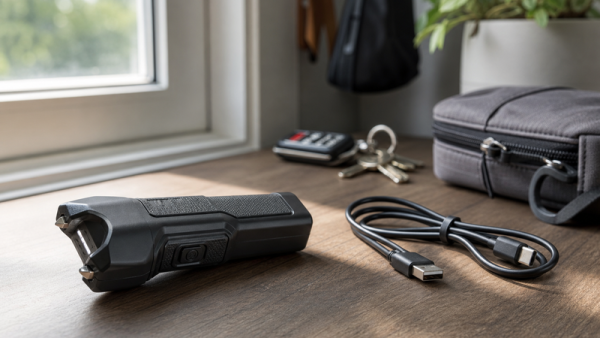
Battery condition is non-negotiable. A stun gun that hasn’t been charged in four months may fire — or it may produce a fraction of its rated output. If you carry one, you need a charging schedule. Rechargeable models make this easier. We break down the difference between rechargeable and battery-powered units in detail if you’re still deciding which type of stun gun battery is actually better for everyday carry.
Finally: pain tolerance and altered states vary. A person in a highly agitated state, under the influence of certain substances, or experiencing extreme adrenaline may be less affected than a calm person would be. This is true of most non-lethal options. It doesn’t make stun guns ineffective — it means you use them to create an opening and then you move. A stun gun is not meant to subdue. It’s meant to give you seconds to escape.
Does stun gun voltage actually matter, and what specs should you pay attention to?
This is one of the most misunderstood areas in the stun gun market, and it costs people money and, potentially, safety. Manufacturers have an incentive to advertise the highest voltage number possible because consumers associate bigger numbers with more power. You’ll see devices advertised at 80 million, 100 million, even 200 million volts. These numbers are largely marketing. What matters in practice is amperage output and the quality of the circuit that delivers it.
Think of it this way: voltage is the pressure that pushes the charge through clothing or across an air gap. Once it makes contact with skin, amperage is what the body actually experiences. A well-designed stun gun balances both. Look for devices from manufacturers with a history in the industry — brands like Streetwise and TASER have earned their reputations by producing devices that actually perform rather than just advertise well.
You should also pay attention to probe spread — the distance between the two contact points on the stun gun. A wider probe spread means the electrical charge passes through more muscle tissue, producing a stronger disruption effect. Compact stun guns with a very narrow probe spread deliver a more localized shock. Larger units with wider spreads tend to be more effective, though they’re also less concealable. This is the trade-off you’re making when you choose between a keychain unit and a full-sized device.
How should you carry a stun gun so it’s actually accessible when you need it?
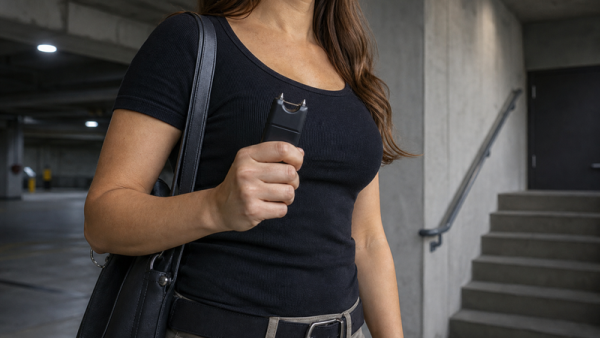
The single biggest failure point for stun gun owners is not the device — it’s the carrying habit. A stun gun at the bottom of a bag, in a glove compartment, or sitting on a nightstand does nothing when you need it on a sidewalk at 9 PM. The only stun gun that helps you is the one you have with you and can access in two seconds or less.
This means your carry method matters as much as the device itself. A stun gun with a holster that clips to a waistband or bag strap is meaningfully more useful than one stuffed in a pocket. Holster carry keeps the device oriented the same way every time, so your hand finds it without fumbling. Practice drawing it. This sounds excessive, but your hands operate on muscle memory under stress — not conscious thought.
For people in specific environments, the carry consideration changes. Teachers and school staff, for example, need to think through where and how they keep a device accessible in a classroom setting. Stun guns designed for teachers take these considerations into account. The same is true for parents — if you want to look at options that balance portability with reliable output, the options designed specifically for moms on the go are worth a look.
One more thing: know your state’s laws before you purchase. Stun guns are legal for civilian carry in most U.S. states, but some states have restrictions on voltage, carry methods, or who can legally possess one. Check your local laws. This is your responsibility, and it matters.
Are cheap stun guns actually effective, or do you get what you pay for?
The honest answer is: it depends on what “cheap” means in context. There are budget stun guns that deliver legitimate stopping power, and there are overpriced devices that are more light show than deterrent. Price alone is not a reliable quality indicator in this category.
What you should be cautious about is unbranded, no-name devices from unfamiliar sources that advertise extreme voltage numbers with no other specifications listed. These are often poorly constructed, inconsistently powered, and sometimes genuinely unsafe. The internal components matter — a weak capacitor that can’t hold a charge under real conditions fails at the moment you most need it not to.
That said, a capable, reliable stun gun does not have to cost a fortune. There are solid options available for under $30 that come from brands with real track records. The key is buying from a source that carries established brands and can tell you what you’re actually getting. A $25 device from a known brand is far preferable to a $60 mystery product with no verifiable specs.
Frequently Asked Questions About Stun Gun Effectiveness
Will a stun gun stop someone who is much larger than me?
Size matters less than placement and contact time. The neuromuscular disruption a stun gun causes affects large individuals the same way it affects smaller ones — the muscles and nervous system respond to the charge regardless of body mass. Sustained contact of two to five seconds on a large muscle group is more important than the attacker’s size. What changes with larger individuals is that you may need to commit to longer contact time before they lose the ability to continue an aggressive action.
Can someone grab the stun gun and use it against me?
Many stun guns include a disable pin — a wrist strap connected to a pin that pulls free if the device is taken from you, rendering it non-functional. This is one of the most important safety features to look for when choosing a stun gun. If the device you’re considering does not have this feature and you’re concerned about it being taken, it’s worth prioritizing models that do. Check the product specs before you buy.
How long does the effect of a stun gun last?
The immediate disruption typically lasts five to thirty seconds after contact ends. The person will usually regain motor control and orientation within a minute or two. This is enough time to create distance and get to safety — which is the entire purpose. A stun gun is not meant to incapacitate indefinitely. It buys you the seconds you need to escape. Use that time immediately and decisively.
Do stun guns work through heavy winter clothing?
Heavy insulating layers — thick down jackets, heavy wool coats — can reduce effectiveness by preventing full contact with the skin. The charge still delivers a shock, but the disruption effect may be less severe. In cold weather, targeting less insulated areas (the neck, inner wrist, lower leg) improves effectiveness. Pressing the device firmly through clothing to maximize contact also helps. This is a real limitation worth understanding, not a reason to dismiss stun guns entirely.
Is a stun gun or pepper spray more effective for self-defense?
They solve different problems. Pepper spray gives you distance — you can deploy it before someone reaches you, at a range of eight to fifteen feet. A stun gun requires direct contact but does not depend on the attacker’s pain response the same way pepper spray does. Many people carry both. If you can only choose one and your primary concern is close-quarters situations — parking lots, elevators, walking alone — a stun gun is a strong choice. If you want to stop someone before they reach you, pepper spray has the range advantage.
Can I use a stun gun if I have no self-defense training?
Yes. Stun guns are designed for people who are not trained fighters, which is part of what makes them useful. You do not need martial arts experience to make contact and hold for two to five seconds. What you do need is to practice the draw — getting the device out of your pocket or holster quickly and confidently. Do that a few times until it’s automatic. That muscle memory matters far more than any formal training when stress response takes over.
How often should I charge my stun gun to keep it ready?
A good rule of thumb is to charge rechargeable stun guns once a month if you’re carrying them regularly, and to test-fire them briefly every few weeks to confirm they’re holding charge. Many rechargeable models hold a charge for several months, but that range assumes the battery is in good condition. Treat it the way you’d treat a phone you depend on — charge it consistently, don’t run it to zero, and replace the device if you notice the charge depleting faster than it used to.
Are stun guns legal everywhere in the United States?
Stun guns are legal for civilian carry in the majority of U.S. states, but some states, counties, and cities have restrictions — on voltage levels, carry methods, or who is permitted to own one. Hawaii, Rhode Island, and a handful of municipalities have had varying restrictions at different points. Laws also change. Before purchasing, check your specific state and local laws. This is your responsibility as the carrier, and it’s worth ten minutes of research to get right.
The bottom line is straightforward: stun guns work. They work best when you choose a quality device from a known brand, carry it consistently in a way you can access quickly, keep it charged, and understand both what they do well and where their limits are. None of this is complicated — it just requires paying attention to the right details before something happens, not after. That’s what being genuinely prepared looks like.
If you’re ready to find the right option for your situation, browse the civilian stun gun options at Revere Security — or if budget is a consideration, the under-$30 stun gun category has solid, reliable choices worth a look.