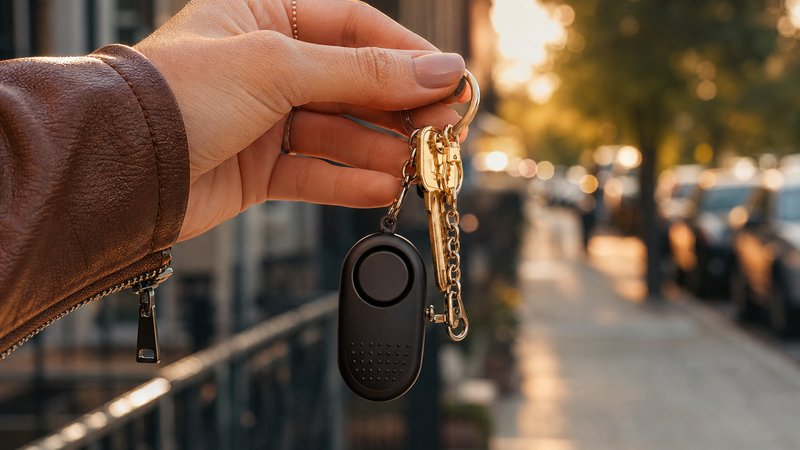
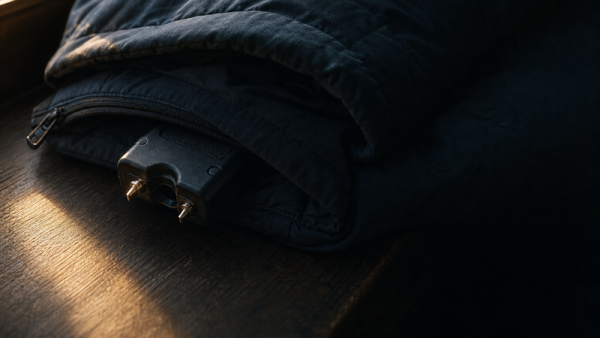
The best personal alarm keychain for everyday carry is one that produces at least 120 decibels, activates instantly with a single pull or press, and is small enough that you genuinely keep it on your keyring instead of leaving it in a drawer. A strobe light adds a second layer of disorientation at night. Beyond that, the best one is the one you’ll actually have with you — which makes design, size, and carry comfort as important as raw volume.
Here’s the part most people get wrong: they evaluate personal alarms the same way they evaluate smoke detectors — as a background safety feature they set up once and forget. That framing misses something important. A personal alarm keychain is more like a smoke signal than a smoke detector. Its job isn’t passive detection. It’s active disruption — of an attacker’s plan, of bystander inattention, of the assumption that you’re an easy target. When you reframe it that way, what you’re really shopping for isn’t a device. It’s a change in social physics.
Why do most personal alarm keychains fail the everyday carry test?
The honest answer is friction. Most personal alarms fail not because they’re too quiet or too fragile — they fail because the design creates just enough inconvenience that people stop carrying them. The alarm that’s slightly too bulky gets moved from keychain to bag. The one that’s slightly too easy to trigger accidentally gets taken off the bag entirely. The one with a cheap battery dies without warning. None of that is dramatic. It’s just the slow erosion of a safety habit.
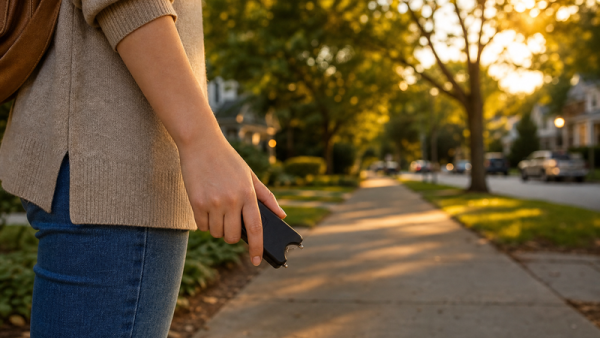
What actually works for everyday carry is a device that disappears into your existing routine. It clips onto keys you already carry, it doesn’t snag on anything, it doesn’t accidentally trigger in your pocket, and it activates immediately and loudly when you need it to. That sounds simple. It’s harder to engineer than it looks.
The innovation worth paying attention to in today’s personal alarm market isn’t voltage or decibel ratings — it’s the combination of strobe light functionality with a compact keychain form factor. A personal alarm with strobe light doesn’t just make noise. It creates a multi-sensory disruption — one that’s particularly effective in low-light situations when the visual element catches bystanders’ attention from farther away than sound alone. That’s a meaningful design upgrade, not a gimmick.
What decibel rating actually matters for a personal alarm keychain?
The answer isn’t “the highest number on the box.” Decibel ratings are measured in ideal lab conditions, which means real-world performance is always somewhat lower. A 130dB alarm in a large open parking garage sounds different from a 130dB alarm on a quiet residential street. Both are loud. The context changes how far the sound carries and how quickly it draws attention.
For practical everyday carry, 120dB is a solid floor — that’s roughly equivalent to a car horn at close range. Most quality keychain alarms land between 120dB and 140dB. What matters more than squeezing an extra five decibels out of a spec sheet is consistency: does the alarm maintain that volume for the full duration it sounds? Some budget models peak loudly and then drop significantly. A genuinely loud personal alarm sustains its output — because an attacker who waits out a few seconds of noise before it fades has effectively neutralized it.
There’s also the matter of pitch and tone. A sharp, high-frequency alarm pierces ambient noise — traffic, crowd noise, music — more effectively than a lower-frequency tone at the same decibel rating. This is why personal alarms sound distinctly different from car alarms, even at similar volumes. The design is intentional: high-frequency sound triggers a startle response and is harder to habituate to quickly.
How does a pull-pin activation mechanism change the way a personal alarm actually works?
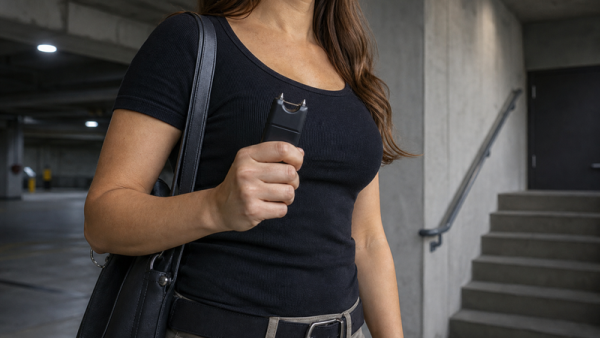
Most personal alarms activate one of two ways: a button press or a pull-pin. The difference matters more than it sounds. A button requires you to find the button, orient the device correctly, and apply deliberate pressure — all while stressed, possibly moving, possibly in low light. A pull-pin works with gross motor movement. You grab the device, pull, and the alarm sounds. That’s it.
The pull-pin design also has a secondary advantage that’s genuinely clever: if someone grabs the alarm from you, pulling it away from the pin activates it rather than disabling it. The attacker’s instinct to take the device becomes the trigger. That’s not just a feature — it’s a design inversion of the attacker’s assumption.
Some newer designs combine both mechanisms: a pull-pin for emergency activation and a button to test the alarm or turn it off after the threat has passed. That dual-function approach is worth looking for if you want flexibility without sacrificing speed under pressure.
Is a waterproof personal alarm worth the extra consideration for daily carry?
Yes — and here’s the framing shift: you don’t buy a waterproof personal alarm because you expect to use it in the rain. You buy it because anything attached to your keychain is going to face real-world conditions. Keys go into damp pockets, get left in gym bags, fall into puddles, and spend summers in hot cars. A device that degrades under those conditions is a device you’ll eventually replace with nothing.
A waterproof personal alarm is simply a more durable alarm. The waterproofing is a proxy for overall build quality — a manufacturer that engineers water resistance into a small keychain device is paying attention to durability in ways that manufacturers of budget alternatives often aren’t. If you’re buying something to carry every day for months or years, build quality is the most underrated spec on the list.
What makes a personal alarm keychain a smart choice for elderly users specifically?
This is where the innovation conversation gets genuinely interesting. For most buyers, a personal alarm is a backup — one option among several. For many elderly users, it’s a primary safety tool, and the design requirements are different. A device that requires two-handed operation, fine motor coordination, or significant grip strength fails the use-case entirely.
The best self-defense keychain options for elderly users prioritize single-action activation, lightweight construction, and a form factor that’s easy to hold and locate quickly. A wrist strap or lanyard option is worth looking for — it keeps the device immediately accessible without requiring someone to search through a bag or pocket under stress. The strobe feature also matters more in this context: someone who falls or is in distress at night benefits from a visual signal that draws attention even when they can’t call out loudly.
The broader point is that the “best” personal alarm keychain isn’t a single device. It’s the intersection of specific features with a specific user’s situation. For a college student walking to her car after a late shift, the pull-pin with a belt clip might be ideal. For an elderly person living alone, a wrist-worn design with a loud alert and strobe might serve them better. The innovation in this category is the growing recognition that one-size-fits-all doesn’t serve anyone particularly well.
How does a personal alarm keychain compare to other non-lethal options for everyday carry?
It’s genuinely worth thinking about this differently than most people do. Personal alarms are often framed as the beginner’s option — the thing you carry before you graduate to pepper spray or a stun gun. That framing undersells them. A personal alarm works in situations where other tools create legal and practical complications. It requires no aim, no close contact, no legal review before purchase in any U.S. state, and no hesitation about escalation.
That said, layering is smart. If you’re comparing options directly, our post on personal alarm vs. pepper spray for night shift safety breaks down the real-world tradeoffs in detail. The short version: a personal alarm excels at drawing attention and deterring opportunistic attackers. Pepper spray provides a direct physical deterrent. They solve slightly different problems, and carrying both isn’t redundant — it’s strategic.
What most people don’t consider is the social dimension of a personal alarm. Activating a 130dB alarm in a public space is inherently non-escalatory in the eyes of bystanders — it signals distress, not aggression. That matters both practically and legally. You can buy a personal alarm online without age restrictions, licensing, or state-by-state legal review. For someone who wants a meaningful safety tool with the lowest possible friction to carry and use, that combination is hard to beat.
Frequently Asked Questions About Personal Alarm Keychains
What is the loudest personal alarm keychain available?
Most keychain personal alarms range from 120dB to 140dB. Models rated at 130dB or higher are considered loud enough to be disorienting at close range and audible up to a quarter mile in open conditions. What matters as much as peak decibels is sustained output — look for alarms that maintain their volume for at least 30 minutes of continuous use rather than fading after a few minutes.
How long do the batteries last in a keychain personal alarm?
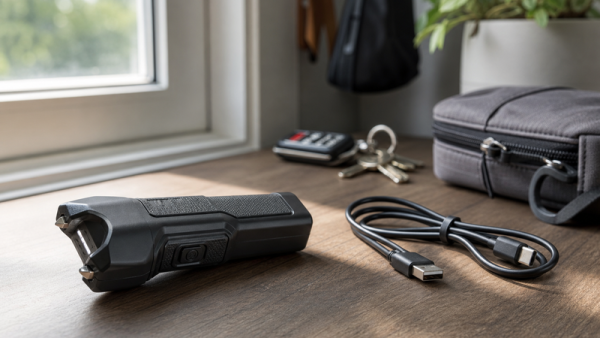
Battery life varies by design. Most keychain alarms use LR44 button batteries or a CR123A-style lithium battery, which typically last 1–3 years in standby mode. Some models are USB-rechargeable, which eliminates the risk of a dead battery going unnoticed. Whichever type you choose, testing your alarm briefly once a month is a simple habit that ensures it’s ready when you need it.
Can a personal alarm go off accidentally in a bag or pocket?
Pull-pin designs are generally very resistant to accidental activation because the pin must be physically removed to sound the alarm. Button-activated alarms carry more risk of accidental triggering. If you use a button-style alarm, look for one with a safety cover or locking mechanism over the button. Some designs require holding the button for one to two seconds before activating, which prevents momentary contact from triggering it.
Is a personal alarm effective at night or in isolated areas?
Yes, with the right features. In isolated areas, a 130dB alarm can be heard up to a quarter mile away. At night, a strobe light adds a visual signal that can attract attention from people who might not hear the sound. The psychological effect matters too — most attackers rely on surprise and the assumption of an easy target. An immediate, loud alarm disrupts both. You can read more about real-world effectiveness in low-visibility situations at our post on whether personal alarms work at night or in isolated areas.
Are personal alarm keychains legal everywhere in the United States?
Personal alarms are legal in all 50 U.S. states with no age, licensing, or purchase restrictions. Unlike pepper spray or stun guns, there are no state-by-state regulations to navigate. This makes them one of the most universally accessible personal safety tools available. International travelers should check local regulations, as rules vary by country.
What should I look for in a personal alarm keychain if I have limited hand strength?
Look for a pull-pin design with a large, easy-to-grip ring — this requires less fine motor coordination and works with gross motor movement, which holds up better under stress. Lightweight construction matters too, since heavy devices are harder to manage quickly. A wrist strap or lanyard option keeps the alarm immediately accessible. Avoid button-only designs that require precise placement of a fingertip under pressure.
How do I know when to replace my personal alarm?
Test it briefly once a month by activating it for one to two seconds. If the volume seems reduced or the strobe light is dimmer than usual, replace the battery or the unit. Most quality personal alarms last two to five years with normal use. If your alarm has been dropped, submerged, or exposed to extreme heat, test it immediately — physical damage isn’t always visible but can affect performance when it matters most.
Can personal alarms be used by children for school safety?
Yes — personal alarms are one of the most appropriate safety tools for children because they require no training, create no legal or disciplinary complications, and are straightforward to use under stress. A child who is grabbed, followed, or frightened can activate a pull-pin alarm without hesitation. Many parents pair a keychain alarm with a backpack clip so it’s accessible without being a distraction during the school day. Look for durable, simple designs with a pull-pin rather than button activation for younger users.
The most effective personal alarm keychain isn’t necessarily the loudest one, the most feature-rich one, or the most affordable one. It’s the one you carry every single day — because you forget it’s there until the moment you need it. That’s the real design challenge, and the products that solve it well are worth finding. Start with your actual carry habits, match the form factor to how you move through your day, and build from there. A 130dB alarm on your keychain beats a 140dB alarm in your glove compartment every time.