Quick Answer: The single biggest self-defense mistake most people make before leaving the house is carrying a tool they’ve never actually practiced using. It doesn’t matter how powerful the device is or how confidently you bought it – if your hands have never held it under pressure, your brain won’t find it when seconds count. That gap between owning protection and being protected is smaller than you think to close, and what’s on the other side might surprise you.
Why does owning a self-defense tool give you a false sense of security?
Here’s something most people never hear: the moment you buy a pepper spray or a stun gun, your brain quietly files it under “problem solved.” It’s the same psychology that makes people feel safer after locking their car from across a parking lot without checking the back seat. The action feels protective. But the action and the protection aren’t always the same thing.
Ownership creates comfort. Comfort creates complacency. And complacency is exactly what an unexpected situation exploits. The truth is, a self-defense tool sitting in your bag untested is almost no different from not having one at all – because under real stress, your hands won’t remember what your eyes once glanced at on a product page.
There’s something researchers call “skill fade,” and it happens faster than anyone wants to admit. If you haven’t held your pepper spray in three months, your muscle memory for deploying it is essentially zero. And the irony? The people who think about their safety the most are often the ones who bought something, felt relieved, and never thought about it again.
What actually happens to your body in a high-stress moment?
Most people have a rough idea that stress affects you physically. What most people don’t know is how specifically – and how brutally – it affects fine motor skills. When adrenaline floods your system, blood moves away from your extremities and toward your major muscle groups. Your hands get less precise. Your fingers get clumsy. Tasks that felt automatic become surprisingly difficult.
This is the part nobody explains when you’re standing at a checkout page deciding between models. The stun gun with the slightly awkward safety switch? Under calm conditions, it’s manageable. Under stress, that same switch becomes a puzzle your hands might not solve fast enough. The pepper spray with the flip-top you never practiced flipping? That half-second fumble is all an encounter needs to shift.
Here’s what changes everything: repetition. Not hundreds of hours – just enough deliberate, unhurried practice that your hands know the shape of your tool, the location of the trigger, the direction the spray fires. Five minutes once a week. That’s the gap between prepared and exposed, and almost nobody fills it.
What’s the right way to practice with a self-defense tool?
The answer isn’t complicated, but it does require intention. Start with familiarization – pick up your pepper spray or stun gun with your eyes closed and locate every functional part by touch alone. Safety. Trigger. Nozzle direction. Do it until it feels boring, because boring means automatic.
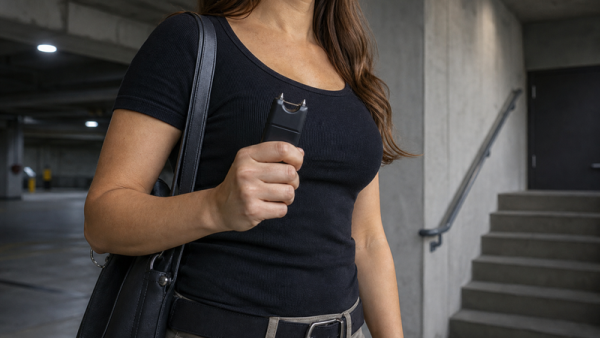
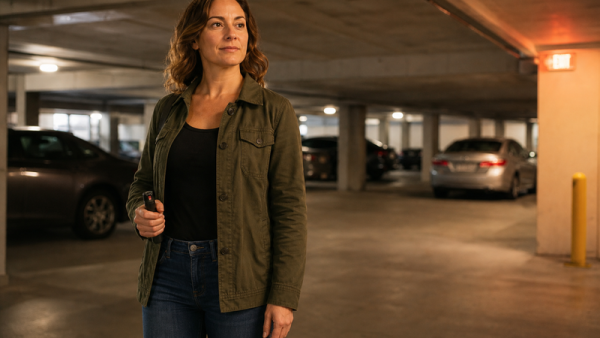
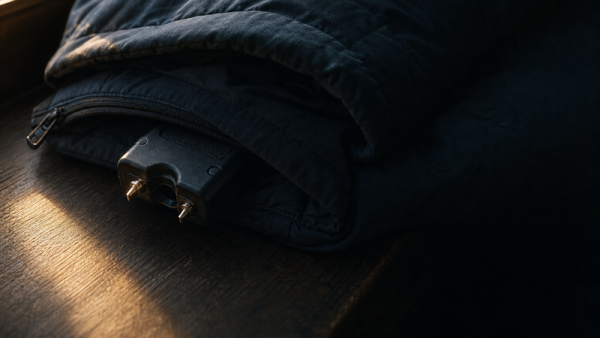
Next, practice deployment from wherever you actually carry it. Not from your countertop. From your bag, your jacket pocket, your waistband. The carry position is half the battle. Most people practice drawing from a comfortable position they’d never actually be in when something happens.
Then add movement. Practice stepping back while deploying. Most self-defense situations involve someone closing distance, and standing still while you fumble with a safety is the worst of both options. You don’t need a training partner. You don’t need a course. You need a wall to practice facing, a pocket to practice drawing from, and ten repetitions a few times a week. The transformation in confidence – real confidence, not just comfort – is something you have to feel to understand.
Does the carry position really matter that much?
It matters more than almost any other single factor. Here’s why: reaction time in a real encounter is measured in fractions of a second, and the distance between your hand and your tool might as well be miles if you haven’t closed it a hundred times in practice.
Think about where your self-defense tool actually is right now. Bottom of a bag under your keys and a water bottle? Inside a zipped pocket? In your car? Each of those positions adds steps, and steps add time, and time is the one thing a surprise encounter doesn’t give you. The people who walk away from bad situations prepared – not lucky – almost always had their tool in the same spot, every time, accessible by a single motion they’d performed so many times it required no thought.
Consistency of carry is a habit, and habits are built in advance. Decide where you carry. Commit to it. Then practice from that exact position until it becomes thoughtless. That level of readiness is quieter than most people imagine – it’s not tactical gear or a specific posture. It’s just a decision you make once and reinforce every day.
Is there something important to check before leaving the house every day?
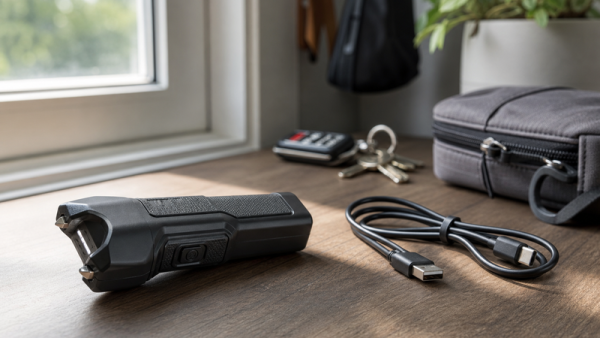
Yes, and almost no one does it. Before you walk out the door, your self-defense tool should pass a two-second check: it’s in its dedicated spot, and if it’s rechargeable or battery-powered, you have a reasonable sense of its charge level. That’s it. Two seconds that most people skip entirely.
A stun gun with a dead battery is a piece of plastic. Pepper spray that expired two years ago may not deploy with the pressure you’re counting on. These aren’t dramatic failure points – they’re quiet ones, the kind that only reveal themselves when it’s too late to correct them. Checking your tool before you leave the house the same way you check your keys or your phone isn’t paranoia. It’s just the completion of a decision you already made when you bought it.
There’s something almost invisible about this habit once it’s formed. It takes less than a moment, costs nothing, and closes the last gap between carrying a self-defense tool and actually being prepared. Most people will read this and think, “that’s obvious.” Most of those same people still won’t check tomorrow morning. The ones who do are harder to surprise than they look.
Frequently Asked Questions
How often should I actually practice with my self-defense tool?
A few deliberate repetitions two or three times a week is enough to build real muscle memory. You’re not training for competition – you’re training for one moment. The goal is to make deployment feel automatic from your actual carry position. Consistent short sessions beat occasional long ones every time. Think of it as a two-minute habit, not a workout.
Does it matter which self-defense tool I choose if I practice with it?
Yes, the tool still matters – but practice closes more of the gap than people expect. A well-practiced user with a reliable mid-range pepper spray will almost always outperform an unpracticed user with a premium model. That said, choose a tool that fits your lifestyle and carry habits. The best self-defense tool is the one you actually have with you and can actually use.
Can I practice with my actual pepper spray without wasting it?
You can practice the draw, the grip, the safety release, and the firing stance without deploying a single burst. Reserve a small amount for at least one live-fire test outdoors so you understand the spray pattern and range. After that, dry practice – going through every motion except actually spraying – builds the muscle memory you need without emptying the canister.
What’s the biggest mistake people make when choosing a carry position?
Choosing convenience over accessibility. A self-defense tool at the bottom of a large bag feels convenient right up until the moment you need it. The right carry position is the one that lets you reach your tool with one hand in the fewest possible motions. It might feel slightly less convenient day-to-day, but that small inconvenience is exactly the point.
Is it worth taking a formal self-defense class if I carry a tool?
Absolutely, and the two complement each other in ways most people underestimate. A class teaches you awareness, distance management, and decision-making under stress – skills that make your tool more effective, not redundant. Even a single afternoon course changes how you read situations before they escalate. Your tool becomes a last resort, not a first response, which is exactly the right relationship to have with it.
How do I know if my pepper spray is still effective?
Check the expiration date printed on the canister – most formulas lose potency and propellant pressure within two to four years. If yours is expired or close to it, replace it. An easy test for propellant is to do a very brief outdoor burst away from people and wind. Weak spray or poor pattern formation is a reliable sign the canister needs replacing before you carry it again.
Should I tell people I carry a self-defense tool?
That’s a personal decision with no single right answer. Discretion has real advantages – it preserves the element of surprise and avoids unnecessary attention. What matters more than disclosure is your own comfort and confidence with the tool. If you feel the need to announce it to feel credible, that’s often a sign to invest more time in practice until the confidence comes from preparation, not declaration.
What if I freeze up even after practicing?
Freezing is a real physiological response, not a character flaw, and practice reduces but doesn’t eliminate it. What practice does is give your hands something to do while your brain catches up – and that physical action often breaks the freeze faster than willpower alone. Awareness training, which teaches you to recognize situations developing early, is the best companion to tool practice for managing freeze response.
The part of preparedness nobody talks about
There’s a version of personal safety that looks like buying the right product and never thinking about it again. It feels complete. It feels responsible. And it leaves a gap that only reveals itself in the worst possible moment.
The people who are genuinely harder to victimize than they appear share something that has nothing to do with size, strength, or intimidating gear. They know exactly where their tool is. Their hands know exactly what to do with it. And they checked both of those things before they walked out the door this morning.
That’s the whole secret – and now you have it. What you do before you leave the house tomorrow is entirely up to you.