
Pepper Spray for Hiking and Camping
You put thought into your boots, your pack, your water filter—but the one thing that could matter most often gets left behind. Trail threats don’t announce themselves: an off-leash dog rounding a blind corner, a bear that stumbled onto your campsite, a stranger on a remote stretch of trail who doesn’t take the hint. The good news is that being prepared out there doesn’t require anything heavy, complicated, or hard to carry. The right spray—sized and formulated for your specific environment—takes up almost no room and gives you a real option when instincts kick in. Here’s what we’d put in our own pack.
Our Top Picks for Hikers, Campers, and Trail Users


What to Look for in a Pepper Spray for Hiking and Camping
Match the formula to the threat. This is the most important decision, and most people skip it. Personal pepper spray—like the Wildfire Pepper Spray with Belt Clip—is designed for human attackers and aggressive dogs at close range. Bear spray is a completely different product: EPA-registered, large-volume, and built to reach a charging animal at 20 to 30 feet. Know what you’re likely to encounter before you choose.
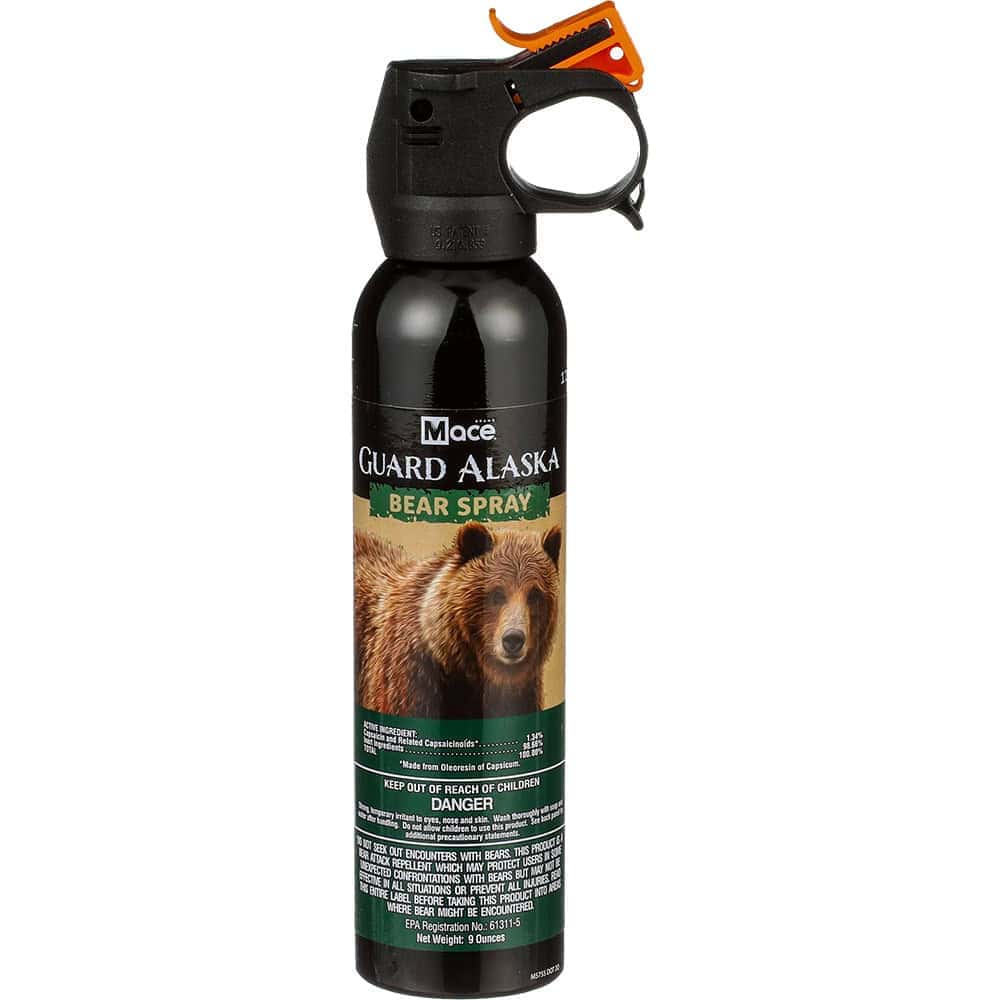
Range matters more outdoors than it does in a parking lot. In an urban encounter, you might deploy at 6-8 feet. On a trail, a bear or off-leash dog can cover ground before you’ve processed what’s happening. The Guard Alaska Bear Spray reaches 20 feet; the GrizGuard Bear Spray by Mace reaches 30. That distance isn’t a marketing stat—it’s the margin between stopping a charge and not.
Spray pattern affects how much aim you need under stress. Stream patterns give you range and wind resistance but require you to track a moving target. Fogger patterns create a wide cloud that’s more forgiving when your hands aren’t steady. For wildlife, a fogger is typically the better call. For trail encounters with people or dogs, a stream keeps drift from coming back at you.
Carry position determines whether you actually use it. Both bear sprays in this lineup include holsters. The Mace Canine Repellent and Wildfire Pepper Spray clip directly to your waist strap or pack hip belt. A canister in your side pocket is not accessible when you need it in two seconds. Think about where on your body you’d naturally grab with either hand, and put it there.
Check canister weight and volume before a long haul. A 9 oz bear spray canister adds real weight to an ultralight setup. If you’re doing a multi-day trip in grizzly country, it’s non-negotiable. For day hikes on well-traveled trails where dog encounters are the more realistic concern, a compact option like the Mace Canine Repellent keeps your kit light.
How to Carry Pepper Spray on the Trail
The most common mistake is treating trail defense the same as urban carry. At home, a keychain spray in your bag is fine. On a trail, you need something accessible with one hand while you’re mid-step, mid-conversation, or mid-snack. Clip belt-mounted options to your hip belt or shoulder strap, not buried in a pocket.
Bear spray rides differently than personal spray. Both the Guard Alaska and GrizGuard come with dedicated holsters—use them. The holster keeps the safety oriented the right way, protects the nozzle from debris, and makes the draw consistent. Practice pulling and re-holstering the actual canister before the trip so the motion is automatic.
Wind is a real factor outdoors in a way it isn’t indoors. Before you deploy, think about wind direction. Spraying into the wind turns your defense into a problem. For fogger-style bear sprays, deploy slightly low and let the cloud drift—you don’t need a direct hit, you need the animal to enter the cloud. For stream patterns, aim at the face.
Keep sprays out of a hot car or direct sun when not in use. Extreme heat can affect canister pressure. Check the expiration date before a trip—most pepper sprays have a 2-4 year shelf life, and a degraded canister isn’t something you want to discover on the trail.
Frequently Asked Questions
A: Bear spray and personal pepper spray are not interchangeable. Bear spray is EPA-registered specifically for deterring large wildlife—it uses a wider fogger pattern and larger canister to create a deterrent cloud at 20-30 feet. Standard pepper spray like the Wildfire Pepper Spray with Belt Clip is formulated and sized for human threats at close range. If you’re hiking in bear country, bring bear spray. If you’re worried about aggressive dogs or people on the trail, personal pepper spray is the right tool. Many hikers carry both.
A: Personal pepper spray is legal in most states, but national parks have their own rules—and they vary. Bear spray is generally permitted in national parks for wildlife defense, but carrying it as a weapon against people may not be. State laws on canister size, concentration, and age restrictions differ as well. Before you head out, check our Laws and Restrictions page at https://reveresecurity.com/law-and-restrictions/ for state-by-state guidance, and confirm the specific rules for any park or trail you plan to visit.
A: Accessibility is everything—a canister buried in your pack is useless. For personal protection, the Wildfire Pepper Spray with Belt Clip and Quick Release Key Chain attaches to a waist strap or pack hip belt so it’s within reach while you walk. For bear spray, holsters are the standard: both the Guard Alaska Bear Spray and GrizGuard Bear Spray include belt-loop holsters designed for trail carry. Practice your draw at home before you go. In a real encounter, there’s no time to fumble.
A: No, and this is an important distinction. Standard personal pepper spray canisters are too small, too short-ranged, and not formulated or EPA-tested for wildlife deterrence. A charging bear covers ground fast—you need the reach and cloud volume that dedicated bear spray like the Guard Alaska Bear Spray or GrizGuard Bear Spray provides. Pointing a keychain-sized canister at a bear would put you in serious danger. Use the right tool for the situation.
A: Most experts agree you should begin deploying bear spray when a charging bear is around 60 feet away—not when it’s on top of you. Aim slightly downward to create a fog cloud the bear runs into. The GrizGuard Bear Spray’s 30-foot range and fogger pattern give you the best coverage without needing precise aim under pressure. After use, move away from the area, as the residue can actually attract bears if they return. Familiarize yourself with the safety clip before you go—practice releasing it at home so it’s second nature on the trail.
Not Sure Which Spray Is Right for Your Trip?
Bear country, dog encounters, solo trail running—each situation calls for something a little different, and we're happy to help you figure out which product fits your plans. Give us a call at 800-859-5566 and we'll talk it through.
Shop All Pepper Sprays