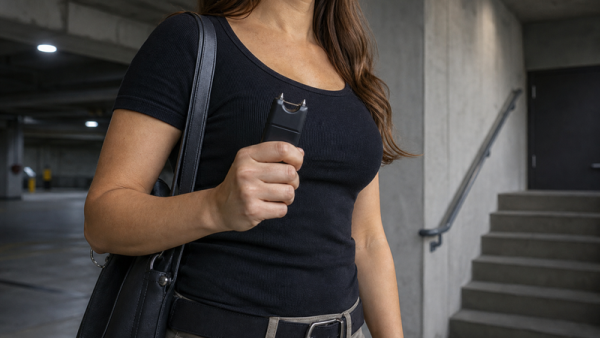
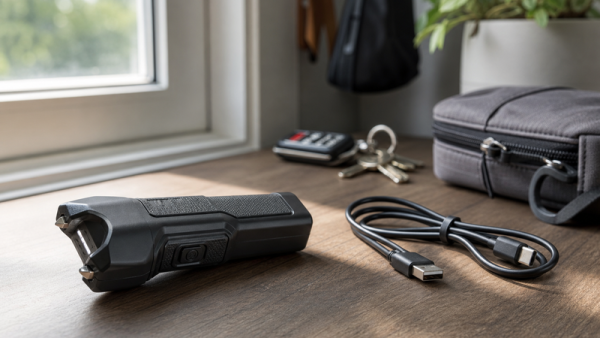
Quick Answer: Yes, stun guns are genuinely effective for self-defense when used correctly – but they are not magic wands, and believing otherwise can get you hurt. Understanding exactly what a stun gun does, what it does not do, and how to use one under pressure are the three things that separate people who walk away safe from people who don’t.
What Does a Stun Gun Actually Do to an Attacker?
A stun gun delivers a high-voltage, low-amperage electrical charge that disrupts the body’s neuromuscular system. When you press the electrodes against an attacker and hold that contact for one to five seconds, the electrical pulse causes involuntary muscle contractions, disorientation, and a loss of voluntary muscle control. The attacker’s brain is essentially overwhelmed with competing signals. The result is temporary incapacitation – not permanent injury, not unconsciousness in every case, but a real, measurable window for you to escape.
That window matters enormously. I’ve been in this industry since 1986, and the one thing I tell every customer who walks through the door is this: a stun gun buys you seconds. What you do with those seconds is the whole game. If you deploy correctly and use that moment to create distance and get to safety, you’ve won the encounter. If you stand there admiring your work, you’ve wasted it.
The voltage rating you see on packaging – 50,000 volts, 100,000 volts, even higher – is not the most important number. Amperage is what causes physiological disruption, and most stun guns operate in the 3 to 4 milliamp range, which is effective for incapacitation without causing lethal injury. Higher voltage numbers mostly reflect the ability of the charge to penetrate thick clothing. Don’t let a big voltage number alone drive your purchase decision.
How Long Does the Effect Last and Is It Enough Time to Escape?
The incapacitation effect from a stun gun contact typically lasts between five and thirty minutes depending on the duration of contact, the individual’s body chemistry, their adrenaline level, and whether substances like alcohol or stimulant drugs are involved. A one-second contact produces muscle spasms and pain. A three-to-five second contact produces more significant muscle disruption and disorientation. A full five seconds is generally considered effective for creating an escape opportunity against most attackers in most situations.
Here is the critical warning I want you to hear clearly: do not assume the effect is guaranteed to drop someone completely flat. Determined attackers, particularly those under the influence of drugs or running on extreme adrenaline, may remain partially functional even after a solid stun gun contact. Your plan must always be to stun, then move. Not stun, then confront. Not stun, then wait. Stun, then move. That is your protocol.
Contact time is something you need to practice in your mind before you ever need it in real life. Most people, under the stress of an actual threat, default to what they have rehearsed mentally. Decide right now that your response sequence is: deploy, hold contact for a minimum of three seconds, break away, create distance, get to safety. Run that sequence through your head until it becomes automatic.
Do Stun Guns Work Through Clothing?
Yes, but with important caveats. A quality stun gun with sufficient voltage can penetrate light to medium clothing – a t-shirt, a light jacket, denim. Heavy winter coats, leather jackets, and thick layered clothing significantly reduce effectiveness because the charge has to travel farther to reach skin. This is where electrode spacing matters as much as voltage. Wider electrode gaps produce a broader arc with more potential to penetrate thicker material.
Practical guidance: aim for areas where clothing is thinner or less layered. The neck, inner arm, under the armpit, and the upper hip area are all effective target zones where clothing tends to be less bulky and skin is closer to the surface. In a real encounter you take what you can get, but if you have any choice in contact placement, these areas improve your odds of effective penetration.
This is also why I always recommend that customers handle and understand the specific device they purchase rather than just throwing it in a drawer. Know your electrode spacing. Know your voltage. Know what your stun gun was designed to handle. That knowledge is not paranoia – it is basic preparedness.
What Are the Real Limitations You Must Know Before You Buy?
I am going to be direct here because this is where a lot of marketing in this industry does people a disservice. Stun guns have real limitations and you need to know every one of them.
First: stun guns are contact weapons. You must touch the attacker for the device to work. There is no projectile, no arc across open air. If someone is rushing you from distance, you need to time your deployment and make contact. This requires composure under extreme stress. If you freeze or fumble, you lose the advantage. This is why carrying with the device accessible – not buried in a purse or backpack – is non-negotiable.
Second: some stun guns require the safety to be disengaged before they fire. Practice disengaging your safety with the hand you actually carry the device in, under conditions that simulate mild stress. Do this until it is reflexive.
Third: batteries degrade. A stun gun you charged two years ago and never tested may have a weak charge when you need it most. Test your device monthly by triggering a one-second arc in open air. A strong, loud, bright arc means you’re good. A weak, sputtering discharge means you need to charge or replace batteries immediately.
Fourth: stun guns are illegal in some states and municipalities. Before you buy or carry, verify the laws in your specific location. Carrying an illegal self-defense device creates legal exposure that defeats part of the purpose of carrying one. This is your responsibility to check.
How Does a Stun Gun Compare to Pepper Spray for Self-Defense?
These are different tools for different scenarios, and the honest answer is that the best-prepared people carry both. Pepper spray gives you standoff distance – effective range of eight to fifteen feet with a good canister – which means you can deter or stop a threat before physical contact becomes unavoidable. A stun gun requires contact but is unaffected by wind direction, doesn’t risk blowback onto you, and doesn’t depend on the attacker’s mucous membranes or respiratory system to work effectively.
Someone extremely intoxicated may not respond as predictably to pepper spray. Someone wearing eye protection won’t be stopped by it. In those scenarios a stun gun is your better option. Conversely, in an open outdoor environment with multiple aggressors, pepper spray buys you more defensive coverage. Think of these as complementary tools, not competing ones.
The critical error I see is people buying one or the other and declaring themselves prepared. Real preparedness means thinking through the range of scenarios you’re likely to encounter and selecting tools that address those scenarios. What does your daily environment look like? Parking lots? Urban transit? A walking routine at dawn or dusk? Your environment should shape your carry choices.
What Is the Correct Way to Use a Stun Gun Under Pressure?
Effectiveness under pressure depends almost entirely on preparation done before the encounter, not during it. Here is the exact sequence you need to build into your muscle memory and mental rehearsal.
- Identify the threat early. The earlier you recognize a situation deteriorating, the more time you have to access your device before the attacker closes distance.
- Access your stun gun before physical contact is imminent. If you are fumbling with a zipper while someone is three feet away, you are already behind.
- Disengage the safety with your carrying hand. Practice this specific motion until it takes less than one second.
- Make firm contact with the attacker’s body. Press the electrodes against skin or thin clothing with deliberate, steady pressure.
- Hold contact for a minimum of three seconds. Five seconds if you can maintain it. Count deliberately in your mind – do not release prematurely.
- The moment you feel the attacker’s resistance diminish, break contact and move immediately. Do not hesitate.
- Create maximum distance as fast as possible. Shout for help. Get to a populated area or secure location.
- Contact law enforcement and report the incident. Document everything including time, location, and a description of the attacker.
That eight-step sequence is your protocol. Review it. Visualize it. Own it.
Frequently Asked Questions About Stun Gun Effectiveness
Can a stun gun knock someone unconscious?
Unconsciousness is not a reliable or guaranteed outcome with a stun gun. What you should expect is temporary muscle disruption, disorientation, and impaired voluntary movement lasting several minutes. Some individuals may fall due to loss of muscle control, but planning your escape around the assumption of unconsciousness is a dangerous mistake. Always expect a partially functional attacker and move accordingly.
Will a stun gun work on someone who is drunk or on drugs?
Stun guns are less predictable against attackers under the influence of stimulant drugs like methamphetamine or PCP because those substances can blunt the pain response and override some neuromuscular disruption. Alcohol impairment has a more variable effect. Against drug-affected individuals, longer contact time and precise electrode placement on high-muscle-mass areas improve effectiveness, but you should carry a backup option and prioritize escape above all else.
Is it safe to use a stun gun on someone with a pacemaker?
This is not a consideration that should change your decision to defend yourself from a violent attacker. You cannot know in a threatening situation whether someone has a pacemaker, and hesitating to protect yourself from injury or death because of speculation about an attacker’s medical history is not a reasonable standard of self-defense. Focus on your safety. Legal and ethical questions about specific circumstances belong with an attorney.
How close do I have to be to use a stun gun?
Direct physical contact is required – the electrodes must touch the attacker or their clothing. This means stun guns are only effective once an attacker is within arm’s reach. Unlike pepper spray, there is no standoff distance advantage. This is precisely why early threat recognition and having the device already in your hand before contact becomes imminent are the two most important tactical habits a stun gun carrier can develop.
Are stun guns legal everywhere in the United States?
No. While stun guns are legal in the majority of U.S. states, several states have restrictions or outright prohibitions, and individual cities and counties can impose additional regulations. Hawaii, Rhode Island, and certain other jurisdictions have historically restricted civilian possession. Always verify your local laws before purchasing or carrying a stun gun. Carrying an illegal device undermines the legal protection you expect from legitimate self-defense tools.
How often should I test and charge my stun gun?
Test your stun gun monthly by triggering a brief open-air arc – one second is sufficient. You should see a strong, bright, loud discharge. If the arc is weak or the sound is thin, charge or replace the battery immediately. Rechargeable models should be topped off after testing. A stun gun you have never tested is an unknown quantity in a moment when unknowns are dangerous. Treat it like a smoke alarm – regular testing is not optional.
Can a stun gun hurt me if it touches my skin accidentally?
Accidental contact with your own skin will cause sharp pain and involuntary muscle contraction at the contact point. It is not dangerous in the way that cardiac-level electrical shock is dangerous, but it is genuinely painful and can cause you to drop the device. This is why safety switches matter and why you should practice handling your specific device until you can operate it confidently without inadvertently activating it against yourself.
The Bottom Line on Stun Gun Effectiveness
Stun guns work. They are not infallible, they are not guaranteed to drop every attacker immediately, and they require you to close to contact range to use them. But deployed correctly – with deliberate contact, adequate hold time, and an immediate escape plan – they are a proven, legitimate tool for creating the seconds you need to get to safety.
My advice after nearly four decades in this industry is simple. Buy a quality device from a reputable source. Learn its specific operation before you need it. Test it monthly. Carry it where you can actually reach it. And build that eight-step response sequence into your thinking until it becomes second nature. Because the best self-defense tool in the world is only as effective as the person holding it.
Your safety is your responsibility. Take it seriously.