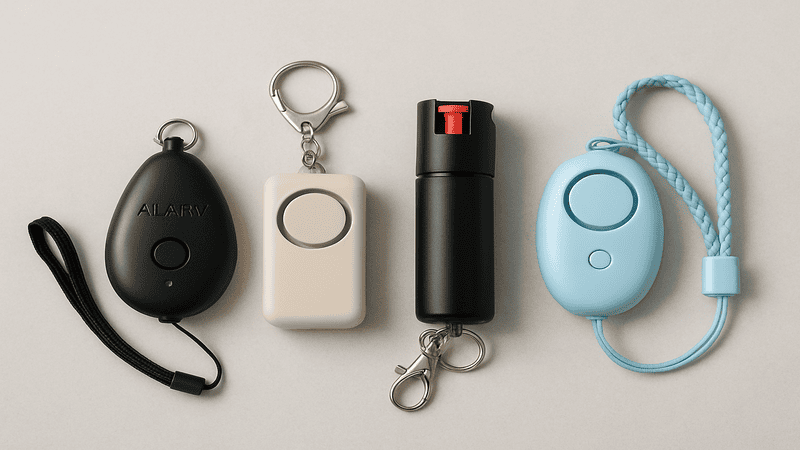
Personal alarms for college students are genuinely useful in specific situations — primarily for drawing attention and creating a window to escape — but they are not a complete safety solution on their own. The effectiveness of any personal alarm depends heavily on the environment, how it’s carried, and whether someone nearby can actually respond to the sound. The best personal alarm is the one you’ll actually have on you, positioned where you can activate it without thinking.
There’s something most personal alarm marketing won’t tell you. The device itself isn’t the plan — it’s a piece of one. And on a college campus, where the environments shift from crowded quads to empty parking garages within a single evening, that distinction matters more than most students realize. The real question isn’t whether personal alarms work. It’s understanding exactly what they do, where that falls short, and what the honest picture looks like when you put the two together.
What follows isn’t a product pitch. It’s the breakdown that most safety conversations skip — the part about what’s actually happening when that alarm goes off, why it helps in some situations and not others, and what it tells us about the specific conditions college life creates. There’s more to this than a 130dB number on a spec sheet.
What does a personal alarm actually do — and what do most people get wrong about it?
The mechanics are simple. Pull a pin, press a button, and a personal alarm emits a sharp, piercing sound — typically between 120 and 140 decibels — that is difficult to ignore and nearly impossible to replicate accidentally. At 130dB, you’re in the range of a jackhammer at close distance. The sound carries. People notice.
What most people get wrong is assuming that the sound itself is the safety mechanism. It isn’t. The safety mechanism is what the sound triggers in other people — and in the person causing the threat. A personal alarm works on two levels simultaneously: it draws attention from bystanders who might intervene or call for help, and it signals to anyone nearby that this situation has just become very public. That second effect is often underestimated. Someone who was banking on a quiet, unwitnessed encounter suddenly faces a very different calculation.
Here’s what that means practically: a personal alarm is most effective in environments where people are close enough to hear it and respond — or where the perception of being heard is enough to change the dynamic. It is least effective in isolated locations where no one is within earshot, and the alarm is simply noise with no audience.
On a college campus, both of those environments exist within a few hundred feet of each other. That’s the nuance most conversations about personal alarms quietly sidestep.
Why does a college campus create specific conditions that make personal alarms worth understanding?
College campuses have a density pattern unlike most environments. During the day, there are people everywhere — outside classrooms, in dining halls, crossing open quads. In those conditions, a personal alarm would be heard by dozens of people within seconds. But campuses also have a shadow side to that density: the library basement at 11pm, the far end of a parking structure, the path between the off-campus apartment complex and the nearest bus stop. These spaces exist right alongside the populated ones, and students move between them regularly.
There’s also a cultural dimension worth acknowledging. College students, particularly in the first year or two, are navigating new independence and environments they don’t yet know well. They may not have a strong read yet on which campus paths are reliably populated at night, which parking areas have blind spots, or which social situations carry a different kind of risk entirely. That unfamiliarity is real, and it’s not a weakness — it’s just where everyone starts.
This is also an age group that’s highly mobile and distracted — phones out, earbuds in, moving quickly between classes and social commitments. A safety tool that requires deliberate preparation tends to stay in a bag. One that clips onto a keychain or a backpack strap is actually present when it needs to be. That physical reality is part of why personal alarms designed for everyday carry get carried, and why pocket-dwelling ones often don’t.
What are the real pros of personal alarms for college students?
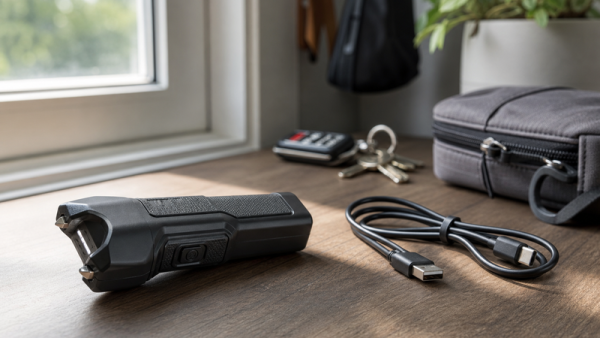
Let’s be direct about what genuinely works here. First: accessibility. A personal alarm requires no training, no physical strength, no decision-making under pressure beyond the simple act of activating it. Compare that to pepper spray — which has an effective range and wind concerns — or a stun gun, which requires close contact and some understanding of how to use it. A personal alarm removes most of those variables. If you can pull a pin, it works.
Second: campus-specific legal simplicity. Many residence halls and campus facilities have restrictions on weapons or self-defense sprays. Personal alarms exist almost entirely outside those restrictions. You can carry one in a dorm room, bring it to class, clip it to your bag without any legal or institutional concern in virtually every environment.
Third — and this is the one that gets overlooked — personal alarms are useful for non-confrontational emergencies too. A student who slips and falls on an empty path, has a medical episode in a quiet part of the library, or gets locked out and needs help has a tool that can get attention fast. That broader utility is part of why personal alarms make sense for everyday carry beyond self-defense scenarios.
Fourth: the deterrence factor. The moment a loud alarm activates in a low-light environment, the nature of any situation changes immediately. The sound is disorienting. It draws eyes. It removes anonymity. For someone attempting a confrontation that depends on going unnoticed, that single variable often ends the situation.
What are the honest cons and limitations most reviews don’t mention?
Here’s where the picture gets more complicated — and where a little mystique around personal alarms starts to dissolve into something more useful.
The most significant limitation is environmental dependency. A 130dB alarm in an empty parking garage at midnight may be extremely loud — and completely useless if no one is within several hundred feet to hear it. Sound carries differently through open air than through walls, and a piercing alarm in a deserted area is just noise. If you’re regularly moving through genuinely isolated environments, a personal alarm alone is not a complete answer.
Second: bystander effect. In densely populated areas, a loud noise doesn’t automatically produce immediate intervention. Research on bystander behavior consistently shows that in crowds, individual people often assume someone else will respond. The alarm creates awareness — but awareness doesn’t always translate to action, especially on a busy campus where loud sounds can blend into background noise.
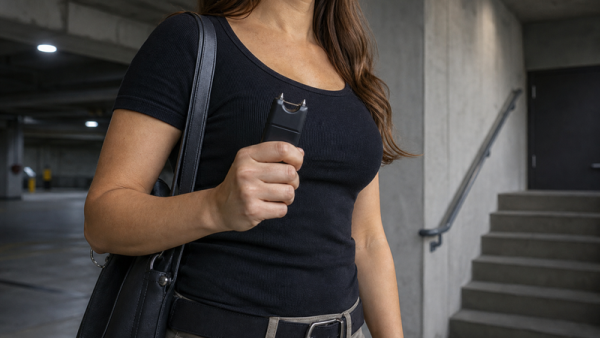
Third: carry position matters enormously. A personal alarm buried in a backpack main compartment is not a personal alarm — it’s a keychain you bought once. To be functional, it needs to be clipped somewhere you can access it without stopping to dig. The devices worth having are designed with this in mind: small, clip-mounted, and activatable without looking. If yours requires a zipper to reach, it’s worth reconsidering where it lives.
Fourth: the sound can be disabled. Some personal alarms rely on a pin that, once pulled, emits a continuous sound — the pin needs to be reinserted to stop it. Others use a push-button. In a close-contact situation, an alert attacker may be able to grab the device. This is where understanding the specific mechanism of what you’re carrying matters. It’s also why some people pair a personal alarm with a secondary option — not to replace it, but to account for contact situations differently. Our post on personal alarms versus pepper spray breaks down how those two tools compare side by side.
When do personal alarms actually make the biggest difference for college students?
This is the question worth sitting with — because the honest answer has some texture to it.
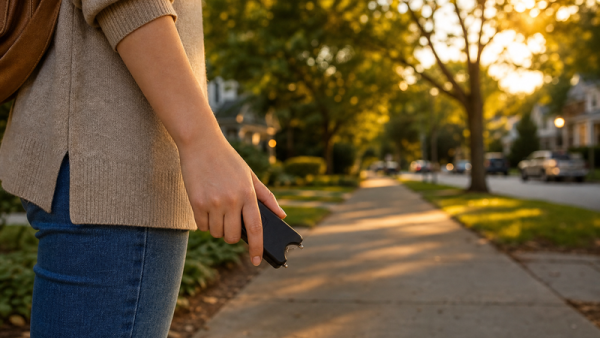
Personal alarms perform best in transitional moments: walking between buildings at night, leaving a campus event late, walking to or from public transit. These are the environments where people are nearby enough to hear an alarm, where the sound can travel across a quad or parking lot and reach someone who can respond or call for help.
They’re also highly effective in social situations that escalate in ways that don’t involve a stranger. The reality of campus safety includes situations between people who know each other — and in those cases, an alarm that immediately draws the attention of everyone in a dorm hallway or apartment building is precisely the kind of disruption that can interrupt an escalating situation before it becomes something worse.
They’re less effective when someone is completely alone with no potential responders in range — late at night in an empty parking structure, on a trail with no other pedestrians. If those are regular parts of your routine, layering in an additional option alongside the alarm is worth considering seriously.
For students who run or commute regularly, a personal alarm designed for that kind of active use is worth the specific consideration — personal alarms for runners are built to stay accessible at a pace, which is a different design requirement than a bag clip.
How do you choose a personal alarm that will actually get used?
The honest filter is this: will you actually have it on your person, in a position to reach it without thinking, every time you need it? Everything else is secondary.
Decibel rating matters — 120dB is a functional floor, and 130dB or above is better for outdoor environments. But a 140dB alarm buried in your backpack is less useful than a 120dB one on your keychain. Size, clip style, and activation mechanism matter more to real-world use than raw volume numbers.
Look at the activation method. A pull-pin design that emits a continuous alarm until the pin is reinserted is low-effort to activate under stress — there’s no button press timing to manage. Push-button designs need to stay accessible and your hands need to be free. Neither is universally better; what matters is knowing which one you have and practicing finding it without looking.
Battery life and form factor round it out. Some alarms are rechargeable — useful if you’ll actually charge them. Some use replaceable batteries that can sit dormant for years without degrading. Know what yours uses and check it occasionally. An alarm with a dead battery is decoration.
Streetwise and Mace both offer personal alarm options built for everyday carry — compact, reliable, and built to the activation standards that actually matter in the moment rather than just on a spec sheet.
Frequently Asked Questions About Personal Alarms for College Students
Are personal alarms allowed in college dorms?
In almost every case, yes. Personal alarms are not classified as weapons and are not restricted by typical residence hall policies. Unlike pepper spray or stun guns — which may require specific legal permissions or face campus restrictions — personal alarms are straightforward to carry in dorms, classrooms, and campus facilities. If you have a specific concern, a quick review of your residence hall handbook will confirm it, but restrictions on personal alarms are rare.
How loud does a personal alarm need to be to actually work?
A minimum of 120 decibels is considered functional for outdoor use. Most quality personal alarms fall between 120dB and 140dB. At 130dB, the sound carries across open outdoor spaces and is difficult to ignore at close range. Indoors — in a dorm hallway or building stairwell — even a 120dB alarm is extremely disruptive. The number matters, but carry position matters more: the loudest alarm in the world is useless inside a closed backpack.
Can a personal alarm be grabbed and turned off during a confrontation?
It’s possible in a close-contact situation, which is one honest limitation of the tool. Pull-pin designs that require the pin to be reinserted to stop the sound are harder to silence quickly, since an attacker would need to find and reinsert a small pin under stress. Push-button designs that require continued pressure are easier to deactivate if grabbed. Understanding your specific alarm’s mechanism matters, and it’s one reason some people pair an alarm with a secondary option for close-contact scenarios.
Does a personal alarm work if no one is nearby?
Not as a safety mechanism in the traditional sense. The alarm’s effectiveness depends on someone — a bystander, a passerby, anyone — being within earshot and responding to the sound. In genuinely isolated locations with no one nearby, the alarm creates noise without creating the response that makes it useful. If your routine regularly takes you through isolated areas, a personal alarm is still worth carrying, but it works best as part of a layered approach rather than as a standalone solution.
Where should a college student carry a personal alarm?
Somewhere you can reach without stopping, looking, or digging. The best positions are clipped to the outside of a backpack strap, attached to a keychain that rides in an outer pocket, or attached to a bag handle. The critical factor is that it stays in an accessible position consistently — not moved around between uses, not dropped into the main compartment for “safe keeping.” Find one position, keep it there, and make sure you can activate it without looking.
Is a personal alarm better than pepper spray for college students?
They do different things, and the better choice depends on your specific situation and comfort level. A personal alarm draws attention and works from any position without physical targeting — no aiming required, no wind concern, no legal restrictions in most campus environments. Pepper spray creates a physical deterrent at close range that doesn’t depend on anyone else responding. Many people find value in both. If you’re weighing the decision, the comparison between these two options comes down to environment, legal access, and what you’re actually comfortable carrying and using under pressure.
Do personal alarms require any training to use effectively?
Very little, which is part of their appeal. The activation is simple — pull a pin or press a button. There’s no targeting, no physical technique, and no required familiarity with the device beyond knowing how your specific alarm activates. The one practice worth doing: find your alarm by feel, without looking, several times. That muscle memory matters if you ever need to activate it quickly while your attention is elsewhere. Thirty seconds of deliberate practice is all it takes to make that second-nature.
Can a personal alarm help in situations other than stranger danger?
Yes — and this is underappreciated. A personal alarm is useful in any situation where you need immediate attention: a medical emergency, a fall in an isolated location, a fire, or a social situation that escalates with someone you know. On a college campus specifically, where many safety concerns don’t involve strangers, the alarm’s ability to draw