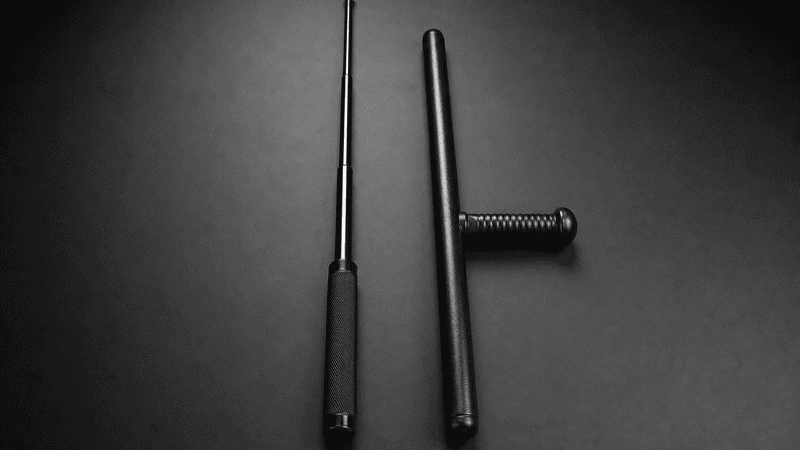
An expandable baton is a compact, telescoping impact tool that collapses for easy carry and deploys instantly with a flick of the wrist. A nightstick is a fixed-length, rigid baton — the kind carried openly on a duty belt. The core difference comes down to portability and purpose: expandable batons are built for civilians and plainclothes professionals who need something concealable and fast-deploying, while nightsticks are designed for uniformed law enforcement carrying them in the open.
This distinction matters more than most people realize. If you’re making a decision about a self-defense tool, knowing exactly what each one is — and what it isn’t — determines whether you’re choosing something that works for your situation or something that creates more problems than it solves. Let’s break it down clearly.
How are expandable batons and nightsticks different in design and construction?
The structural difference between these two tools is stark and deliberate. An expandable baton — also called a collapsible baton or ASP-style baton — is made of telescoping steel or aluminum sections that nest inside each other. Collapsed, it’s typically 6 to 9 inches long. Extended, it reaches 16 to 26 inches depending on the model. That transition happens in a fraction of a second. You flick your wrist, the friction locks engage, and you have a rigid striking tool in your hand.
A nightstick is a single-piece, fixed-length baton — usually 24 to 26 inches long — and it stays that length whether you’re carrying it or using it. The classic straight nightstick has been joined over the decades by side-handle variants (the PR-24 style), but the core principle is the same: rigid, visible, carried openly on a duty belt or in hand. There is no collapsing mechanism, no deployment step, and no concealment option.
The materials differ too. Traditional nightsticks were made of hardwood — hickory and walnut were common. Modern versions are often polycarbonate or aluminum. Expandable batons are almost exclusively steel or aircraft-grade aluminum, which allows the telescoping walls to be thin while maintaining striking strength. Both are impact tools. But they are built around fundamentally different assumptions about how and where they’ll be carried and used.
Which is better for civilian self-defense — an expandable baton or a nightstick?
For civilian self-defense, the expandable baton wins on nearly every practical point. Concealment is the deciding factor. You cannot carry a 26-inch nightstick on your daily commute, in your car, or tucked into a bag without attracting immediate attention — and in many jurisdictions, openly carrying a nightstick as a civilian will draw a legal response before you ever need it for self-defense. The expandable baton solves this entirely. Collapsed, it disappears into a coat pocket or clips to a belt. Nobody knows you have it until you need it.
Speed of deployment is another decisive advantage. A quality expandable baton deploys in under a second with a sharp downward flick. That’s a realistic timeframe in a real situation. Reaching for a rigid 26-inch baton that you’d need to be carrying in your hand or visibly on your belt is a different calculation entirely — one that works for a uniformed officer on a controlled scene, not for a civilian who didn’t know trouble was coming.
The tradeoff is striking mechanics. Nightsticks, especially side-handle variants, give a trained user more control options — blocking, hooking, leveraging. Expandable batons are linear strikers. They’re effective and they’re fast, but they require less training to deploy usefully, which is actually an asset for most civilians who haven’t completed formal baton training. If you’re looking at expandable batons under $30, you can find solid, functional options without spending professional-grade money.
Are expandable batons legal for civilians to own and carry?
This is where you need to do your homework, because the legal landscape varies significantly by state and even by municipality. Some states allow civilians to own and carry expandable batons with no restrictions. Others require a concealed weapons permit. A few states — California is the most commonly cited example — restrict civilian ownership of collapsible batons outright. Local ordinances can add another layer of restriction on top of state law.
Nightsticks occupy a similarly complicated legal space. In most jurisdictions, civilians aren’t prohibited from owning a nightstick, but carrying one openly in public is likely to get you stopped, and carrying one concealed is often illegal. They fall into a legal gray zone that depends heavily on intent, location, and what a responding officer concludes about why you’re carrying it.
The bottom line: check your local and state laws before you carry either tool. This isn’t a reason to avoid expandable batons — it’s a reason to know the rules in your area so you can carry legally and confidently. Never rely on a blog post, including this one, as your legal authority on what’s permitted where you live. Look up your state statutes directly or consult an attorney.
How much force does an expandable baton actually deliver?
An expandable baton is a serious impact tool. When deployed and swung properly, it concentrates force at the tip, which delivers a significantly higher pounds-per-square-inch impact than an open hand or a fist. A strike to a large muscle group — the thigh, the shoulder, the forearm — can cause immediate pain and interrupt an attack. A strike to a joint can be debilitating. This isn’t a tool that merely annoys an attacker. It causes real pain and can cause real injury.
That’s not a warning meant to scare you away from considering one. It’s a reason to treat it with the seriousness it deserves. If you’re going to carry an expandable baton, understand what it does. Know that using it in a situation that doesn’t legally justify force can result in serious legal consequences for you. Expandable batons are lawful self-defense tools — and they’re also tools that demand situational awareness and restraint. They don’t replace good judgment. They extend it.
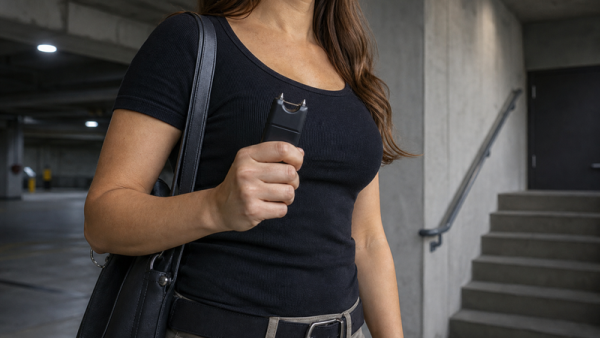
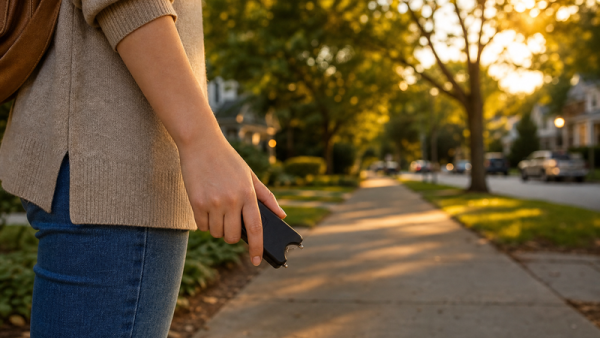
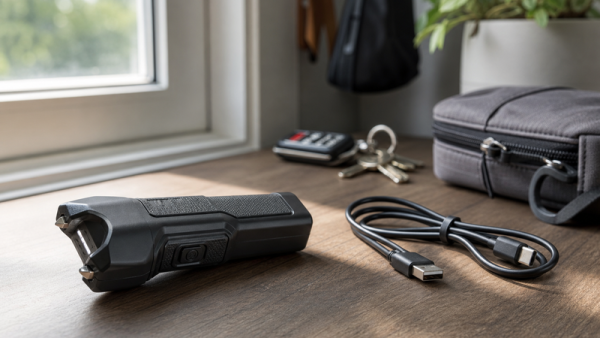
For comparison, if you want an impact-plus-stun option in a similar form factor, it’s worth looking at heavy duty stun baton flashlights, which combine striking capability with an electrical deterrent and built-in illumination — a genuinely different tool designed for a different set of scenarios.
What training do you need to use an expandable baton effectively?
You don’t need professional law enforcement training to deploy an expandable baton effectively for basic self-defense. The mechanics of opening it are simple, and a strike to a large muscle group doesn’t require precision targeting under pressure. That said, some training pays dividends — understanding how to hold it, how to strike efficiently, and how not to hurt yourself in the process makes you meaningfully more capable. Some martial arts schools and self-defense instructors offer baton or impact weapon courses, and there are solid instructional resources available independently.
Nightstick training, by contrast, is more involved. Side-handle techniques require specific grip and stance training to be effective. The leverage and blocking techniques that make nightsticks genuinely powerful defensive tools in trained hands don’t translate well to untrained use. Law enforcement officers go through formalized baton qualification courses for a reason. This doesn’t make nightsticks ineffective — it means they reward training more heavily than expandable batons do.
If personal safety while moving around a city is your concern, the combination of practical training and the right tools matters. Our post on walking alone at night in a city covers the situational habits that matter most — the tool is one piece of a larger picture.
How does an expandable baton compare to other non-lethal self-defense options?
Expandable batons occupy a specific lane in the non-lethal self-defense toolkit. They require physical proximity — this is a close-range tool, full stop. Pepper spray gives you distance. A stun gun or stun baton flashlight gives you an electrical deterrent at close range without requiring a swinging motion. A personal alarm gives you noise and attention without physical engagement. Each of these tools has a different use case, and knowing where each one fits determines whether you’re carrying the right thing for your actual situation.
For someone who wants a physical deterrent they can deploy without getting within arm’s reach of a threat, pepper spray is often the better starting point. For someone who wants to be able to create distance through a decisive strike and then run, an expandable baton is a strong choice. For someone who commutes through areas where drawing and deploying something quickly matters most, a quality expandable baton on a belt clip is a practical, proven option. Know your environment. Make a deliberate decision.
Frequently Asked Questions About Expandable Batons vs. Nightsticks
Can a civilian legally own an expandable baton?
In many U.S. states, yes — civilians can legally own and carry expandable batons, sometimes with a concealed weapons permit. However, laws vary significantly by state and city. California, for example, restricts civilian possession. Always check your specific state and local statutes before purchasing or carrying one. Don’t assume legality based on where you live — look it up directly.
What is an expandable baton made of?
Most expandable batons are constructed from hardened steel or aircraft-grade aluminum. The telescoping sections are designed to lock rigidly when deployed, maintaining structural integrity under impact. Higher-quality models use thicker-walled sections that resist bending or collapse during a strike. Steel models are generally heavier and more durable; aluminum models are lighter and easier to carry for extended periods.
How long does it take to deploy an expandable baton?
A quality expandable baton deploys in under one second with a sharp, downward flick of the wrist. The friction-lock mechanism engages automatically when the sections telescope out fully. No buttons, no safeties, no two-hand operation. That speed is one of the primary reasons expandable batons are preferred over fixed-length batons for concealed civilian carry.
Can I carry a nightstick for self-defense as a civilian?
Technically, civilians can own nightsticks in most states. But carrying one in public — especially concealed — is legally complicated. Openly carrying a 24-inch baton invites police contact in most communities, and local ordinances may prohibit it entirely. For practical civilian self-defense carry, expandable batons are the far more workable option, assuming they’re legal in your jurisdiction.
Is an expandable baton considered a lethal weapon?
Expandable batons are classified as non-lethal or less-lethal impact tools, but that doesn’t mean they can’t cause serious injury. Strikes to the head, neck, or spine can be life-threatening. Legally and practically, they’re treated as capable of causing serious bodily harm, which means using one in a self-defense situation requires the same justification threshold as other impact weapons. They are not toys.
How does an expandable baton compare to a stun baton?
These are different tools. An expandable baton is a pure impact weapon — it works through physical force. A stun baton adds an electrical charge that can deter or temporarily incapacitate through pain compliance, without requiring the same striking mechanics. Stun batons also typically function as flashlights. If you want combined functions, a stun baton is worth considering. If you want a dedicated impact tool, an expandable baton is the more focused choice.
What size expandable baton is best for self-defense?
For most civilians, a 16-inch to 21-inch expandable baton strikes the right balance — long enough to generate meaningful force, compact enough to carry comfortably. Shorter models (under 16 inches) sacrifice striking reach. Longer models (24+ inches) can be harder to deploy in tight spaces like a parking garage or stairwell. Choose based on where you’ll actually carry it and what environments you’re preparing for.
Do I need training to use an expandable baton?
Basic deployment requires no formal training — the mechanics are straightforward. But even a few hours of instruction on grip, striking technique, and situational awareness will make you significantly more effective and less likely to injure yourself. Some martial arts schools offer impact weapon courses. If you’re serious about carrying one, invest at least some time in learning how to use it correctly before you need it.
The difference between an expandable baton and a nightstick isn’t just about shape or size. It’s about what each tool was built for, who carries it, and under what circumstances it’s genuinely useful. For civilian self-defense, the expandable baton is the clear practical choice — concealable, fast to deploy, and legally available in most states. Make the decision deliberately, know your local laws, and choose a tool that fits your actual life. That’s how you carry with confidence.