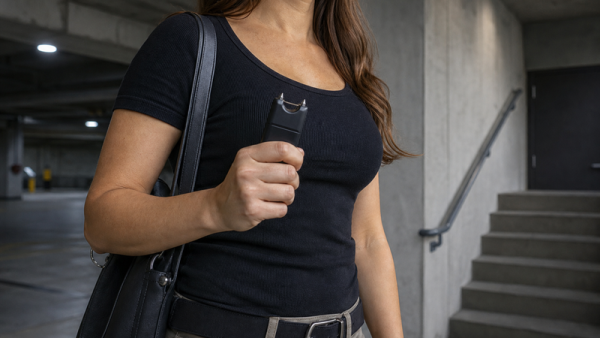
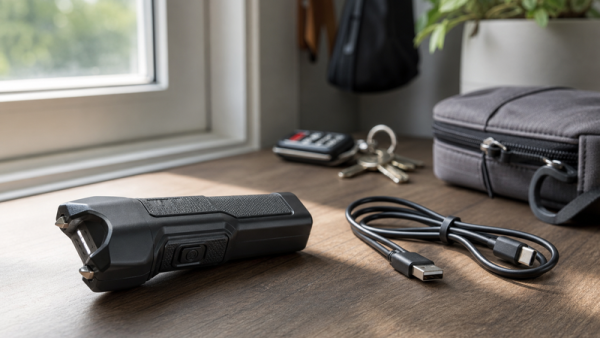
Yes, stun guns do work through clothing — but how well depends on factors most people never consider. The type of fabric, its thickness, how dry or damp it is, where contact is made on the body, and the stun gun’s output all play a role. A quality stun gun pressed firmly against someone wearing a light jacket will deliver an effective charge. A low-powered device pushed through a heavy winter coat is a different story entirely.
Most people picture a stun gun as either working or not working — a simple on/off question. The reality is quieter and more interesting than that. There’s a version of this answer that changes depending on exactly who’s asking it, what they’re carrying, and what they’re wearing on a cold Tuesday night. Understanding the nuance isn’t just technical curiosity. It’s the difference between carrying real protection and carrying a false sense of it.
What actually happens when a stun gun makes contact through fabric?
Electricity doesn’t care about fabric the way you might expect. What it cares about is resistance — and fabric, on its own, offers surprisingly little of it. Most common clothing materials, when dry, are thin enough that a stun gun with adequate output punches right through to the skin beneath. The electrical charge arcs through the fibers and does exactly what it’s supposed to do: disrupts the body’s neuromuscular signals and causes involuntary muscle contractions.
The mechanism matters here. A stun gun doesn’t need to touch skin directly. It needs to bridge the gap between its two electrodes with enough charge to complete the circuit through whatever is between them. A thin cotton t-shirt? Nearly no barrier at all. A poly-blend dress shirt? Still minimal resistance. The charge finds its path.
What changes the picture is layering and moisture. Multiple layers of fabric add cumulative resistance. A wet jacket — soaked with rain or sweat — can actually improve conductivity in some situations, but it can also short-circuit the charge across the fabric surface instead of driving it through to skin. Neither outcome is predictable without knowing the specifics. That uncertainty is exactly why it matters to understand what your stun gun is capable of before you need to find out the hard way.
Does clothing thickness actually stop a stun gun from working?
Thickness matters — but it’s not the only variable, and it’s rarely the decisive one. A single layer of heavy denim is more resistant than a double layer of thin polyester, but a high-output stun gun can bridge both. Where things get genuinely complicated is when you’re talking about winter outerwear: thick insulated coats, down jackets, and layered cold-weather gear.
Here’s what most discussions leave out: the electrode spacing on the stun gun matters just as much as the clothing. Electrodes that are farther apart create a wider arc, which generates more surface contact and a more effective current path through thicker material. A device with electrodes close together may struggle to bridge heavy fabric effectively even at higher voltage.
Foam or rubber materials present the most resistance — and this is where some stun guns do genuinely struggle. A thick neoprene jacket or a padded foam vest can absorb and diffuse enough of the charge to reduce effectiveness meaningfully. These are edge cases for most everyday situations, but they’re worth knowing about if you’re thinking through scenarios where you might actually need this device.
The practical reality: for the clothing most people wear most of the time — jeans, t-shirts, dress clothes, light jackets — a quality stun gun works. For extreme cold-weather layering, you want a device with documented penetration capability and enough output to compensate for the added resistance.
Does voltage alone determine how well a stun gun penetrates clothing?
This is where the marketing gets murky — and where a little honest clarity goes a long way. Voltage numbers on stun gun packaging are almost universally exaggerated, and they tell you less about real-world effectiveness than manufacturers want you to believe. A stun gun rated at 80 million volts isn’t delivering that through a cotton shirt. The peak voltage is measured in open air, at the arc itself, not at the point of contact through fabric.
What matters more for clothing penetration is amperage — the actual current flowing through the circuit — and the consistency of that current delivery. A lower-voltage device with stable, consistent amperage often outperforms a high-voltage device with inconsistent output when it comes to penetrating fabric and affecting muscle tissue.
This is one reason why reputable brands like Streetwise and Runt stun guns get recommended by people who’ve done real testing, not just read the box. Their output specs are grounded in something real. If you’re evaluating a stun gun on voltage alone, you’re solving for the wrong variable.
Where you make contact on the body matters more than most people realize
There’s a quiet truth here that doesn’t get discussed much: location of contact changes everything. The most effective target areas — the neck, under the arm, along the torso — are often covered by clothing in a real situation. The least-effective areas (hands, feet, heavily muscled regions) are more likely to be exposed.
This matters for two reasons. First, if you’re thinking about this only in the abstract — “stun guns work through clothing” — you might not be thinking about the practical reality of landing contact on a specific spot during a stressful encounter. Second, it means that even a highly capable stun gun needs to be deployed with some intention about placement to be maximally effective.
There’s also the question of how long contact is maintained. A quick touch isn’t the same as sustained contact. Most sources suggest that two to three seconds of continuous contact produces the most reliable results — and that’s a lot harder to execute through thick fabric than a quick tap. None of this makes stun guns ineffective. It makes them tools that reward some understanding of how they actually work.
If you’re a real estate agent, teacher, or anyone who spends time in situations where you need something ready and reliable, these details matter practically. The right stun gun for a real estate agent isn’t necessarily the same one that works best in a different context — placement, clothing, and encounter type all factor in.
What types of stun guns handle clothing penetration best?
Not all stun guns are built the same, and the design choices that determine clothing penetration aren’t always obvious from a product listing. A few things to look for specifically:
Electrode design: Wider electrode spacing typically means better coverage and more effective current delivery through layered fabric. Some models have extended or pronged electrodes designed specifically to reach through thick material. This is a real engineering difference, not a marketing claim.
Verified amperage: Look for brands that publish their milliamp output, not just peak voltage. Brands like Streetwise and ZAP have a track record that extends beyond marketing copy. If a brand won’t tell you the amperage, that’s worth noticing.
Build quality and consistent delivery: A stun gun that delivers its charge inconsistently — cheap capacitors, poor internal components — may have high peak specs but disappointing real-world performance. A budget stun gun can still be a solid option if it comes from a reputable brand, but budget usually means some trade-off in consistency.
Contact duration and grip: Ergonomics matter more than people expect. A stun gun that’s uncomfortable to hold or slips in your grip makes sustained contact harder. A stun gun with a holster that lets you draw and grip naturally is worth considering — access and grip affect how effectively you can use it when it actually matters.
For a deeper look at how stun guns perform across different real-world scenarios, this breakdown of stun gun effectiveness for self-defense covers the questions most product pages skip over.
Are there situations where clothing genuinely limits stun gun effectiveness?
Yes — and being honest about this is more useful than pretending otherwise. Extreme cold-weather outerwear is the most common real-world example. A thick, insulated ski jacket or a heavy down coat with multiple internal layers creates enough resistance and physical distance from the skin that effectiveness is genuinely reduced. Not eliminated — but reduced.
Rubber-backed or neoprene materials can also limit performance significantly. These aren’t common everyday garments, but they’re worth knowing about. Similarly, if a person is wearing body armor — even soft civilian body armor — contact to the protected area will deliver minimal effect.
Moisture adds unpredictability. A soaking-wet heavy jacket can sometimes short the charge across the outer surface rather than driving it through to the body beneath. This is situational and inconsistent, but it’s real.
What this means practically: a stun gun isn’t a certainty in every scenario, but for the vast majority of real-world situations involving ordinary clothing, it works. The edge cases are worth understanding — not to create doubt, but to inform how you think about deployment and what backup options make sense alongside it.
Frequently Asked Questions About Stun Guns and Clothing
Can a stun gun work through a heavy winter coat?
It depends on the coat and the stun gun. Most quality stun guns can penetrate light-to-medium winter outerwear. A thick, heavily insulated parka with multiple internal layers significantly reduces effectiveness. For cold-weather situations, look for stun guns with wider electrode spacing and verified amperage output, which are more likely to bridge thicker material. No stun gun guarantees effectiveness through extreme outerwear.
Does wet clothing affect how well a stun gun works?
Wet clothing adds unpredictability. In some cases, moisture improves conductivity and aids current delivery to the skin. In others — particularly with thick, heavily saturated fabric — the charge can arc across the outer surface of the clothing rather than penetrating to the body. Dry clothing at normal everyday thickness is generally the most predictable scenario for consistent stun gun performance.
Does voltage tell me how well a stun gun works through clothing?
Not reliably. Peak voltage figures on stun gun packaging are measured in open air and are frequently exaggerated. Amperage — the actual current flow — is a more useful indicator of real-world effectiveness, including through clothing. Brands that publish their milliamp output are giving you more meaningful information than those advertising extreme voltage numbers without supporting specs.
Where on the body is a stun gun most effective through clothing?
The most effective target areas — the neck, torso, and under the arms — tend to be covered by clothing in real situations, but they’re also where thinner garments are typically worn. These areas have proximity to major muscle groups and nerve clusters that respond well to the current. Upper body contact through a single layer of clothing at these points is generally effective with a quality stun gun.
How long does contact need to be maintained for a stun gun to work through clothing?
Most guidelines suggest two to three seconds of sustained contact produces reliable results. A brief touch is less effective, especially through fabric. Through clothing, consistent pressure during contact matters — the electrodes need to maintain firm contact with the fabric to keep the current path stable. Sustained contact is harder to achieve in a real encounter, which is one reason training and familiarity with your device matters.
Are some stun gun designs better than others for penetrating clothing?
Yes. Wider electrode spacing generally improves performance through layered fabric by creating better surface coverage. Some models feature extended or pronged electrode tips specifically designed to reach through thicker material. Consistent internal components — better capacitors, stable current delivery — also improve real-world effectiveness compared to cheap builds that may have impressive peak specs but inconsistent output.
Can clothing completely stop a stun gun from working?
Ordinary clothing — jeans, shirts, light jackets, dress clothes — does not stop a quality stun gun. Extreme outerwear, rubber-backed or neoprene materials, and soft body armor can significantly reduce effectiveness. In everyday situations with common clothing types, a well-made stun gun from a reputable brand delivers its charge through fabric as intended. Edge cases exist, but they’re not the norm for most users.
Should I choose a different self-defense tool if I often wear heavy clothing in winter?
It’s worth thinking about. If your daily reality involves heavy insulated outerwear for months at a time, a stun gun with documented cold-weather performance is worth prioritizing. It’s also reasonable to consider complementary options — pepper spray, for instance, isn’t affected by clothing at all since it works on exposed face and eyes. The best approach considers the specific conditions you’re actually planning for, not just ideal scenarios.
The question of whether a stun gun works through clothing has an answer — it just isn’t the flat yes or no that most people are looking for. What’s underneath that answer is actually more useful: a clearer picture of what makes a stun gun effective, what conditions affect that, and how to choose something that performs in the situations you’re actually planning for. That’s the kind of understanding that turns a product into real preparation.
If you’re still sorting through your options, stun guns designed for teachers and other professionals who need discreet, reliable carry are a good place to start — built for everyday use, tested for real conditions, and sized for the real world rather than a spec sheet.