A stun gun is a compact, close-contact device you press directly against an attacker to deliver a disabling electrical charge. A stun baton does the same thing — but it gives you 12 to 18 inches of reach between you and the threat, making it the stronger tactical choice when distance matters. Both are effective non-lethal tools. Which one belongs in your hands depends entirely on how and where you plan to use it.
Most people ask this question because they want one clear answer — and here it is: if you need something discreet and portable for everyday carry, the stun gun wins. If you’re protecting a home, walking property after dark, or working in a role where someone could close the gap fast, the stun baton is the more commanding option. Let’s break down exactly why that is.
How does a stun gun work and what makes it effective for personal defense?
A stun gun delivers a high-voltage, low-amperage electrical charge directly into an attacker’s body on contact. That charge disrupts the body’s neuromuscular system — the muscles receive rapid, uncontrolled signals that cause confusion, loss of coordination, and temporary incapacitation. You don’t need brute strength to use one. You need contact and a working device.
What makes a stun gun effective isn’t the voltage number on the packaging — it’s the amperage behind the charge and the quality of the circuit. A well-built stun gun with the right output will stop a determined person in seconds. A cheap, poorly made one may just make noise. At Revere Security, you’ll find options from proven brands like Streetwise, Runt, and SMART — devices built to actually perform under pressure, not just look the part on a shelf.
The tradeoff with a standard stun gun is reach. You have to be close enough to press it against the threat. For most everyday scenarios — a grab attempt in a parking lot, a confrontation at your front door — that’s workable. But it does require you to commit to contact. That’s a real consideration, and it’s the core reason some people choose a stun baton instead.
What is a stun baton and how is it different from a standard stun gun?
A stun baton is exactly what it sounds like: a longer, rod-shaped device that delivers the same electrical charge as a stun gun but from a greater distance. Where a palm-sized stun gun requires direct contact, a stun baton typically reaches 12 to 18 inches — sometimes more. That distance is the entire point.
Stun batons like the Stun Bat also function as a physical striking tool. You get two layers of deterrent: the electrical charge and the baton itself. If an attacker is approaching, you can extend the baton to create space. If they continue, the charge is right there. This makes stun batons particularly effective for property defense, late-night walks, and situations where someone larger or faster might close the gap before a shorter device could be deployed.
The honest tradeoff is size. A stun baton does not fit in your pocket or purse. It’s a two-handed tool in many cases, and it requires intentional carry — a bag, a vehicle, a charging station by the door. That’s not a weakness if you plan for it. It’s simply a different tool for different conditions.
If you’ve ever wondered how these electrical devices compare to other non-lethal options, the comparison between stun guns and pepper spray covers that decision in detail.
Which is more powerful — a stun gun or a stun baton?
Both can be built with equivalent electrical output. Power is not a reliable differentiator between the two categories — what matters is the specific device’s build quality, output rating, and battery. A high-output stun gun from a reputable brand can be just as incapacitating as a stun baton. The difference is reach and form factor, not raw power.
That said, stun batons often carry larger batteries and higher output ratings simply because their larger housings allow for it. A device like the 100 million volt stun gun delivers serious stopping power in a compact form — proving that size and effectiveness are not the same thing. Don’t let anyone sell you a stun baton purely on the claim that it’s “stronger.” Ask about amperage, not just volts.
The real power advantage of a stun baton is positional. You can deliver a charge while maintaining distance from the threat. That positional advantage — not the voltage — is what separates the two tools in high-pressure situations.
Who should choose a stun gun over a stun baton?
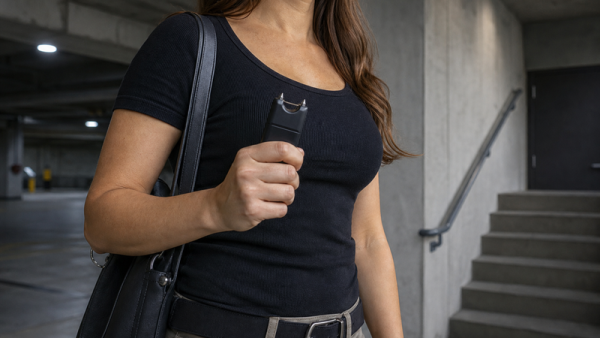
If you’re looking for something you’ll actually carry every day, the stun gun is the clear choice. Concealment matters. A device that stays in your glove box or sits on a shelf provides zero protection. Compact stun guns from brands like Runt or SMART fit in a jacket pocket, attach to a keychain, or ride in a purse without bulk or announcement. That’s protection that travels with you.
Everyday carriers — commuters, college students, people who work late — benefit most from the stun gun’s portability. It’s also the better option for those who want a stun gun with a holster for quick, organized access. Real estate agents, who often meet strangers in empty properties, represent another group for whom a compact, concealable stun gun makes practical sense — read more about that in this guide specifically designed for stun guns for real estate agents.
The stun gun is also the right call if budget and simplicity are priorities. You can get a proven, reliable device without spending a lot. The best cheap stun gun options still deliver real stopping power — and a two-pack gives you one for home and one for the road, which is exactly how prepared people think.
Who should choose a stun baton over a standard stun gun?
Home defense. Property patrol. Security roles. Late-night walks in open areas where someone could approach from a distance. These are the scenarios where a stun baton earns its place.
If you’re a homeowner who wants something positioned near a door or kept in a vehicle, a stun baton makes sense. You’re not trying to conceal it — you’re staging it where you need it. The added reach means you can create space before the situation demands contact. That’s a commanding advantage in a home defense context where you control the environment.
Security personnel, property managers, and anyone walking larger spaces after dark will find the baton’s reach to be the dominant factor. You can use the extended form to push distance while still having the electrical option if needed. It commands the space around you. That’s what makes the stun baton the right tool for perimeter protection and property-focused security.
Can you use a stun gun or stun baton more than once?
Yes — both are reusable, multi-discharge tools. A single charge on either device will allow multiple activations, and both types are rechargeable. You’re not holding a one-shot solution. Understanding how stun guns handle repeated use is important before you rely on one for defense, so that article is worth a read.
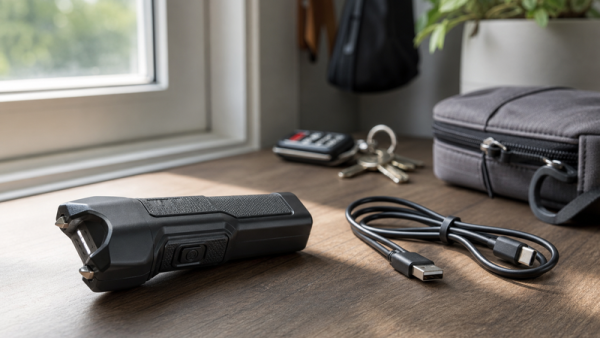
The key discipline is maintenance: keep it charged. A stun gun or baton with a dead battery is a plastic handle. Rechargeable models make this easy — plug it in when you charge your phone. Build it into your routine and it’s never an issue.
Are stun guns and stun batons legal to carry?
In most U.S. states, both stun guns and stun batons are legal for adults to own and carry. However, state and local laws vary — some jurisdictions have restrictions on voltage ratings, carry permits, or prohibited locations. We don’t give legal advice here, and the laws change. Before you purchase, verify the rules in your specific state and city. That’s your responsibility as the owner, and it’s a simple one to meet.
Both tools are designed for lawful self-defense use by responsible adults. Using them responsibly — understanding when deployment is justified — is as important as knowing how to use them.
Frequently Asked Questions About Stun Guns vs Stun Batons
What is the main difference between a stun gun and a stun baton?
The primary difference is reach and size. A stun gun requires direct contact with the target — you press it against the person. A stun baton extends your effective range by 12 to 18 inches or more, allowing you to deliver a charge while maintaining distance. Both use the same electrical mechanism. The right choice depends on whether portability or reach matters more in your situation.
Is a stun baton more powerful than a stun gun?
Not necessarily. Power is determined by the device’s output rating and build quality, not its category. A high-quality compact stun gun can match or exceed the output of a lower-end stun baton. The real advantage of a stun baton is positional — you can create space while still having a charged device ready. Don’t choose based on marketing voltage claims. Choose based on reputable brands and verified output.
Which is better for everyday carry — a stun gun or a stun baton?
A stun gun is the clear winner for everyday carry. Stun batons are too large for pockets or most purses, making consistent carry impractical for most people. A compact stun gun fits in a jacket pocket, attaches to a keychain, or rides discreetly in a bag. Since the best self-defense tool is the one you actually have with you, portability makes the stun gun the dominant choice for daily use.
Is a stun baton good for home defense?
Yes — a stun baton is one of the stronger non-lethal home defense options available. You can stage it near an entry point or keep it in a vehicle. Its extended reach lets you create distance from an intruder before the situation requires contact, and it doubles as a physical striking tool. For home defense where concealment isn’t a priority, the baton’s size and reach work in your favor.
How much do stun batons cost compared to stun guns?
Stun batons typically cost more than entry-level stun guns due to their larger housing, bigger battery, and additional components. Reliable stun guns can be found at very reasonable price points — making them the more accessible choice for budget-conscious buyers. Stun batons represent a step up in investment, but for the right use case — home defense, security work, property patrol — that cost is worth it.
Do I need a permit to carry a stun gun or stun baton?
In most U.S. states, no permit is required for adults to own or carry a stun gun or stun baton. However, laws vary by state and municipality, and some locations have restrictions on voltage, carry in public spaces, or age requirements. Always verify the current laws in your specific state and city before purchasing. This is your responsibility as the owner — and it’s straightforward to check.
What brands make reliable stun guns and stun batons?
At Revere Security, we carry stun devices from brands including Streetwise, Runt, SMART, Stun Bat, ZAP, BashLite, and others with proven track records. When choosing any stun device, look for a brand with verifiable output ratings, a solid build, and a rechargeable battery. Avoid cheap, unbranded devices with exaggerated voltage claims and no reputation to back them up.
Can a stun gun or stun baton be taken away and used against me?
It’s a legitimate concern. Many modern stun guns address this with a disable pin — a wrist strap that pulls a safety pin from the device if it’s grabbed from you, rendering it inoperable in an attacker’s hands. When choosing a stun device, look for this feature. It’s a straightforward safeguard that removes a serious vulnerability from an otherwise solid tool.
The choice between a stun gun and a stun baton isn’t complicated once you’re clear on how you plan to use it. Carry one with you everywhere? Go with a compact, reliable stun gun. Defending a home, walking property, or working in a role where reach matters? The stun baton earns its place. What you don’t want to do is pick one based on marketing hype, leave it in a drawer, and call it preparation.
Pick the tool that fits your actual life, keep it charged, and know how to use it. Browse the full selection at Revere Security — including the stun gun two-pack if you want protection staged in more than one place — and make a decision you’ll stand behind.