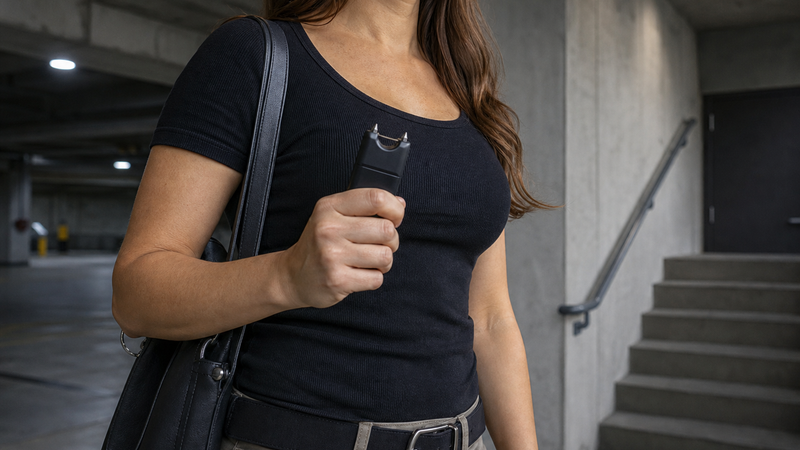
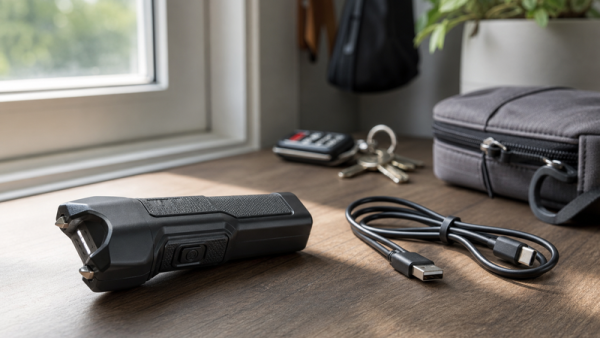
An effective stun gun needs a minimum of around 1 milliamp of current delivered through two electrodes spaced far enough apart to penetrate clothing and disrupt muscle function. Voltage — the number most manufacturers advertise — moves the charge across distance and through layers of fabric, but it’s the amperage that does the actual stopping work. A unit rated at 50 million volts with proper amperage will outperform a 100 million volt device with poor electrode design every single time.
Here’s what frustrates me about most stun gun buying guides: they lead with voltage like it’s the only number that matters, and they leave you with a false sense of confidence about what you’re actually holding. Voltage is the headline. Amperage and electrode spacing are the story. If you’re making a decision about something you might need to use in the worst moment of your life, you deserve to understand all of it — not just the number that looks best on a product page.
Why does voltage matter in a stun gun — and what are its real limits?
Voltage is the electrical pressure that drives current through a target. In a stun gun, high voltage is what allows the charge to arc across the air gap between the electrodes and then penetrate through clothing, skin, and tissue to reach the muscle underneath. Without sufficient voltage, the device simply can’t bridge that gap — especially against someone wearing a jacket, hoodie, or thick work clothes.
This is why modern stun guns are rated in the millions of volts. A rating of 20 million volts used to be considered strong. Today, reputable units start at 50 million, and many quality options — including 100 million volt stun guns — have become the practical standard for dependable penetration through heavy clothing.
But here’s where the critical detail lives: once voltage is high enough to bridge the gap and make contact, adding more voltage does not automatically make the device more effective. There’s a threshold. After that threshold, what determines incapacitation is the quality of the current delivered — its amperage, its waveform, and how well the electrodes maintain contact with the target. More voltage beyond the functional threshold is largely marketing. Sufficient voltage is non-negotiable. Excess voltage is a number on a box.
What is the difference between volts and amps in a stun gun, and why does it matter?
Think of it this way: voltage is how hard the electricity is pushing. Amperage is how much of it is actually flowing. You need both working together for a stun gun to do its job, but they do very different things in the circuit.
Volts push the charge across the distance and through clothing. Amps cause the neuromuscular disruption — the involuntary muscle contractions that prevent an attacker from controlling their body for several seconds. A stun gun with high voltage but almost no amperage will produce a painful but ineffective spark. A device with the right amperage and sufficient voltage will cause real, temporary incapacitation.
The key safety threshold you need to know: stun guns are designed to deliver less than 3 milliamps, typically between 1 and 4.5 milliamps depending on the unit and manufacturer. That range is enough to cause muscle disruption without being lethal to a healthy person. For context, it takes less than 100 milliamps sustained across the heart to cause cardiac arrest. Quality stun guns stay well below that — not by accident, but by intentional design.
When you’re comparing stun guns, look for manufacturers who publish their milliamp rating alongside the voltage. If a company only advertises voltage and is evasive about amperage, that’s a signal worth paying attention to.
How far apart do stun gun electrodes need to be to work through clothing?
Electrode spacing is the overlooked specification that separates units that work from units that just make noise. The two metal probes on the front of a stun gun need to be far enough apart to make simultaneous contact on two distinct points of the body — allowing current to flow between them through muscle tissue, not just across the surface of skin.
A general rule: probes spaced at least one inch apart can penetrate light to medium clothing effectively. For heavy clothing — winter coats, denim jackets, layered hoodies — spacing of 1.5 inches or more becomes important. Units with probes set too close together may produce a painful surface shock but fail to achieve the deeper neuromuscular disruption that actually stops someone.
This is why you can’t evaluate a stun gun by voltage rating alone. A device with 100 million volts and electrodes set a quarter-inch apart may underperform a 50 million volt unit with probes set an inch and a half apart. Check the specs. If electrode spacing isn’t listed, ask. It matters more than most buyers realize until they’re comparing units side by side.
Are higher-voltage stun guns always better, or is there a point of diminishing returns?
There’s absolutely a point of diminishing returns, and the industry doesn’t always want you to know where that line is. Once a stun gun has enough voltage to reliably penetrate clothing and make solid contact with the body — roughly in the range of 20 to 50 million volts for most practical scenarios — adding more voltage to the rating does not proportionally increase stopping effectiveness.
What higher voltage ratings do reliably affect is the arc display — the visible spark between the probes when you test-fire the device. Higher-rated units produce more dramatic, louder arcs. That visible deterrent has real value: a would-be attacker seeing and hearing a stun gun fire often reconsiders the situation immediately. So there’s a legitimate case for high-voltage units — just understand that the deterrent effect and the incapacitation effect are two different things, and voltage contributes more to the former.
If you’re considering the stun gun two pack option — useful for keeping one at home and carrying one — make sure whichever unit you choose publishes both its voltage and amperage rating. A well-specified mid-range stun gun will outperform an overhyped high-voltage unit with vague specs.
What other stun gun features affect real-world effectiveness?
Voltage and amperage are the electrical foundation, but several other factors determine whether a stun gun works when you actually need it.
Battery reliability. A stun gun with a dead or weak battery has an effective voltage of zero. Rechargeable units with a visible charge indicator remove the guesswork. If you carry a stun gun regularly, get into the habit of checking the charge — this is not optional. If you want to understand battery longevity and reuse, this guide on how many times a stun gun can be used covers what you need to know.
Safety mechanism. A stun gun with a disable pin or wrist strap lanyard prevents the device from being turned against you if it gets grabbed. This is a critical feature, not a nice-to-have. If someone takes the device from your hand, the pin pulls free and the unit stops working. That’s the difference between a tool and a liability.
Grip and form factor. A stun gun you can’t hold securely under stress is a stun gun that may not make solid contact when you need it. Rubberized grips, ergonomic shapes, and appropriate size for your hand all affect reliable delivery of the charge. Consider a stun gun with a holster for carry — it keeps the device accessible, protects the electrodes, and makes it easier to deploy quickly without fumbling.
Loud arc sound. The crackling sound of a stun gun firing is a deterrent on its own. Units that produce a loud, visible arc when test-fired serve a dual purpose: they signal that the device is functioning, and they communicate to anyone nearby that you are prepared and serious.
What voltage stun gun should someone buy for everyday carry?
For everyday carry, a stun gun in the range of 50 to 100 million volts with a published amperage between 3 and 4.5 milliamps, combined with electrode spacing of at least one inch, covers the practical bases for most situations. That’s the honest answer — not because those are the flashiest numbers, but because those specifications have been tested and they work.
If budget is a real concern, there are honest options in the lower price range that still meet effective specifications. A reliable budget stun gun that publishes its amperage is a better investment than an overpriced unit that only advertises voltage. Effective means the right electrical specs, a disable pin, a charging indicator, and a form factor you’ll actually carry.
For people who carry stun guns for professional reasons — real estate, social work, delivery work — form factor becomes an additional consideration. If you want specifics for that situation, this breakdown for real estate agents addresses carry constraints and practical requirements in detail.
And if you’re still weighing whether a stun gun is the right choice compared to other options, it’s worth reading the comparison of stun guns versus pepper spray — both have genuine advantages, and the right choice depends on your specific situation and comfort level.
Frequently Asked Questions About Stun Gun Voltage and Effectiveness
Is 50 million volts enough for a stun gun to be effective?
Yes — 50 million volts is sufficient for most real-world scenarios, particularly against people wearing light to medium clothing. What makes the difference at that voltage level is proper amperage (ideally between 3 and 4.5 milliamps) and adequate electrode spacing. Don’t let a higher voltage number on a competing product convince you that 50 million volts is underpowered — it’s not, provided the rest of the specifications are solid.
Can a stun gun be too powerful?
Within the design parameters of commercial non-lethal stun guns, no — the upper limits are set by amperage caps built into the device. Voltage ratings can be inflated in marketing without meaningfully increasing risk, because the stopping mechanism is amperage, not voltage alone. All quality stun guns sold in the U.S. are designed to stay well below the amperage threshold that would pose serious cardiac risk to a healthy person.
Does voltage rating affect how long a stun gun’s battery lasts?
Not directly — battery life is determined by battery capacity (measured in milliamp-hours) and how frequently the device is used and test-fired. High-voltage ratings don’t inherently drain batteries faster in standby mode. That said, rechargeable stun guns with a charge indicator are strongly preferred over disposable battery models, regardless of voltage rating, because knowing your charge level is essential to relying on the device.
Will a stun gun work through thick winter clothing?
A properly specced stun gun — typically 50 million volts or more, with electrode spacing of 1.5 inches or greater — can penetrate heavy clothing including winter coats and thick hoodies. The charge needs to bridge the distance through fabric to reach muscle tissue. This is why electrode spacing matters as much as voltage when evaluating a stun gun for cold-weather or layered-clothing situations.
How long does a stun gun need to make contact to be effective?
General guidance suggests one to three seconds of contact to cause disorientation and muscle disruption, and three to five seconds for more pronounced incapacitation. These are approximate — individual physiology, adrenaline, substance use, and pain tolerance all affect response. The practical takeaway: maintain contact as long as safely possible and create distance the moment the attacker is disoriented. A stun gun buys time; use it to get away.
What does the spark display on a stun gun actually tell you?
The arc you see when test-firing tells you the unit is functioning and has sufficient charge. Louder, more visible arcs are a byproduct of higher voltage. Beyond confirming function, the arc serves as a genuine deterrent — many confrontations de-escalate when an attacker sees and hears a stun gun activate. Test-fire your stun gun periodically to confirm it’s working, but do so carefully and briefly to avoid draining the battery unnecessarily.
Is a higher milliamp rating more dangerous to the attacker?
Within the range of commercial stun guns (1 to 4.5 milliamps), higher amperage means stronger neuromuscular disruption — more effective incapacitation. This is still considered non-lethal for healthy individuals. A stun gun is not a safe tool for everyone in every circumstance — people with pacemakers or cardiac conditions face elevated risk. This is why stun guns are classified as non-lethal, not harmless, and should always be used only in genuine self-defense situations.
Should I prioritize voltage or brand when buying a stun gun?
Neither should be your primary filter. Prioritize published specifications — voltage, amperage, and electrode spacing — alongside practical features like a disable pin, charge indicator, and form factor that fits your carry needs. A reputable brand matters in that it signals consistent quality control and honest spec reporting, but a brand name alone doesn’t guarantee the right combination of features. Evaluate specs first, then let brand track record reinforce your decision.
The bottom line on stun gun voltage is this: sufficient voltage is necessary, but it’s one part of a three-factor equation. Voltage gets the charge where it needs to go. Amperage causes the incapacitation. Electrode spacing and contact quality determine whether the current actually reaches muscle tissue. A stun gun that checks all three boxes — with a disable pin and a reliable charge — is what you want on your person, not just the one with the biggest number on the label.
You deserve to make this decision with accurate information. Browse the stun gun options at Revere Security with those specifications in mind, and you’ll find something that actually performs — not just something that looks impressive in a product photo.