Most self-defense content online is produced by people who have never been in a real confrontation, never trained anyone who has, and are selling you a feeling of preparedness rather than actual preparedness. The gap between what looks credible and what is practically useful is wider than most people realize — and that gap has real consequences.
Why Does So Much Self-Defense Advice Online Feel Authoritative But Fall Apart in Practice?
Here is something worth sitting with: the most-watched self-defense videos on the internet are often the least useful ones in an actual emergency. That is not a coincidence. It is a direct result of how content gets rewarded online.
Dramatic demonstrations get clicks. Complex, context-dependent advice does not. So the algorithm serves you content that feels satisfying to watch — crisp techniques, confident instructors, clean resolutions — and quietly buries the stuff that would actually help you think through a real situation. What you are left with is a curated highlight reel of things that work perfectly under controlled conditions, demonstrated on cooperative partners, with no accounting for adrenaline, distance, terrain, or the fact that the other person did not agree to lose.
The instructors who produce this content are not always lying. Some of them believe everything they are teaching. That almost makes it worse. Confident misinformation delivered with conviction is harder to identify than obvious nonsense. You walk away thinking you learned something, and you did — you just learned the wrong lesson with high confidence.
Who Is Actually Producing the Self-Defense Content You Are Watching?
The answer here is more unsettling than most people expect. A significant portion of popular self-defense content is produced by martial artists who have extensive sport or competitive experience but limited real-world application experience. Some of it comes from people with no verifiable training background at all — just a camera, a confident presentation style, and an understanding of what performs well on short-form video.
There is a subset of legitimate content from people with genuine law enforcement, corrections, military, or emergency response backgrounds. That content exists. It tends to be less flashy, more conditional, and more honest about what self-defense actually involves — which is partly why it gets fewer views. Real expertise sounds like “it depends” a lot more than fake expertise does.
The part most people never ask: what is the incentive structure? If someone is selling a course, a membership, or a product, they have a financial reason to make you feel like the threat is enormous and their solution is complete. That does not make them fraudulent, but it does mean you should think about what they are motivated to tell you versus what you need to hear.
What Does the Research Actually Say About Real-World Self-Defense Encounters?
Real confrontations do not follow the structure of instructional videos. The research on violent encounters — from criminology, law enforcement use-of-force studies, and emergency medicine — points to a consistent set of facts that most online content ignores entirely.
Most violent incidents happen fast, at close range, and without warning. The average distance in a physical assault is inside arm’s reach. The average duration of an exchange is measured in seconds, not minutes. Victims rarely have time to recall a specific technique. What they draw on is gross motor skill, spatial awareness, and whatever they have done often enough that it does not require active thought under stress.
Contrast that with most online self-defense content, which assumes you will see the threat coming, have time to set your feet, and execute a multi-step response. That is not pessimism — that is just what the data shows. The content that acknowledges this reality is out there, but it takes deliberate effort to find, and it does not have millions of views.
Is There a Difference Between Self-Defense Tools and Self-Defense Training?
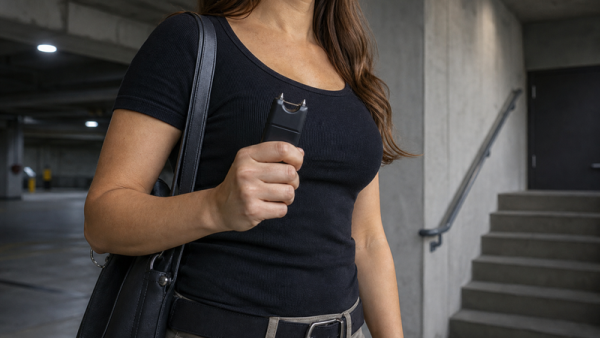
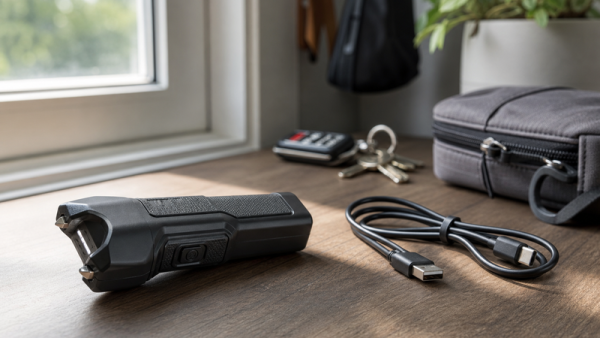
Yes, and the distinction matters more than most people are told. A tool — pepper spray, a personal alarm, a stun device — gives you an option you would not otherwise have. It does not give you a plan, a judgment framework, or the muscle memory to use it under stress when your hands are shaking and someone is six feet away and closing.
Training builds the judgment layer that turns a tool into a usable response. Without some baseline of situational awareness and decision-making, a self-defense product is just an object in your bag. With it, that same product becomes part of a coherent response. Most online content sells you either the tool without the context or the training without the tool — rarely both, and almost never with an honest accounting of what each one actually does and does not do.
That said, carrying nothing is a choice too, and not a neutral one. A person who has never trained a day in their life is still meaningfully better off having a quality pepper spray in hand than not. The goal is not perfection. The goal is giving yourself more options than you currently have and understanding what each option actually requires of you.
What Self-Defense Topics Are Consistently Underrepresented Online?
This is where the picture gets interesting. The topics that would most improve your actual safety rarely trend. They do not photograph well. They do not lend themselves to sixty-second clips. Here is what you almost never see covered seriously:
- Pre-attack indicators — the behavioral and environmental signals that precede most violent incidents, which give you the actual window to avoid the confrontation entirely
- Legal consequences of self-defense actions — what happens after you deploy a tool or use force, because that story does not end when the threat stops
- Environmental awareness habits — the daily practices that reduce your exposure to situations where self-defense becomes necessary in the first place
- Physiological effects of stress on fine motor skill — why the technique you practiced on a calm Tuesday afternoon may not be accessible to you at midnight in a parking garage
- The role of verbal de-escalation — which resolves more potentially violent situations than any physical technique ever will, and which almost no one online teaches with the seriousness it deserves
None of these topics are mysterious. They are well-documented, well-researched, and consistently taught by serious instructors in person. They just do not generate the kind of engagement that keeps a content creator’s numbers moving. So they stay in the background while technique compilations and gear reviews fill your feed.
How Do You Separate Useful Self-Defense Information From Content That Just Feels Useful?
A few filters that hold up well in practice. First, ask whether the instructor acknowledges what their approach does not cover. Legitimate expertise almost always comes with honest limitations. If someone’s system handles every scenario with the same technique, that is a signal worth paying attention to.
Second, look for an acknowledgment of legal and ethical dimensions. Self-defense does not end when the physical threat ends. The legal reality of using force — with your hands or with a tool — is complicated, jurisdiction-specific, and consequential. Anyone teaching self-defense who never mentions this is either unaware of it or has chosen to leave it out. Neither is reassuring.
Third, consider the source’s real-world experience base. Time in a gym is not the same as time on the street or in a facility where violence is a managed occupational reality. Competitive sport experience is valuable but does not translate directly. Law enforcement and corrections backgrounds, security work, and documented emergency response experience carry a different weight — not because rank confers wisdom automatically, but because those fields require you to account for the full complexity of a situation, not just the physical exchange.
Finally, be honest about your own confirmation bias. We tend to find credible the content that confirms what we already want to believe — that we are prepared, that the solution is simple, that the product or technique we already own or know is sufficient. Good self-defense education will occasionally make you uncomfortable, because it will surface the gaps in your current thinking. That discomfort is the useful part.
Frequently Asked Questions
Is most self-defense content on YouTube actually dangerous?
Dangerous is a strong word, but “misleading” fits. The bigger risk is false confidence — believing you have a workable response to a threat because you watched someone demonstrate a technique. Real danger comes from overestimating your readiness and underestimating the speed and chaos of an actual encounter. Content that skips that reality is not teaching you self-defense; it is teaching you a performance of self-defense.
Do self-defense tools actually work without formal training?
Many do, to a meaningful degree. Pepper spray, personal alarms, and similar tools have a lower skill floor than physical techniques — they do not require fine motor precision under stress the way a hand technique does. That said, knowing how to deploy them under pressure, at the right moment, without hesitation, is still a learned skill. Some basic practice matters more than most people think.
What makes a self-defense instructor credible?
Real-world application experience in contexts where failure has consequences — law enforcement, corrections, military, security, emergency medicine. Willingness to acknowledge limitations in their own system. A teaching approach that includes legal context and situational awareness, not just physical technique. Peer recognition from other credible practitioners. And, frankly, skepticism toward anyone who claims their system handles everything with the same answer.
Why do the most-viewed self-defense videos tend to be the least realistic?
Because the algorithm rewards engagement, not accuracy. Dramatic demonstrations, confident delivery, and satisfying resolutions perform well. Conditional advice, honest uncertainty, and nuanced situational thinking do not generate clicks. The content that would actually improve your preparedness tends to be slower, more contextual, and less visually impressive — which means the platform systematically deprioritizes it.
Should situational awareness be part of self-defense preparation?
It should be the foundation of it. Most violent incidents involve pre-attack indicators that a trained observer would recognize — positioning, behavioral signals, environmental factors. The ability to identify and respond to those signals early is what creates the option to avoid the confrontation entirely. No physical technique or tool is as effective as not being in the situation in the first place.
Are self-defense products a substitute for training?
No, and anyone who tells you otherwise is selling you something. A quality self-defense tool expands your options and can make a meaningful difference — especially tools with a low skill requirement under stress. But a tool used with poor judgment at the wrong moment can make a situation worse. Products and judgment development work together; neither one fully replaces the other.
How do legal considerations factor into self-defense preparation?
More than most online content acknowledges. The legal standard for justified use of force varies by jurisdiction, and it applies whether you used your hands, a less-lethal tool, or something else. Understanding your local laws — what constitutes a reasonable threat, what force is proportional, and what happens after an incident — is part of being genuinely prepared. Ignoring this dimension is not tactical minimalism; it is a real gap in your preparedness.
What is the one thing most people get wrong about self-defense readiness?
They confuse knowing about self-defense with being prepared for it. Reading articles, watching videos, and researching products builds knowledge. Actual readiness comes from applied practice — using a tool under simulated stress, developing situational awareness habits over time, and working through decision-making scenarios before you need them. The gap between information and capability is where most people’s preparation actually stops.
The Part Nobody Mentions at the End of These Articles
There is something worth saying plainly: genuine preparedness is not a product you buy or a video you watch. It is a combination of honest self-assessment, practical tools that match your actual life and risk profile, and enough applied practice that your response under stress comes from habit rather than active recall.
The internet will keep producing content that makes self-defense look simpler than it is, because that content performs better than the honest version. That is not going to change. What can change is how critically you evaluate what you are consuming and whether the gaps it leaves — legal context, situational awareness, stress inoculation, honest limitations — are ones you are actively filling.
Carry something useful. Understand what it actually does and what it does not. Know the legal framework you are operating in. And treat any source — including this one — as a starting point, not an endpoint. The people who stay safest are the ones who keep asking questions after they think they already have the answer.