Yes, you can use a dummy camera in most apartments. There are no federal laws prohibiting them, and most landlords don’t restrict them outright — though some leases do govern how you mount things to walls. The main rules to follow involve where you point it: dummy cameras must not record (or appear to monitor) spaces where others have a reasonable expectation of privacy, like a neighbor’s unit or a shared bathroom.
That simple answer covers most situations. But if you’re renting and thinking seriously about whether a dummy camera makes sense for your space — what it can realistically do, where you can legally put it, how your landlord fits into the picture, and when a real camera might serve you better — the fuller picture is worth understanding. Getting this right means you’re actually protected, not just hoping for the best.
What does a dummy camera actually do in an apartment setting?
A dummy camera works on one principle: deterrence. It looks like a real security camera — dome housing, blinking LED, mounting bracket — but it doesn’t record anything. No footage, no storage, no live feed. Its entire job is to make someone think twice before trying something they shouldn’t.
In an apartment, that plays out in a few specific ways. Mounted near your front door, a convincing dummy camera can discourage package theft or keep opportunists from lingering in the hallway. Near a parking area or shared entrance, it signals that someone is paying attention to this space. Studies on situational crime prevention consistently find that visible cameras — real or not — do reduce opportunistic theft and vandalism, because most of these incidents aren’t premeditated. Someone making a quick decision to grab a package off your doorstep is likely to move on when they see a camera watching.
What a dummy camera cannot do is provide evidence. If something does happen — a break-in, a confrontation, a hit-and-run in the parking lot — you’ll have no footage to hand to the police. That’s the honest trade-off, and it’s worth knowing going in. If you’re in a situation where you’ve already had an incident or you’re genuinely concerned about a specific threat, a dummy camera alone probably isn’t enough. For those situations, a real hidden camera for bedroom security or another working camera gives you the documentation a dummy never can.
Are there any laws that affect dummy camera placement in apartments?
The legal framework for dummy cameras is actually simpler than most people expect, because the camera isn’t recording. Privacy laws that govern surveillance equipment — state wiretapping statutes, video voyeurism laws, recording consent requirements — are triggered by actual recording activity. A dummy camera that captures nothing generally falls outside those regulations.
That said, the “reasonable expectation of privacy” standard still applies to how the camera is positioned and what it appears to monitor. Pointing a camera — real or dummy — directly into a neighbor’s window, at a shared bathroom entrance, or in any space where your neighbors have a genuine expectation of privacy can still create legal exposure, even if the camera is fake. The concern isn’t what the camera captures; it’s what a reasonable person would think it’s capturing.
In practical terms for apartment renters: keep dummy cameras oriented toward your own door, your own patio or balcony, common areas that are genuinely public-facing, or interior spaces you control. Avoid aiming them at any spot where your neighbors could reasonably object to surveillance. If you’re uncertain about a specific placement, your local tenant’s rights organization or a quick call to your property manager can clarify what’s acceptable in your building.
One more thing worth knowing: some cities and states have specific ordinances around security cameras in residential areas. While dummy cameras rarely trigger these rules, it doesn’t hurt to do a quick search for your city’s regulations if you’re in a jurisdiction known for stricter privacy laws.
Does your lease affect whether you can use a dummy camera?
Your lease is the document that actually governs most of your day-to-day decisions as a renter, and it’s the first place to check before mounting anything to your walls or ceiling. Most standard residential leases don’t specifically address dummy cameras — they’re too common a product to have generated widespread lease language around them. But they do often address wall damage, modifications to the unit, and alterations to common areas.
A dummy camera mounted with a screw into drywall creates the same tiny hole as any other wall anchor. If your lease requires you to restore the unit to its original condition, that applies whether you’re hanging a camera or a picture frame. Some renters solve this by using adhesive mounting strips for lightweight dummy cameras — worth checking whether the camera you’re looking at supports that option.
Common areas are a different matter. Mounting anything in a hallway, stairwell, or shared entrance almost always requires landlord approval because those spaces don’t belong to your unit. Even if your landlord is unlikely to care about a small dummy dome camera, asking first keeps you on solid ground. Most landlords, once they understand what you’re trying to accomplish, are receptive — they generally don’t want package theft happening at their building either.
If your building has a homeowners association or tenant committee, there may be an additional layer of rules about exterior modifications. Worth a quick check before you mount anything visible from shared spaces.
Where are the best spots to place a dummy camera in an apartment?
Placement determines whether a dummy camera actually changes behavior — or just collects dust at eye level where no one notices it. Effective dummy camera placement follows the same logic as real security camera placement: position it where someone would see it at the moment they’re considering doing something they shouldn’t.
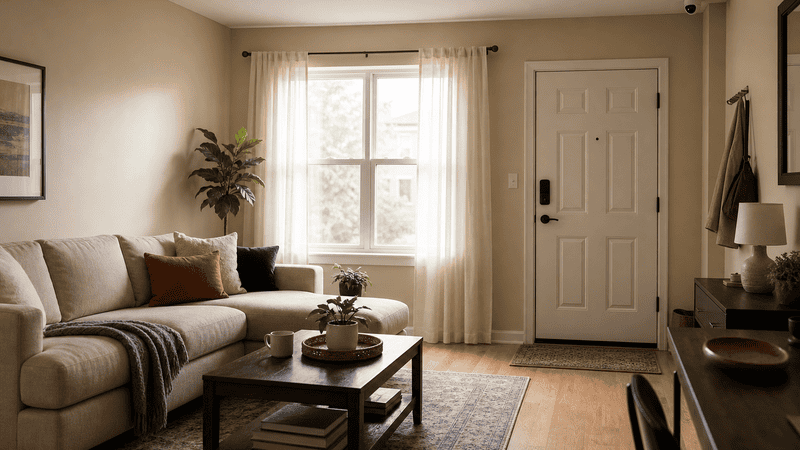
Your front door is the highest-value location for most renters. Mount it above the door frame, angled slightly downward, so anyone approaching can see it clearly. This is where package theft happens, where uninvited guests make contact, and where the visual deterrent has the most immediate impact.
A balcony or ground-floor patio is worth covering if you have one. Ground-floor apartments are statistically more vulnerable to break-ins, and a visible camera on a patio can shift an opportunist’s attention to an easier target elsewhere.
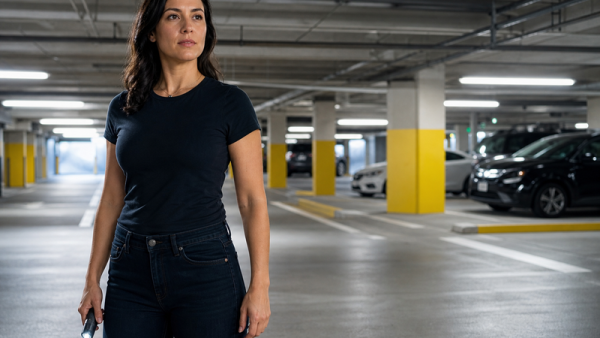
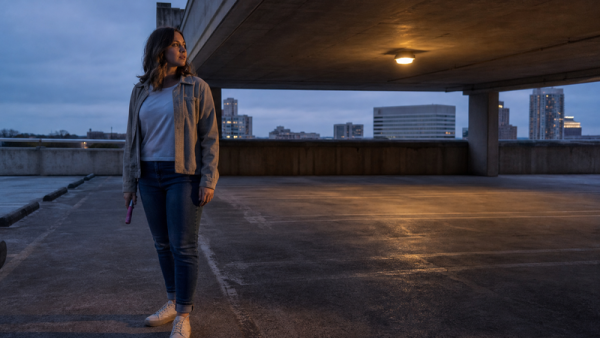
For renters in buildings with shared parking or a private garage space, a dummy camera positioned to cover your vehicle adds another layer of deterrence without requiring any landlord approval (if it’s within your own space).
Inside your unit, a dummy camera near the main living area can serve as an additional deterrent — though interior placement matters less for deterrence than exterior placement does. If you’re thinking about interior coverage for actual documentation purposes, that’s when a long battery hidden camera becomes relevant, because you need real footage if something happens inside your home.
Our decoy security camera options are designed to look convincing at exactly the distances and angles where deterrence happens. A flimsy plastic dome that doesn’t hold up under a second glance doesn’t do the job.
When does a dummy camera stop being enough — and what should you add?
A dummy camera is a solid first step for most renters who want visible deterrence without the cost and complexity of a full camera system. But there are situations where it genuinely isn’t enough, and knowing where that line is helps you make a decision you’ll feel confident about.
If you’ve already experienced a break-in attempt, a confrontation with a neighbor, or theft from your unit or vehicle, you need documentation capability. A dummy camera gives you nothing to show law enforcement or your landlord after the fact. A real camera — even a single, well-positioned one — changes that entirely.
If your primary concern is what happens inside your home rather than at the door, dummy cameras serve no purpose. They’re entirely exterior-facing deterrent tools. For interior peace of mind — whether you’re concerned about a housekeeper, a maintenance worker, or someone who has access to your space — a real camera is the right answer.
If you rent in a building with a history of incidents, or you live alone and want the confidence that comes from knowing you have actual evidence if something happens, layering a real camera with your dummy setup is worth considering. You can read more about how to think through your full options in our post on dummy cameras explained — it walks through the full landscape of when they make sense and when they don’t.
Frequently Asked Questions About Dummy Cameras in Apartments
Can my landlord tell me to remove a dummy camera?
Yes, if your lease restricts wall modifications or exterior alterations, your landlord can require removal. Most won’t object to a small camera near your own door, but common area placement almost always requires approval. When in doubt, ask before mounting — it’s a much easier conversation than after.
Is it illegal to have a fake security camera?
No. Dummy cameras are legal to own and use throughout the United States. They aren’t regulated by federal law, and no state has laws specifically prohibiting them. The placement rules that apply to real cameras — specifically around privacy expectations — are still worth following even though the camera doesn’t record.
Can a dummy camera be used as evidence in court?
No. A dummy camera captures no footage, so there is nothing to present as evidence. If you anticipate needing documentation of incidents — theft, vandalism, harassment — a real camera is the only option that gives you usable evidence.
What makes a dummy camera look convincing?
The most convincing dummy cameras have a realistic housing (dome or bullet style), a blinking LED indicator, a proper mounting bracket, and positioning that matches where a real camera would logically be placed. Cheap plastic housings at the wrong height or angle don’t hold up to a second look. Placement matters as much as appearance.
Do I need to tell my neighbors I have a dummy camera?
No disclosure is required for a dummy camera in your private space or directed at public-facing areas. If you’re placing something in a common area, giving your landlord a heads-up is courteous and protects you if any neighbor objects. Transparency with your property manager is generally the right call for anything outside your unit’s walls.
Can I use a dummy camera inside my apartment?
You can, but it doesn’t serve much purpose inside. Deterrence only works when someone sees the camera before deciding to act. Inside your unit, any potential issue is already in progress by the time it would matter. Interior security is better served by a real camera if documentation is your goal.
How do I mount a dummy camera without damaging my walls?
Some dummy cameras are lightweight enough to mount with heavy-duty adhesive strips, which avoids wall damage entirely. Check the weight and mounting options before you buy. If screws are required, standard drywall anchors create small holes that are easy to patch and paint when you move out — the same as any other wall-mounted item.
Is a dummy camera better than no camera at all?
For deterring opportunistic crime — which represents the majority of residential theft and vandalism — yes, a visible dummy camera is meaningfully better than nothing. It changes the risk calculation for someone making a quick decision. It won’t help if you face a determined, repeat offender or need evidence after an incident, but for everyday deterrence in a typical apartment, it earns its place.
Renting an apartment doesn’t mean giving up control over your own security. A dummy camera, placed thoughtfully, gives you real deterrent value without a major investment or a complicated installation. Check your lease, position it where it’s visible at the right moment, and be honest with yourself about whether deterrence alone is what you need — or whether your situation calls for actual documentation capability too.
If you’re ready to look at options, start with our decoy security camera lineup and go from there. You deserve to feel settled in your own home, and making one smart, informed decision today is the best way to get there.