Yes, most stun guns work through clothing, but effectiveness depends on fabric thickness, device voltage, and contact pressure — not just whether clothing is present. A thin cotton shirt barely changes the outcome. A thick leather jacket or heavily padded coat can reduce effectiveness significantly. The real variable isn’t “clothing or no clothing” — it’s how much material sits between the electrodes and skin, and how hard the device is pressed against the body.
Here’s the assumption everyone gets backwards about stun guns and clothing
Most people assume clothing is a simple on/off switch — either it blocks a stun gun completely, or it doesn’t matter at all. Neither is true. The actual physics are more interesting, and once you understand them, you’ll shop for a stun gun completely differently.
A stun gun doesn’t need bare skin to work. It needs a closed electrical circuit between its two contact points, and enough voltage to punch through whatever resistance stands in the way. Clothing adds resistance. It doesn’t eliminate the circuit — it just makes the device work harder to complete it. That distinction is the entire story, and it’s the one most product pages skip entirely.
How does clothing actually affect stun gun contact?
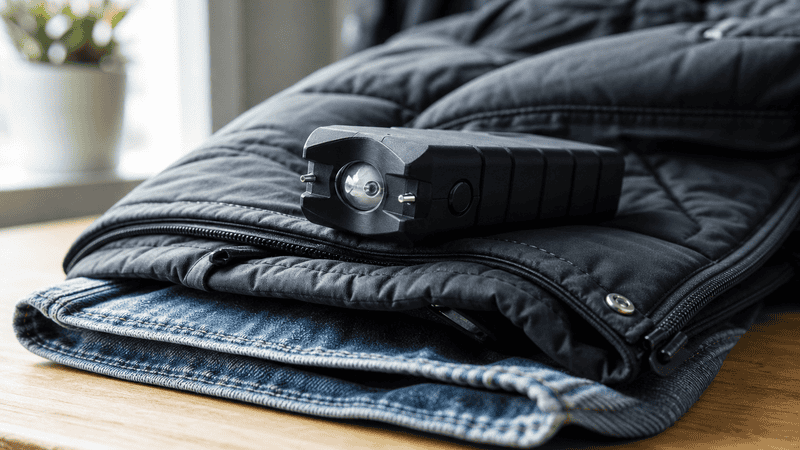
Clothing acts like an insulating layer, and every layer changes the math. A single layer of cotton or thin synthetic fabric adds minimal resistance — most modern stun guns punch through it without a meaningful drop in effectiveness. Multiple layers, or dense materials like wool, denim, or synthetic padding, add up fast. Stack a t-shirt, a sweater, and a winter coat, and you’ve built a barrier that even a strong device may struggle to overcome fully.
Here’s the part that surprises people: it’s not really about fabric type. It’s about air gaps and density. Loose, airy fabric — even if it looks thick — often transmits current better than a tightly compressed layer, because compressed fabric can actually improve contact if the electrodes are pressed firmly against the body. That’s counterintuitive, and it’s exactly why generic advice like “thick clothing blocks stun guns” oversimplifies something that depends heavily on device design.
Does higher voltage mean better performance through clothing?
Voltage gets the marketing spotlight, but it’s not the number that matters most here. Amperage — the actual current delivered — is what does the work once the circuit is made. High voltage helps the device arc across small air gaps and initiate the connection, especially through thicker material. But once contact is established, amperage is what disrupts the muscles.
This is why two devices with wildly different advertised voltage numbers can perform almost identically in real-world use, and why a device with modest voltage but solid amperage can outperform a flashier spec sheet. If you’re comparing options, this is a smarter place to focus than the biggest number printed on the box. Our breakdown on what research really shows about electric self-defense digs into this in more depth if you want the full picture.
What actually determines whether a stun gun works through a coat?
Three factors matter more than anything else, and none of them is “clothing thickness” by itself:
- Contact pressure. A stun gun jammed firmly against the body — even through a coat — completes a much stronger circuit than one barely touching fabric. Pressure closes air gaps.
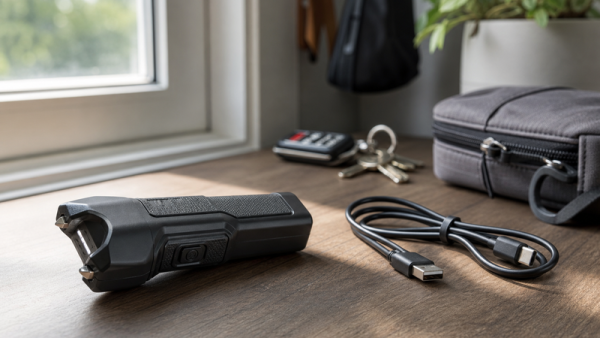
- Prong spacing and design. Devices with wider prong spacing and sharper contact points tend to punch through material more reliably than flat, closely spaced contacts.
- Duration of contact. A half-second tap through a heavy coat may do almost nothing. Three to five seconds of sustained contact dramatically increases the odds of an effective disruption, even through resistant material.
This is the part nobody talks about, and it’s genuinely useful: the “through clothing” question is less about the product and more about how it’s used in the moment. A weaker device applied correctly with sustained pressure often outperforms a stronger device tapped briefly against a jacket sleeve.
Why do compact stun guns sometimes outperform bulkier ones through fabric?
This is where it gets genuinely counterintuitive. You’d expect a bigger device to win every comparison. In practice, smaller devices designed for close, controlled contact — rather than raw specs — often perform better against clothing because they’re easier to press firmly and hold in place during a real struggle.
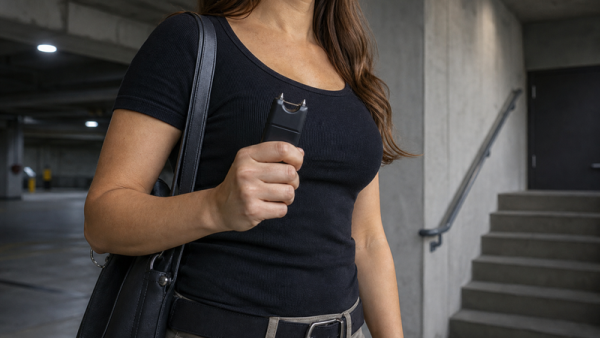
A compact option like a lipstick stun gun isn’t just about disguise. Its small, focused contact area concentrates pressure precisely, which matters more against a heavy coat than sheer size does. Similarly, devices carried in a stun gun with nylon holster setup tend to get drawn and applied faster — and speed of application, paired with a solid grip, often beats specs on paper.
If you’re deciding between a stun gun and other electric options, our comparison on stun guns versus TASER devices for self-defense covers how contact-based devices differ fundamentally from projectile-based ones — a distinction that matters even more once you factor in clothing.
Does the same logic apply to devices carried while commuting or exercising?
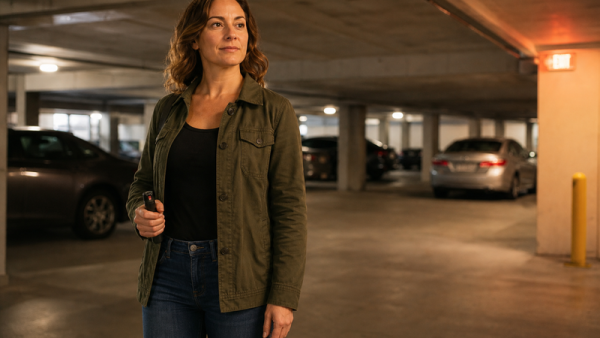
Yes, and it’s arguably more relevant there than anywhere else. Commuters layer up for weather. Runners wear moisture-wicking fabric that behaves differently than cotton. Both situations change the clothing variable in ways worth thinking through before you buy.
If you’re commuting through cold months, a stun gun built for commuters designed for quick one-handed access matters more than raw power specs, since coats and scarves are already working against you. For anyone active outdoors, our post on stun guns for runners covers how lightweight athletic wear changes the equation compared to bulky winter layers — often for the better, since thin synthetic fabric transmits current more easily than people expect.
A device secured with a stun gun wrist strap also solves a problem that matters more than clothing thickness: keeping the device in your hand during a struggle, so you can apply sustained pressure instead of a glancing tap.
Frequently Asked Questions About Stun Guns and Clothing
Do stun guns work through a winter coat?
Often yes, but with reduced certainty. Thick, padded coats add significant resistance. A device applied with firm, sustained pressure for 3-5 seconds has a much better chance of working effectively than one briefly tapped against heavy outerwear.
Does thicker clothing always block a stun gun completely?
No. Clothing reduces effectiveness by adding resistance, but it rarely blocks a stun gun entirely. Contact pressure and duration matter more than most people realize — firm, sustained contact through thick fabric often works better than brief contact through thin fabric.
Is a higher voltage stun gun better through clothing?
Not necessarily. Voltage helps initiate contact across small gaps, but amperage does the actual work once the circuit is complete. A device with solid amperage and good prong design often outperforms one with a flashier voltage number.
Do disguised stun guns work as well as standard ones through fabric?
Yes, disguise doesn’t change the internal electronics — it changes the housing. What actually affects performance through clothing is prong spacing, contact pressure, and duration, not whether the device looks like a stun gun or something else entirely.
Why does contact duration matter more than people think?
Because completing an effective electrical disruption takes time, especially through resistant material. A half-second tap rarely accomplishes much. Three to five seconds of sustained, firm contact dramatically increases the likelihood of an effective result, even through heavier clothing.
Does synthetic athletic clothing block stun guns differently than cotton?
Yes, often in a helpful way. Thin, moisture-wicking synthetic fabric typically transmits current more easily than people assume, since it lacks the dense, layered structure of winter clothing. This is worth knowing if you carry a device while running or exercising.
Should I press a stun gun harder against someone’s body if they’re wearing thick clothing?
Firm, direct pressure genuinely improves the odds of an effective contact through thick material by closing air gaps between the electrodes and the body. This is one of the most overlooked factors in real-world effectiveness.
The real takeaway most people miss
The question “does it work through clothing” has a more useful answer than a flat yes or no: it works based on pressure, duration, and design — not fabric thickness alone. That reframes how you should actually shop. Instead of chasing the highest voltage number on the box, look at prong design, grip comfort, and how quickly you can draw and apply the device under stress.
Once you see it this way, the “through clothing” question stops being a mystery and starts being a design problem — one that better-built devices solve more consistently than others. That’s worth knowing before you buy, not after.