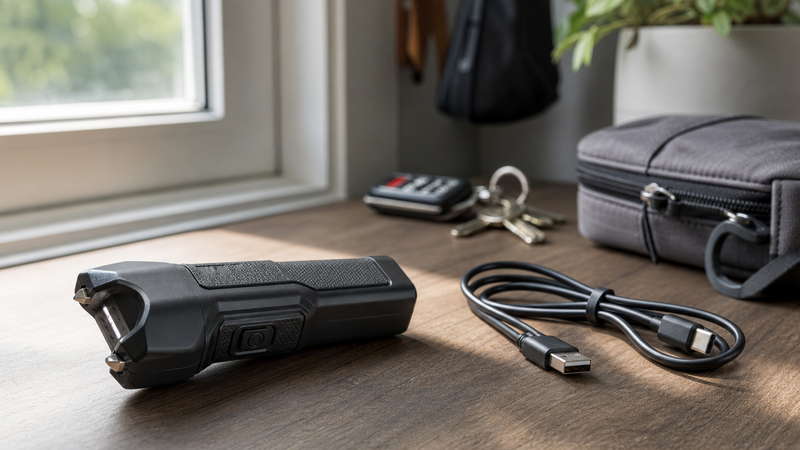
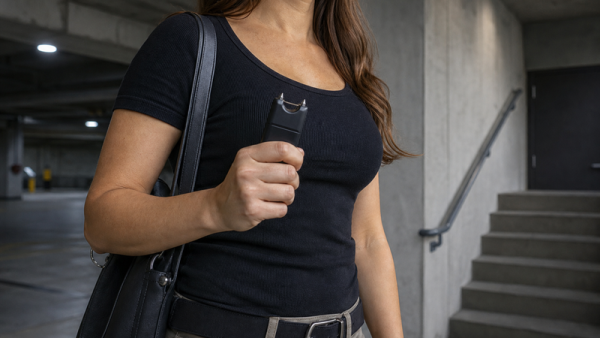
Yes — a stun gun can be used more than once, and in most cases, many more times than people expect. A fully charged rechargeable stun gun typically delivers dozens of discharges before the battery runs low, and battery-powered models last just as long on fresh cells. One trigger pull doesn’t empty the tank. The bigger question isn’t how many times you can fire it — it’s how many times you will actually have it charged and ready.
Here’s the part most people don’t think about: the assumption that a stun gun is a one-shot tool is exactly the kind of thinking that leaves people underprepared. It shapes how people buy, how they carry, and whether they bother charging their device at all. Rethinking that assumption changes everything about how you approach personal safety — and how much value you actually get from a stun gun.
How Many Times Can You Fire a Stun Gun Before It Dies?
The answer depends on the model, but the number is almost always higher than people guess. A rechargeable stun gun with a standard built-in battery can typically deliver anywhere from 20 to 100 short discharges on a single charge. A one-second test fire uses a fraction of the stored energy. Even a five-second sustained contact, which is more than enough to stop a threat, leaves substantial charge remaining.
Battery-powered stun guns follow similar logic. Fresh alkaline or lithium batteries hold enough power for dozens of activations. The dramatic spark and crackle you see in a test fire? That consumes less energy than you’d think. The discharge sounds intense — and it is — but modern stun gun circuitry is surprisingly efficient at converting stored battery energy into the high-voltage output that makes them effective.
What does drain a stun gun faster than expected is extended arc testing — holding the trigger for five or more seconds repeatedly, just to watch it spark. If you’re doing that weekly to “make sure it works,” you’re genuinely shortening your charge cycle. A quick one-second test every few weeks is plenty. Everything beyond that is theater, not maintenance.
What’s the Real Difference Between Rechargeable and Battery-Powered Stun Guns?
This is where the conventional wisdom breaks down in an interesting way. Most buyers default to “rechargeable is better” without questioning it. The truth is more nuanced — and which type wins depends almost entirely on your actual usage pattern.
Rechargeable stun guns are genuinely more convenient for daily carry. Plug it in overnight, like your phone, and it’s ready. No hunting for batteries, no guessing whether the AAs in your drawer are fresh. If you’re someone who will commit to a weekly or biweekly charge routine, a rechargeable model is the right choice. Our post on whether rechargeable stun guns are better than battery-powered ones breaks this comparison down in more detail if you want to go deeper.
Battery-powered models have a counterintuitive advantage: they’re ready the moment you put fresh batteries in. No charging window. For someone who keeps a stun gun in a bag, a car, or a property they visit occasionally — rather than carrying it on their person daily — a battery-powered model means you can swap in new batteries and be at full power instantly. A rechargeable device that’s been sitting in a drawer for three months may be nearly dead when you actually need it.
The innovation here isn’t in the technology — it’s in the thinking. Match the power type to your actual behavior, not the one that sounds better in a product description.
Does Using a Stun Gun Multiple Times Wear It Out Faster?
Not meaningfully, within a realistic use scenario. Stun guns are designed for repeated discharge. The components that produce the high-voltage arc — the oscillator circuit, the capacitors, the transformer — are built to cycle. Normal self-defense use, even if it involves multiple activations in one incident, does not degrade the device in any measurable way.
What does cause wear over time is the battery itself, not the discharge circuit. Rechargeable stun guns use lithium-ion or nickel-cadmium cells, both of which have a finite number of charge cycles — typically 300 to 500 full cycles before capacity begins to drop. That sounds like a lot, and it is. If you charge your stun gun once a week, you’d hit 500 cycles in nearly ten years. Realistic battery degradation is almost never a practical concern for the average owner.
The more common failure mode isn’t wear from use — it’s neglect. A stun gun that sits uncharged for months can develop battery issues from deep discharge. The fix is simple: maintain a basic charging habit and store it with some charge remaining rather than running it completely flat.
How Long Does a Stun Gun Discharge Actually Need to Be to Be Effective?
This is one of the most misunderstood aspects of how stun guns work — and it changes the math on “how many times can I use it” in a meaningful way. Most people imagine they need to hold the stun gun in contact for a long time. In practice, one to two seconds of contact is enough to cause muscle disruption and pain that creates the window to escape. Three to five seconds significantly increases the effect.
What this means practically: in an actual self-defense situation, you’re not depleting your battery with a prolonged discharge. You’re using a short, targeted burst. The rest of your charge remains fully available. A stun gun that can technically deliver 50 discharges can, in a real-world situation, effectively handle multiple encounters on a single charge — which is both reassuring and almost never discussed in product listings.
This is also why testing your stun gun doesn’t need to be elaborate. A one-second arc test tells you the device is functional. It doesn’t tell you much more than that, and it costs you battery life you’d rather keep in reserve.
What Should You Look for If You Want a Stun Gun That Stays Ready?
The criteria most buyers focus on — voltage, size, price — aren’t the ones that determine whether a stun gun is actually ready when it matters. Here’s what actually matters for a device that stays functional over time:
Built-in charging indicator. If you can’t tell whether your stun gun is fully charged without guessing, you’ll either overcharge it or carry it at partial power. A visible charge indicator removes the guesswork entirely.
Low-drain standby. Some stun guns bleed charge slowly even when not in use. Models with efficient circuitry maintain their charge for weeks between uses. This matters enormously for a device that might sit in your bag between uses for long stretches.
Safety mechanism. A reliable on/off safety switch or disable pin prevents accidental discharge — which wastes charge and, more importantly, could cause an unintended incident. Look for a safety that’s easy to disengage quickly but won’t trip on its own.
If you’re looking for reliable options without spending a lot, it’s worth browsing stun guns for less than $30 — some of the most dependable everyday carry models are in that range. Or if you want a backup unit ready to go, a stun gun two-pack is a smart way to keep one charged and one in use without ever having a gap in your readiness.
Are There Jobs or Situations Where Having a Multi-Use Stun Gun Matters More?
Yes — and this is an angle most people overlook entirely. For someone who carries a stun gun once in a while, the number of available discharges is mostly theoretical. But for professionals who spend significant time in unpredictable environments, the multi-use capacity of their stun gun is a genuine consideration.
Real estate agents, for instance, routinely meet strangers alone in empty properties. The possibility of needing to use a stun gun — and then continue their day, still alone, still in unfamiliar spaces — makes a high-capacity, rechargeable model worth thinking about. A stun gun sized for professional carry and quick access is a different tool than one sized for a quick errand. Our guide on stun guns for real estate agents covers exactly this kind of professional use case, and the related post on stun gun laws for real estate agents is worth reading before you buy.
For anyone who carries regularly, a stun gun with a holster adds another layer of readiness — faster access means less fumbling, which matters more than voltage in a real situation.
Frequently Asked Questions About How Many Times a Stun Gun Can Be Used
Can a stun gun run out of power in the middle of using it?
It’s extremely unlikely in a real self-defense situation. A fully charged stun gun holds enough power for many discharges, and a single defensive use — even multiple activations — uses only a small fraction of the stored energy. The scenario to guard against is carrying a neglected, uncharged device. Keep it charged, and mid-use failure is not a realistic concern.
How often should I charge my stun gun?
For most rechargeable models, charging once every four to six weeks is sufficient for a device that doesn’t see daily heavy use. If you test-fire it frequently or use it regularly, charge it more often. The key is developing a consistent habit — treat it like your smoke detector battery and pick a regular reminder date.
Does firing a stun gun multiple times in one incident reduce its effectiveness?
No. Each discharge delivers the same voltage as the last, provided the battery still has charge. The electrical output doesn’t diminish with repeated use in a single incident. The stun gun either has power or it doesn’t — there’s no “weakening” effect from using it back to back.
Can you recharge a stun gun too many times?
Over many years, battery capacity in rechargeable models does gradually decline after hundreds of charge cycles — the same way any lithium or NiCad battery does. For typical carry and maintenance habits, this isn’t a practical concern for years. If you notice the charge not lasting as long as it used to after several years of use, the battery may need replacement or the device may be due for an upgrade.
Is a more expensive stun gun able to fire more times than a cheap one?
Not necessarily. Price often reflects voltage rating, build quality, and features like disable pins or LED lights — not the number of available discharges. Some affordable stun guns deliver excellent charge capacity. Compare battery type and milliamp rating, not price, when evaluating discharge performance.
What happens if someone grabs my stun gun while I’m using it?
Models with a wrist-strap disable pin address this directly. When the pin is pulled — which happens if the strap is attached to your wrist and someone yanks the device away — the stun gun becomes inoperable. The attacker can’t use it against you. This is a feature worth prioritizing, and it has nothing to do with how many times the device can fire.
Do battery-powered stun guns lose charge when not in use?
Quality alkaline and lithium batteries have extremely low self-discharge rates. A stun gun with fresh batteries and a reliable safety switch can sit unused for a year or more and still be functional. This is one practical advantage battery-powered models hold over rechargeable ones — they don’t need a charge routine to stay ready.
Can I test my stun gun to make sure it still works without wasting too much battery?
Yes. A one-second arc test — holding the trigger briefly so the discharge crackles — is enough to confirm the device is functional. You don’t need a prolonged test. Stick to one brief test every few weeks rather than regular extended demos, and you’ll preserve your charge without sacrificing confidence in the device.
The bottom line on stun gun reusability is simpler than most people assume: one use doesn’t finish the charge, repeated use doesn’t degrade performance, and the only real failure mode is neglect. The stun gun you maintain and actually carry beats the one with a higher voltage rating collecting dust in a drawer. Pick a model that fits your life, build a charging habit that sticks, and you’ll have a tool that’s genuinely ready — not just technically capable. That’s a more useful way to think about it than any spec sheet comparison.