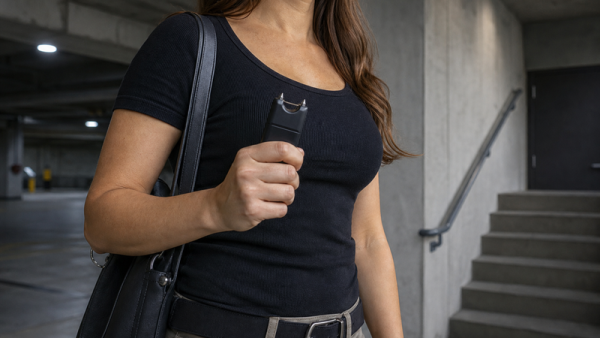
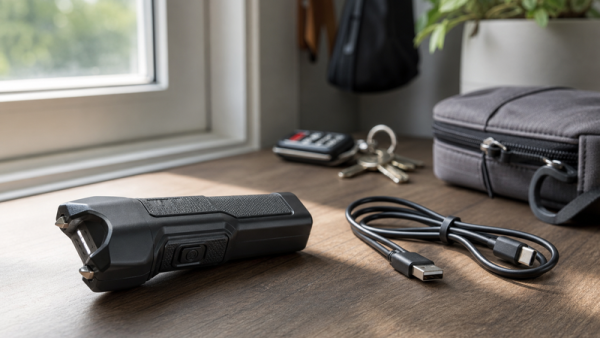
A stun baton reaches between 12 and 21 inches farther than a standard compact stun gun, depending on the model — and that distance is the entire point. Where a pocket stun gun requires physical contact at arm’s length, a stun baton lets you stop a threat before it closes to within grabbing distance. For anyone who has thought seriously about personal protection, that distinction isn’t a minor detail. It’s the difference between two fundamentally different tools.
Most people shopping for a stun device focus on voltage numbers or how small a device is. That’s understandable, but it misses the more important question: what does this tool actually give you in a real situation? The reach of a stun baton changes your options in ways that a compact stun gun simply cannot. Understanding that difference — clearly, without the noise — is what separates a well-considered decision from an impulse buy you’ll second-guess later.
How does reach actually differ between a stun baton and a compact stun gun?
A compact stun gun — the kind that fits in your palm or clips to a keychain — requires you to press the electrodes directly against an attacker. The contact zone is measured in fractions of an inch. You have to be close enough to touch them, which means they are already close enough to grab you. That’s a workable tool in the right hands, but it demands that you’ve already made contact with the threat.
A stun baton, by contrast, typically runs 12 to 21 inches in length. Models like those in the Streetwise lineup extend your effective range to the full length of your arm plus the baton — meaning you can make contact with a threat while maintaining meaningful separation. In practical terms, you stop someone at distance rather than in a grapple.
There’s also a secondary effect worth noting: most stun batons display a visible electrical arc along the shaft, not just at the tip. That visual — and the sound that comes with it — functions as a deterrent before any contact is made. The threat sees what’s coming. That alone resolves a significant number of confrontations before they escalate. A compact stun gun tucked in your hand offers no such warning signal.
What situations call for a stun baton over a regular stun gun?
The honest answer is that different tools suit different people and different contexts. But certain situations clearly favor reach over compactness, and recognizing them is part of making a genuinely informed decision.
Security professionals, property managers, and anyone who patrols or monitors space — a parking lot, a building perimeter, a campus — benefit substantially from a baton’s extended reach. The ability to engage at distance rather than close quarters changes the dynamic significantly. It’s also worth noting that a baton carries a visual presence that a palm-sized device does not. Anyone approaching with hostile intent sees what they’re dealing with. That deterrent value is real and shouldn’t be dismissed.
Night walkers, trail runners, and people who regularly move through low-visibility environments are another category where a stun baton’s reach earns its place. You want separation. You want to stop a problem before it physically reaches you. Our post on whether stun batons are effective against large attackers goes deeper on this — particularly relevant if your concern involves a size disadvantage.
Conversely, someone navigating a corporate environment, a classroom, or a professional setting — where discretion is the priority — may find a compact stun gun the more appropriate tool. A stun gun designed for real estate agents or a stun gun suited for teachers prioritizes concealability and ease of carry over extended reach. Neither choice is wrong. They’re just different answers to different questions.
Does a stun baton’s extended reach affect how it should be used?
Yes, and this matters more than most buyers consider before purchasing. A compact stun gun is primarily a contact weapon — press and activate. The technique is straightforward. A stun baton introduces a different handling profile: it requires some awareness of distance management, grip, and the mechanics of extending a longer device from a carry or draw position.
This isn’t complicated, but it’s not trivial either. If you’re carrying a baton in a vehicle or a bag, you need to think about how quickly you can access and extend it. Some models collapse or fold for carry, which adds a deployment step. Others are fixed-length, which simplifies deployment but changes how they’re stored.
The grip and stance also differ. A stun baton functions somewhat like a short stick — you hold it with intention, you position your body, and you present it toward the threat. That physical presence is part of its value, but it requires you to commit to it. A compact stun gun is a tool of last-resort contact; a stun baton is a tool of active deterrence and distance control. Both have their place. Knowing which mindset you’re operating from matters.
Is the electrical output different between a stun baton and a compact stun gun?
This is where a lot of buyers get misled by marketing. Raw voltage numbers — the “80 million volts” or “100 million volts” claims you’ll see on packaging — are largely meaningless without context. What actually determines effectiveness is amperage and the quality of the circuit. A well-built compact stun gun and a well-built stun baton can deliver comparable stopping power at the point of contact.
The reach advantage of a baton doesn’t come from superior electrical output. It comes from superior geometry — more distance between you and the threat when contact happens. Some batons do feature multiple contact points along the shaft, which means they’re harder to grab without getting shocked. That’s a genuine engineering advantage, not a marketing claim. If someone tries to grab the baton away from you, they get a shock for the attempt. That’s meaningful design, not theater.
For a clear-eyed look at how stun devices perform in real conditions — including through clothing — the post on whether stun guns work through clothing is worth your time before you finalize any decision.
How do you choose between a stun baton and a compact stun gun based on your lifestyle?
The right question isn’t which device is “better.” It’s which device you’ll actually carry, access, and use competently in a high-stress moment. That answer varies by person.
If you spend most of your time in professional environments and want something unobtrusive that lives in your bag or on your person without drawing attention, a quality compact stun gun is the sharper choice. A stun gun with a proper holster gives you secure carry without fumbling, which is exactly what you want when seconds matter. Compact doesn’t mean compromised — it means appropriately matched to your actual environment.
If you walk alone frequently, manage property, or spend time in open outdoor settings where threats can come from a distance, a stun baton’s reach is a genuine asset. The ability to deter and stop before physical contact is made has real-world value that no compact device can replicate. Brands like Streetwise and Bad Ass offer baton-style options worth examining seriously.
Some buyers — particularly those who want versatile coverage for multiple users or situations — opt for both. A stun gun two-pack is a practical way to equip a household or keep one accessible in different locations, while a baton serves a specific situational role. That’s not overthinking it. That’s considered preparation.
And if budget is part of your calculation, it’s worth knowing that solid stun gun performance doesn’t require spending heavily. A quality budget stun gun from a reputable brand covers the fundamentals without compromise — because being prepared shouldn’t depend on what you can afford to spend.
Frequently Asked Questions About Stun Baton Reach vs. Stun Gun Reach
How many inches of reach does a stun baton provide compared to a palm-sized stun gun?
Most stun batons range from 12 to 21 inches in length, while a compact palm stun gun’s effective contact range is measured in fractions of an inch — essentially zero distance. Add your arm length to the baton, and you’re engaging a threat at roughly 30 to 40 inches away, compared to arm’s length alone with a compact device. That separation is the primary practical advantage of a baton.
Can a stun baton shock someone who grabs it?
Many stun batons are specifically designed for this. Models that feature electrified contact points along the shaft — not just at the tip — will shock anyone who attempts to grab the baton away from you during a confrontation. This anti-grab feature is a genuine defensive advantage, not marketing. When you’re comparing baton models, look for this feature specifically. It’s a meaningful engineering detail.
Are stun batons legal to carry in public?
Stun devices of all kinds — including batons — are legal in most U.S. states, but local laws vary, and some jurisdictions impose restrictions on size, concealment, or specific device types. You’re responsible for knowing the laws in your state and city before carrying any stun device. We don’t provide legal advice, but a quick check of your state’s statutes is always worth doing before you purchase.
Is a stun baton too large to carry conveniently every day?
It depends on your daily routine. A 13–15 inch baton fits in most full-size bags and can be holstered for outdoor or professional patrol use, but it’s not a pocket carry option. If discreet daily carry is your priority, a compact stun gun is the more practical fit. Many people keep a baton in their vehicle or home while carrying a compact stun gun on their person — a reasonable combination for layered preparedness.
Does higher voltage in a stun baton mean it’s more effective than a compact stun gun?
Not necessarily. Voltage figures in stun device marketing are often exaggerated and inconsistently measured. Effective stopping power depends on amperage and circuit quality as much as voltage. A well-built compact stun gun can match or exceed the contact effectiveness of a poorly built baton. Focus on brand quality and build integrity — brands like Streetwise or Stun Bat — rather than raw voltage claims when making your selection.
What’s the main advantage of a compact stun gun over a stun baton?
Concealability and ease of carry. A compact stun gun fits in a pocket, attaches to a keychain, or sits in a bag without bulk or visibility. For anyone working in a professional environment — an office, a school, a client-facing role — a compact device is the discreet, appropriate choice. The tradeoff is contact distance: you give up reach for portability. For many people in many situations, that’s the right tradeoff to make.
Do stun batons work as a physical impact weapon if the electrical charge fails?
Yes. This is a genuine secondary value of a well-built stun baton. A solid baton provides a physical deterrent and impact option that a small stun gun cannot. If batteries are depleted or a malfunction occurs, the baton itself — as a rigid striking tool — remains a defensive option. This dual-use capability is one reason security professionals and people in high-exposure roles often prefer a baton as their primary device.
How should I store a stun baton in my vehicle?
Accessibility is the priority. A stun baton stored deep in a trunk or buried under gear is useless in an urgent moment. Most users keep a baton in a door pocket, under a seat in a quick-access holster, or in a center console — somewhere that allows retrieval without hunting. Check that your storage location keeps the baton secure but not locked away. Speed of access in a stressful moment is as important as having the device at all.
The Difference a Few Inches Makes
Reach is not a trivial specification. In a genuine confrontation, the distance between you and a threat at the moment of contact is the distance between options and no options. A stun baton gives you more of it — and that margin, for people who understand what it represents, is worth choosing deliberately rather than overlooking in favor of convenience alone.
That said, the best tool is the one that matches your actual life: your environment, your carry habits, your daily context. If you’re ready to look at the specific options that fit your situation, browse the stun device categories at Revere Security. The right choice is out there. You deserve to make it with clear eyes.