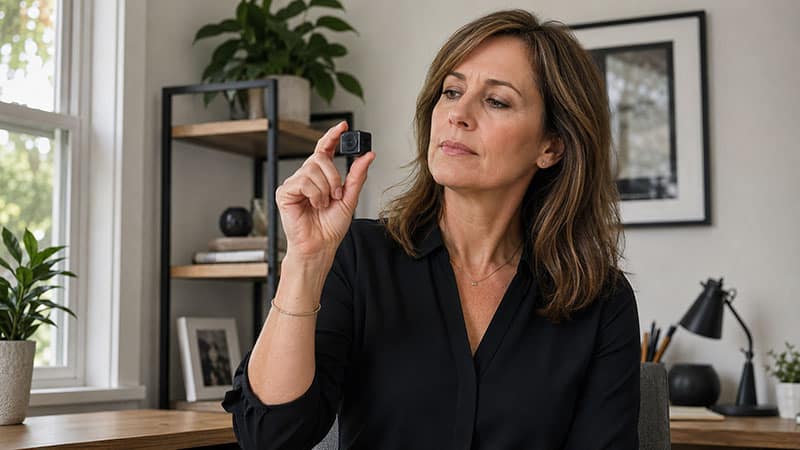
The seven specs that actually determine whether a hidden camera works are resolution (1080p minimum), field of view, night vision capability, storage type and capacity, battery life or power source, motion detection accuracy, and connectivity method. Everything else — sleek marketing copy, gimmicky shapes, inflated megapixel claims — is noise. Get these seven right and the camera does its job. Get even one wrong and you own an expensive paperweight.
Why do most hidden cameras fail when people actually need them?
Because buyers get sold on the wrong specs. A camera hidden in a phone charger or a picture frame looks impressive on a product page. But looks don’t capture footage. Performance does. Most people buying a hidden camera for the first time compare price and disguise design — and completely skip the specs that determine whether the thing actually works when it matters.
Here’s the truth: a hidden camera has one job. Record clear, usable footage of what happens when you’re not there. That’s it. Everything else is secondary. If you’re evaluating hidden cameras for bedroom security, hidden cameras for elderly care, or hidden cameras for the office, these seven specs are non-negotiable. Master them, and you’ll buy with authority instead of guessing.
What resolution do you actually need from a hidden camera?
1080p full HD is the floor. Not the goal — the floor. Anything below that and you’re recording footage that looks fine on a phone screen but falls apart the moment you need to zoom in on a face, a license plate, or a hand reaching into a drawer.
Don’t get seduced by 4K marketing claims on a $30 device. A tiny lens crammed into a smoke detector or a USB charger physically cannot deliver true 4K clarity, no matter what the spec sheet says. What matters is consistent, clean 1080p with a sharp lens and solid low-light compensation. That’s what holds up when footage becomes evidence — whether that’s for insurance, a legal matter, or peace of mind after checking in on a caregiver.
Resolution isn’t a preference. It’s the difference between footage you can act on and footage you can only speculate about.
How wide of a field of view do you need?
Wider is stronger — but only if it doesn’t distort the image. A field of view under 90 degrees means you’re only covering a slice of the room, and blind spots are exactly where problems happen. A field of view over 140 degrees without proper lens correction starts to fisheye at the edges, warping faces and distances.
The sweet spot for most rooms — bedrooms, offices, nurseries, living rooms — is 100 to 130 degrees. That’s wide enough to cover a doorway and the majority of a room from a single mounting point, without turning your footage into a funhouse mirror. Before you buy, ask exactly what the field of view is in degrees. If the listing doesn’t say, that’s your answer right there.
Does the hidden camera need night vision?
Yes. Full stop. Most incidents worth recording don’t happen in daylight with perfect lighting. Night vision isn’t a bonus feature — it’s core functionality.
Here’s what to demand: infrared night vision with a range of at least 15-20 feet, and ideally a “no-glow” IR design rather than visible red LED dots that give away the camera’s location in the dark. A camera that announces itself with a glowing red light isn’t hidden — it’s a night light with a lens attached.
Check the IR range in feet, not just the presence of the feature. A camera that claims “night vision” but only illuminates 6 feet of a 12-foot room is giving you half the picture — literally.
What storage setup should you insist on?
You have two real options: local storage via SD card, or cloud storage via WiFi upload. Both work. Neither is automatically better — but you need to know which one you’re buying and why it matters.
Local SD storage means no monthly fees and no dependence on your WiFi staying connected. It also means the footage lives on the device itself, which is a real consideration if someone could physically access and remove the camera. Cloud storage protects your footage even if the camera is discovered and destroyed, but it requires a stable connection and often a subscription. If you want the straightforward option, look into nanny cams that work without monthly fees — for a lot of buyers, that’s the smarter long-term call.
Whatever you choose, insist on a minimum of 32GB storage capacity or a rolling cloud plan with at least 7 days of history. Anything less and you’ll be deleting footage before you even know if you needed it.
How long does the battery actually need to last?
This depends entirely on placement, but here’s the command decision: if the camera isn’t plugged into continuous power, it needs a minimum of 10-14 days of standby battery life with motion-triggered recording. Anything less, and you’re recharging constantly — which means gaps in coverage exactly when you’re not paying attention.
For a camera disguised as a wall charger or plugged into an outlet, battery life is a non-issue since it draws continuous power. But for anything portable — a camera tucked into a shelf, a bag, or a static object without a nearby outlet — battery performance is one of the most overlooked specs on the entire market. Manufacturers advertise “long battery life” without ever giving you a number. Demand the number.
How accurate does motion detection need to be?
Precise enough that you’re not scrolling through 400 clips of a ceiling fan casting shadows. Cheap motion sensors trigger on anything — light changes, shadows, pets, HVAC vents kicking on. That’s not motion detection. That’s noise generation.
A camera worth buying should let you adjust sensitivity and define detection zones, so it’s only recording actual activity in the areas that matter. This single spec is the difference between a camera that gives you a clean, reviewable log of real events, and one that buries the one clip you need under hundreds of false triggers.
What connectivity method actually works for you?
WiFi-connected cameras give you live remote viewing from your phone — which matters if you’re checking in on an elderly parent’s care situation or monitoring your home while traveling. Non-connected cameras with local SD storage give you total independence from network reliability and zero risk of a hack — but you only see footage after the fact.
Neither is objectively correct. What’s non-negotiable is knowing exactly which one you’re buying and matching it to your actual use case. A nanny cam you check throughout the day needs WiFi. A discreet office camera reviewed once a week doesn’t. For more on this exact tradeoff, see our breakdown of hidden cameras versus visible cameras and what actually works for different situations.
Frequently Asked Questions About Buying a Hidden Camera
What’s the single most important spec when buying a hidden camera?
Resolution. A camera can have every other feature dialed in perfectly, but if the footage isn’t clear enough to identify faces or actions, none of it matters. 1080p is the minimum standard — treat anything lower as a dealbreaker, regardless of price or disguise quality.
Do hidden cameras need WiFi to work?
No. Many hidden cameras record locally to an SD card and require no internet connection at all. WiFi models add the ability to view footage remotely in real time, which is valuable for certain situations, but it’s a feature — not a requirement for basic functionality.
How much storage do I actually need?
A minimum of 32GB for local SD storage is a solid baseline for most home or office use. If you’re recording continuously rather than only on motion, you’ll want 64GB or higher. Cloud storage plans typically offer 7-30 days of rolling history depending on the tier.
Is night vision necessary for indoor hidden cameras?
Yes, in almost every case. Rooms get dark — at night, with blinds closed, or in low-traffic areas like closets and hallways. A camera without reliable infrared night vision will miss the majority of what happens outside daylight hours.
Can motion detection cameras miss real events?
Yes, if the sensitivity is poorly calibrated or the detection zone isn’t set correctly. This is why adjustable motion zones matter — a camera that only monitors the actual area of concern, rather than the entire room, produces far more reliable results.
How long should hidden camera batteries last?
For battery-powered units without continuous power, 10-14 days of standby with motion-triggered recording is a strong baseline. Cameras plugged into outlets or USB power don’t face this limitation since they draw continuous power rather than relying on an internal battery.
Are more expensive hidden cameras always better?
Not automatically. Price often reflects disguise design and brand marketing more than actual performance. Two cameras at very different price points can have identical resolution, night vision range, and storage specs. Compare the seven core specs directly instead of assuming price equals quality.
What’s the difference between a nanny cam and a general hidden camera?
Functionally, very little — the core specs that matter are the same. The distinction is mostly in disguise and placement, since nanny cams are typically designed to blend into nurseries or living areas. For a closer look at discreet options built specifically for this use, see the most discreet nanny cams available.
Own This Decision
You don’t need to be a surveillance expert to buy the right hidden camera. You need to know seven numbers — resolution, field of view, IR range, storage capacity, battery life, motion sensitivity, and connectivity type — and refuse to settle for a listing that hides any of them. That’s not overthinking it. That’s how you make sure the camera does its one job when it counts.
Stop comparing disguises and start comparing specs. When you know exactly what to demand, you’re not gambling on a purchase — you’re making a decision from a position of control.