


Magnetic Door Window Alarm – 90 dB, 2-Pack, No Wiring
$13.00
Buy with Confidence
Covered by a 30-Day Money Back Guarantee. If it's not right for you, returns are easy and hassle-free.

Secure checkout • 100% Satisfaction Guaranteed • 30 Day Money Back Guarantee • Easy Returns • Fast Customer Support
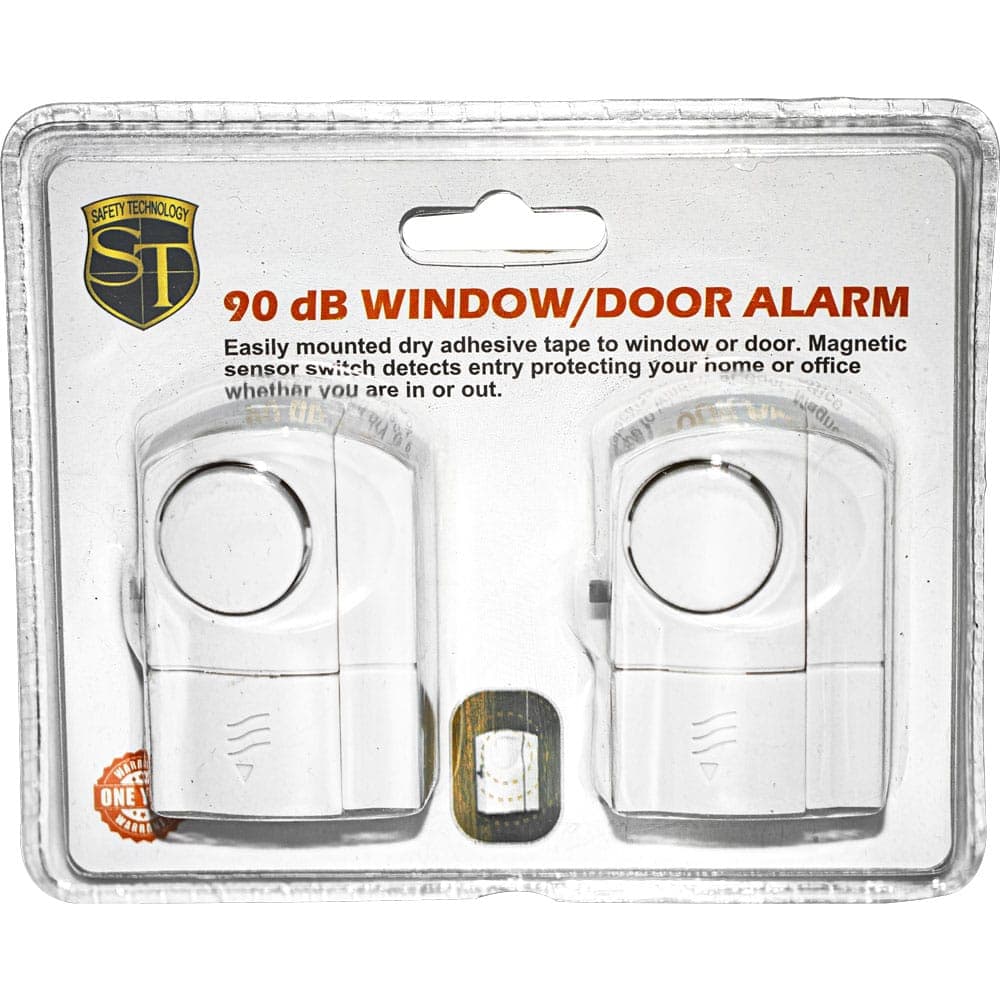
Renting means you work with what you’ve got—no drilling, no contractors, and definitely no lease violations over a security system. But none of that should mean settling for zero protection. Stick this on your front door and your bedroom window tonight, and the Magnetic Door Window Alarm does the rest: the moment either one opens without you knowing, a 90 dB siren goes off instantly.
Who This Door Window Alarm Is For
This one is squarely aimed at renters, college students, and anyone who moves between spaces more than once a year. If you’re in a dorm, a shared house, a short-term rental, or an apartment where putting holes in walls isn’t an option, this covers you without involving your landlord. It’s also a solid choice for parents who want to know the second a kid’s window opens after curfew, or for anyone who wants a simple, honest entry alert without a monthly subscription or a Wi-Fi password required.
Is It the Right Fit for You?
Choose It If You Want
- Entry alerts that are ready in minutes, no tools needed
- A genuinely portable setup you can take with you when you move
- Coverage for two specific doors or windows on a tight budget
- A completely self-contained system—no app, no hub, no subscription
Consider Another Option If You Need
- Whole-home monitoring with professional response
- Remote alerts sent to your phone while you’re away
- A system that integrates with smart home devices
Magnetic Door Window Alarm Features and Benefits
- 90 dB Siren: Loud enough to startle anyone on the other side of the door and alert you or nearby neighbors—this is not background noise.
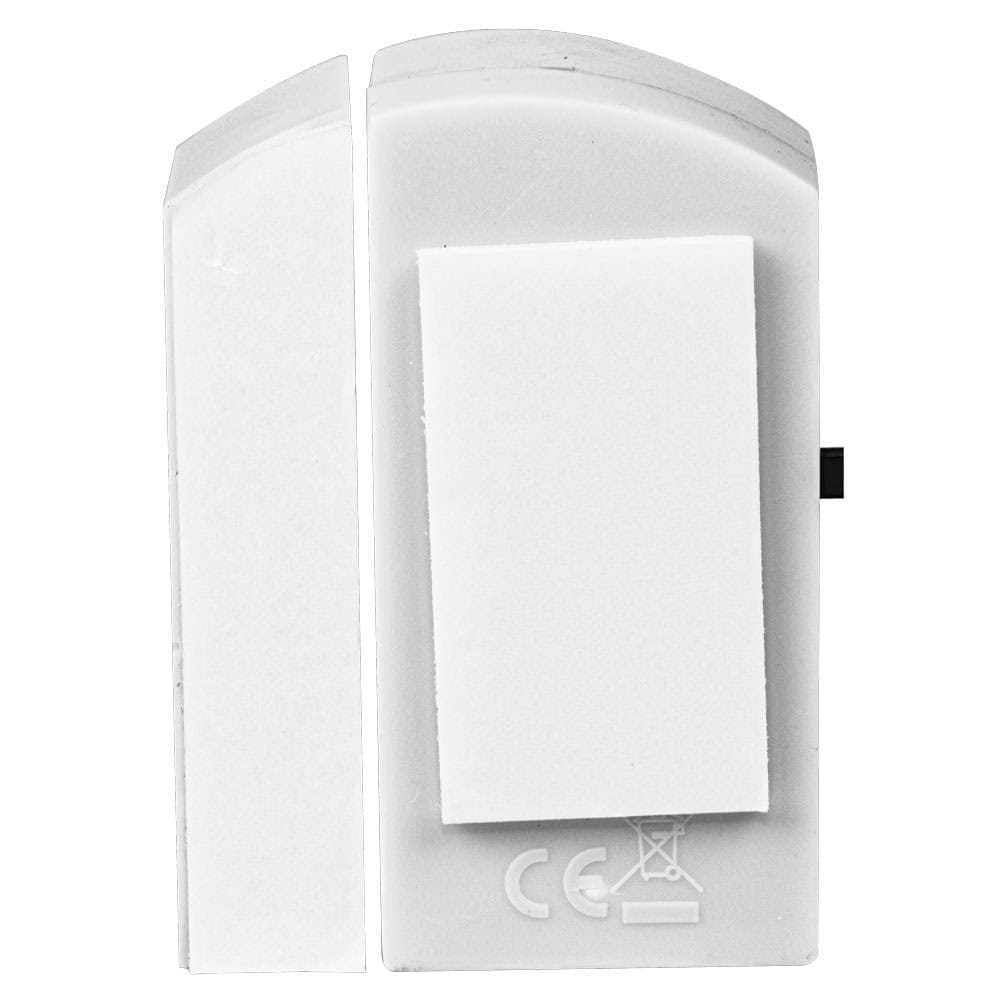
- Magnetic Contact Sensor: The two-piece design triggers the instant the magnet separates from the alarm unit, so there’s no delay when a door or window opens.
- Adhesive Mount: Press-on backing means no screws, no drilling, and no damage to walls or door frames—ideal for renters and short-term spaces.
- Batteries Included: Three 1.5V LR44/AG13 button cell batteries come in the box, so you’re set up and armed the same day it arrives.
- 2-Pack: Cover two entry points at once—front door and a bedroom window, two sides of a sliding door, or any two spots that matter most.
- On/Off Switch: Arm it when you leave or go to sleep, disarm it when you’re moving through the space—no codes, no apps, just a switch.
- Compact and Lightweight: At 2½” x 1¾” x ¾” and 0.2 lbs per unit, it fits on any door or window frame without looking like a project.
How the Magnetic Door Window Alarm Compares
Here’s how this alarm stacks up against two common alternatives shoppers consider.
| Feature | Magnetic Door Window Alarm | Smart Security System | Standard Deadbolt |
|---|---|---|---|
| Key Spec | 90 dB siren | App-based alerts, cloud storage | Physical lock only, no alert |
| Install | Peel, stick, done—no tools | Hub, Wi-Fi setup, often professional install | Requires drilling, tools, or a landlord |
| Power Source | Included button cell batteries | AC power or rechargeable, subscription required | No power needed |
| Portability | Takes it with you when you move | Largely fixed in place | Stays with the door |
| Best For | Renters, dorms, quick setup | Homeowners wanting full monitoring | Owners who can modify the door |
Care and What’s Included
What’s in the Box
Each 2-pack includes two alarm units, two magnetic sensor pieces, and the adhesive strips for mounting—plus the batteries already sorted. Everything you need to be up and running is in the box.
Care and Upkeep
Test the alarm periodically using the on/off switch—if the tone sounds weaker than usual, it’s time for a fresh set of LR44/AG13 button cells. The adhesive backing removes cleanly from most surfaces, but it’s worth checking that your lease allows adhesive mounts before you install. The 1-year warranty covers manufacturer defects.
Magnetic Door Window Alarm: Frequently Asked Questions
How loud is the Magnetic Door Window Alarm?
It puts out 90 dB—roughly the volume of a gas-powered lawn mower at close range. That’s enough to startle anyone on the other side of the door and wake up most people in the surrounding rooms. It won’t replace a whole-building fire alarm, but for a single entry point, it’s genuinely hard to ignore.
Does the Magnetic Door Window Alarm work on sliding doors and windows?
Yes. The two-piece magnetic design works on any surface where one piece can stay fixed and the other moves away when the door or window opens. Sliding doors, casement windows, and standard hinged doors all work the same way—the alarm triggers the instant the magnet separates from the unit.
What batteries does the alarm use, and are they included?
Each unit runs on three 1.5V LR44/AG13 button cell batteries. They’re included in the box, so you don’t need to make a hardware store run before you can use it. Keep a spare set on hand—when the test tone starts sounding weak, that’s your signal to swap them out.
Can I take the Magnetic Door Window Alarm with me when I move?
That’s one of the main reasons people choose this over wired systems. The adhesive backing removes cleanly from most door and window frames, and the units themselves are small enough to pack in a bag. If you move between apartments, dorms, or rentals, this goes with you without leaving a mark—or a repair bill.
Add This to Your Entry-Point Security Today
Two doors or windows, two alarms, one straightforward decision. Pick the entry points that matter most to you, press them on, and you’re done. Add the 2-pack to your cart and have it ready to arm tonight.
| Manufacturer | Safety Technology |
|---|---|
| Decibles | 90 db |
| Battery | Three 1.5V LR44/AG13 Button Cell (Included) |
Reviews
There are no reviews yet.