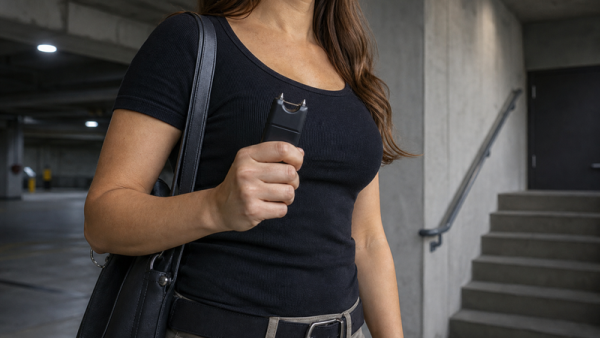
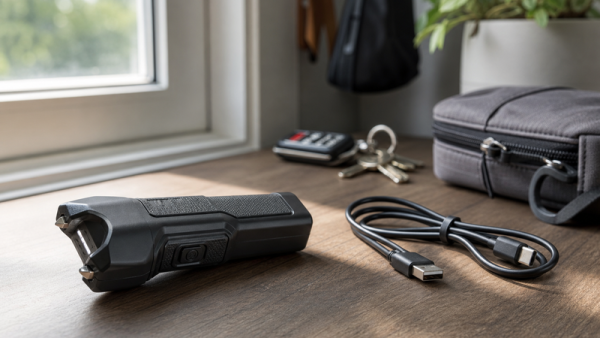
Dog pepper spray stops a charging dog reliably and quickly — typically within seconds of contact — by causing temporary eye and nasal inflammation that halts the animal without causing lasting harm. Ultrasonic dog repellers may work on some dogs in low-stress situations, but they have no consistent track record against a dog that has already committed to a charge. If you walk, run, or deliver packages in areas with loose dogs, pepper spray is the more dependable choice.
Here’s something that took me a while to appreciate: the people who ask this question usually aren’t just curious about product specs. They’ve had a moment. Maybe a dog bolted from a yard and got too close. Maybe they watched a neighbor’s dog chase a kid down the block. Maybe they run the same route every morning and there’s a house they’ve started dreading. That feeling — the mix of not wanting to overreact and absolutely not wanting to be caught unprepared — is real. And it deserves a real answer, not a sales pitch.
So let’s talk through both options honestly, because there’s a place for each of them, and knowing the difference could genuinely change how confidently you move through the world.
What actually happens when you use dog pepper spray on an aggressive dog?
Dog pepper spray works because it targets the dog’s most sensitive systems — eyes, nose, and respiratory tract — with oleoresin capsicum, the active compound derived from hot peppers. When it hits, the dog experiences immediate, involuntary discomfort: eyes clamp shut, breathing becomes difficult, and the drive to keep charging simply stops. The dog isn’t injured. It isn’t traumatized long-term. It’s overwhelmed for a few minutes, which is exactly enough time for you to create distance and get safe.
What matters here is that this response is physiological. It doesn’t depend on the dog’s personality, training history, or how worked up it is. A dog that has fully committed to chasing you doesn’t care about commands or loud sounds in that moment — but it will respond to pepper spray regardless. That consistency is what makes it so valuable. You’re not hoping the dog cooperates. You’re using something that works with the dog’s biology.
Quality dog pepper sprays are formulated specifically for canines, with a concentration and spray range suited to the way dogs approach — fast and low. Many of the options we carry, including formulas from our pepper spray collection, offer a stream or cone spray pattern that covers the distance between you and an animal that’s already moving toward you. The effective range on a good dog pepper spray is typically 10 to 15 feet, which gives you a meaningful buffer before the animal reaches you.
For a deeper look at how pepper spray performs specifically in dog attack situations — including what doesn’t work and why — this post on pepper spray for dog attacks covers it in real detail.
How do ultrasonic dog repellers work, and when do they actually help?
Ultrasonic repellers emit a high-frequency sound that humans can’t hear but dogs can. The idea is that the sound is irritating or startling enough to interrupt the dog’s behavior. In controlled settings — or with a dog that’s curious and approaching but not fully committed — they can work. Some dogs will pause, turn their heads, or back off. It’s a real effect, not snake oil.
The honest part of this conversation, though, is the limitation. A dog that’s already in full chase mode is operating on instinct and adrenaline. At that point, an ultrasonic sound may simply not register as a meaningful enough signal to override what’s driving the animal. Studies and field reports from delivery drivers, postal workers, and runners paint a consistent picture: ultrasonic devices work on some dogs some of the time, which is a very different thing from reliable protection.
Where ultrasonic repellers genuinely shine is in low-stakes deterrence — walking past a yard where a dog barks from behind a fence, or redirecting a loose dog that’s being bold but hasn’t fully committed to aggression. They’re also a good fit for people who want a non-contact option they can use before any spray is warranted. Think of them as an early intervention tool, not a last line of defense.
The other thing worth knowing: ultrasonic devices require a direct line of sight and work best within about 20 feet. They also vary significantly in quality. A well-built repeller with a strong output is a meaningfully different product from a cheap one with a weak signal.
Which option is better for joggers and people who walk in dog-heavy neighborhoods?
For runners and walkers, pepper spray is the stronger choice — and the reason comes down to the nature of the situation. When you’re moving through a neighborhood, you may encounter dogs with no warning. A dog that clears a fence, bolts from an open gate, or rounds a corner doesn’t give you time to assess whether an ultrasonic device will work on it. You need something that works fast and works reliably.
Carrying pepper spray when you’re out walking or running isn’t about being fearful. It’s about giving yourself an option you can actually count on. The people I see who carry it consistently are also the ones who move through the world with the most ease — because they’ve already decided what they’ll do if something happens. That decision, made in advance, takes the anxiety out of every morning walk.
For walkers specifically, a compact spray that clips to a hand or attaches to a leash — so you’re not fumbling through a pocket — makes a real difference. If you walk your own dog, look for a formula with enough volume to address multiple animals, since your dog’s presence can sometimes provoke other dogs. Our options available for purchase include several sizes suited to outdoor use.
What about delivery drivers — is one option better than the other for on-the-job dog encounters?
Delivery drivers are in a genuinely unique position. They’re entering properties repeatedly throughout the day, often without knowing what’s waiting on the other side of a gate or around a corner. They need something they can access in under two seconds, carry comfortably all day, and use without hesitation if a dog charges.
For that role, pepper spray is essentially the professional standard — and for good reason. The specific page we put together on pepper spray for delivery drivers gets into the practical details of what to look for: spray range, canister size, clip or holster options. The short version is that a belt-clip canister with a stream spray pattern and a 10-to-15-foot range is what most experienced drivers settle on, and it’s hard to argue with that.
An ultrasonic repeller can be a useful secondary tool for delivery drivers — something to use when approaching a property where a dog is present but not yet charging. Using the sound first to gauge the dog’s reaction, then having pepper spray as the backup if that doesn’t work, is a reasonable layered approach. But the spray is the anchor of that combination, not the sound device.
Can you carry both, or does it have to be one or the other?
Carrying both is genuinely a smart approach for people who are regularly in situations involving dogs. Use the ultrasonic repeller as a first step — it’s contact-free, it works on some dogs, and using it first is the right call when a dog is curious but not charging. Keep the pepper spray accessible as the reliable fallback if the situation escalates.
What you want to avoid is treating the ultrasonic device as your primary protection and discovering its limits at the wrong moment. The emotional reality of a dog charging at you — the speed, the noise, the adrenaline — is not the moment to be hoping your repeller works on this particular animal. Know your tools, know their limits, and carry the one that gives you a reliable answer in a worst-case scenario.
The combination approach also helps with the guilt some people feel about using pepper spray on a dog. Most dog owners and animal lovers who carry it genuinely don’t want to use it — but they want the option if they truly have to. Starting with the ultrasonic device lets you try a gentler intervention first, and the spray is there only if that’s not enough.
Is dog pepper spray safe for the animal, and will it cause any permanent harm?
This is the question that matters most to a lot of people, and it deserves a straight answer: used correctly, dog pepper spray does not cause permanent harm. The effects — eye irritation, temporary respiratory discomfort, disorientation — are real and effective, but they wear off. Most dogs recover fully within 30 to 45 minutes. There’s no lasting injury to the eyes or respiratory system when the spray is used at appropriate range and in the recommended amounts.
Dog-specific pepper sprays are formulated with this in mind. They’re not the same concentration as human-defense sprays, and they’re designed to stop the animal without causing injury. This matters both ethically and legally — using a reasonable, appropriate tool to protect yourself from a dog attack is legally defensible in virtually every state. Using something excessive is a different story.
The goal was never to hurt the dog. It’s to stop the encounter, create distance, and let everyone — including the dog — walk away okay. That’s exactly what a properly used dog pepper spray accomplishes.
Frequently Asked Questions About Dog Pepper Spray vs. Ultrasonic Repellers
Does ultrasonic dog repeller work on all dogs?
No — ultrasonic repellers work on some dogs in some situations, but they’re not reliable across the board. Dogs that are highly aroused, fully committed to a charge, or simply less sensitive to sound may not respond. They’re most effective as a deterrent for curious or mildly assertive dogs, not as a guaranteed stop for a dog mid-charge. They’re a useful first-step tool, not a standalone protection solution.
Is dog pepper spray the same as human pepper spray?
Not exactly. Dog pepper sprays are formulated specifically for canines — typically at a lower concentration than human defense sprays, and often with a spray pattern designed for low, fast-moving targets. Using human pepper spray on a dog can work, but dog-specific formulas are calibrated to be effective without being unnecessarily harsh on the animal. If you’re buying specifically for dog encounters, get a product designed for that purpose.
How far away do I need to be to use dog pepper spray effectively?
Most quality dog pepper sprays are effective from 10 to 15 feet. You want to deploy before the dog reaches you — ideally when it’s 10 to 12 feet out and still closing. Waiting until the dog is on top of you reduces the spray’s effectiveness and your reaction time. Knowing your spray’s range before you need it matters — read the label and practice the motion of deploying it so it’s muscle memory.
Can I use dog pepper spray if my own dog is nearby?
Yes, but be mindful of the wind direction and try to position yourself between the approaching dog and your own. Pepper spray drifts, and if wind carries it back toward you or your dog, everyone gets affected. A stream spray pattern minimizes this compared to a cone or fog formula. Use the minimum effective amount and aim for the aggressive dog’s face specifically.
Is it legal to use pepper spray on a dog?
In most states, using pepper spray to protect yourself from a dog attack is legally permissible as an act of self-defense. Laws vary by state and local jurisdiction, so it’s worth checking your area’s regulations — but using a reasonable, proportionate tool to stop a genuine dog attack is generally treated very differently from provoking or harming an animal without cause. We’re not attorneys, so for specific legal questions, consult a local professional.
What’s the best way to carry dog pepper spray when running?
The best carry option for runners is something that stays in your hand without requiring you to grip it tightly the whole time — a hand-strap canister or a clip that attaches to your waistband or hydration pack works well. The key is accessibility: if you have to dig through a pocket or fumble with a zipper, you’ve lost precious seconds. Keep it in your dominant hand or within one motion of being in it.
Will an ultrasonic repeller work if a dog is already barking and charging?
Unlikely in most cases. A dog that is actively barking and charging has already passed the threshold where an unfamiliar sound is going to redirect its attention. The ultrasonic signal might register briefly, but adrenaline and prey drive typically override it. Ultrasonic devices work best as a preventive tool — using them while a dog is still in the “alert and approaching” phase, before the situation escalates to an active charge.
How do I choose between dog pepper spray and an ultrasonic repeller if I’ve never had a serious dog encounter?
If you’ve never faced a charging dog, either option may feel sufficient — but the one you’ll be grateful for if something does happen is the pepper spray. Ultrasonic repellers are a nice-to-have that works in mild situations. Pepper spray is reliable across almost every scenario. If cost is a factor, start with the spray. If you walk regularly in areas with loose dogs, carry both and use the repeller as your first intervention when possible.
At the end of the day, this comes down to what kind of peace of mind actually means something to you. A lot of people go years without needing either product — and a lot of people wish they’d had one in the moment it mattered. The question isn’t really whether you’ll ever face an aggressive dog. The question is whether you want to have made the decision ahead of time. Explore the pepper spray options at Revere Security and find something you’ll actually carry — because the best protection is the one you have with you.