
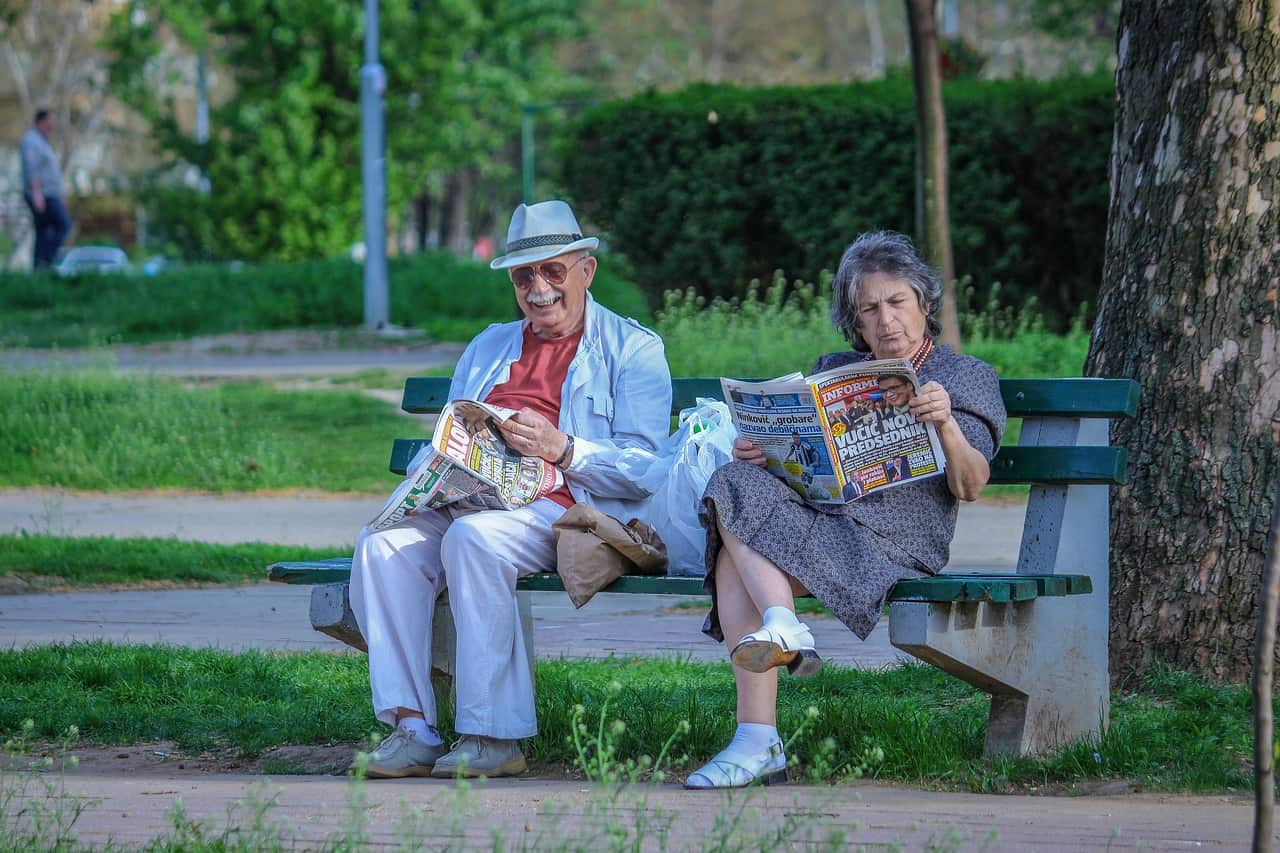
The best self-defense options for seniors prioritize simplicity, ease of use, and don’t require physical strength or complex training. Personal alarms (130 decibels, activated by button press) rank highest for most seniors because they summon help without requiring close contact. Pepper spray gel offers effective protection at distance (10-12 feet) without the blowback issues of spray. Door and window security devices prevent problems before they start. Tactical flashlights serve dual purposes as everyday tools and deterrents. The key is choosing tools that work with aging bodies, not against them – no complicated mechanisms, no physical confrontation required, and nothing that depends on strength, speed, or perfect aim. Preparation and awareness matter more than any single device.
Well, my Aunt Flo lived to be 94 years old, and she spent the last twenty of those years living alone in a house on Maple Street. She was what people used to call a handsome woman – straight-backed, clear-eyed, with a practical turn of mind that served her well through the Depression, the war years, and everything that came after. She kept a hat pin in her purse until the day she died, though I don’t suppose she ever had occasion to use it.
These days, I think about Aunt Flo when I consider the question of safety for older folks. The world has changed since her time, though whether for better or worse depends on which newspaper you read and how optimistic you’re feeling on a given day. What hasn’t changed is this: people deserve to feel safe in their own homes and neighborhoods, regardless of their age, and there are practical steps that can make that feeling justified by facts.
This isn’t about paranoia. It’s about common sense. And if there’s one thing our elders have in abundance, it’s common sense earned through decades of living.
My grandfather used to say that getting old wasn’t for cowards, and I believe he was right. The body changes – that’s just the truth of it – and what worked at forty may not work at seventy. Reflexes slow down. Joints get creaky. The grip that once opened pickle jars without a second thought now struggles with childproof caps.
This matters when we talk about personal protection. A young person might rely on physical strength or quick reactions to get out of trouble. Those of us with a few more years on us need to be smarter about it. We need tools that work with our capabilities, not against them.
The statistics tell a story that isn’t entirely pleasant to hear. According to the Department of Justice, people over 65 are more likely to be targeted for certain types of crimes – particularly scams, theft, and home burglaries during daytime hours when criminals assume folks might be home alone. The physical injuries from these encounters tend to be more severe, and the recovery takes longer. These are facts, and we might as well face them squarely.
But here’s the other side of that story: older folks also have advantages. Experience. Wisdom. The ability to spot trouble before it arrives. A lifetime of observing human nature. And – this is important – the good sense to know that avoiding a fight is smarter than winning one.
The right self-defense tools for seniors are ones that don’t require you to be Jack LaLanne. They should be:
With those principles in mind, let’s talk about what actually works.
If I could recommend just one thing for every senior to carry, it would be a personal alarm. Not the most exciting choice, perhaps – no James Bond gadgetry here – but the most practical one, which is worth more than excitement any day of the week.
A personal alarm is a simple device, about the size of a garage door opener or a bit smaller. You press a button or pull a pin, and it makes a noise that would wake the dead. We’re talking 120 to 130 decibels, which is roughly equivalent to standing next to a jet engine or attending a rock concert without ear protection. It’s loud enough to be heard several blocks away, assuming the neighbors haven’t all gone deaf from their own televisions.
The beauty of a personal alarm is what it doesn’t require. It doesn’t require strength – my 92-year-old neighbor Grace can activate hers just fine, and she can barely open a jar of jam. It doesn’t require aim – you’re not trying to hit a target, just make noise. It doesn’t require you to get close to anyone – in fact, it’s designed to make people want to get away from you, which is exactly what you want in a dangerous situation.
What it does require is that you actually carry it. A personal alarm sitting in your nightstand drawer is about as useful as an umbrella in the basement when it’s raining. Keep it on your keychain, or clipped to your belt, or in your coat pocket – somewhere you can reach it without fumbling.
| Personal Alarm Type | Decibel Level | Best For | Typical Cost |
|---|---|---|---|
| Keychain Alarm | 120-130 dB | Daily carry, errands, walks | $10-$20 |
| Wrist Alarm | 110-120 dB | Exercise, gardening, always accessible | $15-$25 |
| Door/Window Alarm | 100-120 dB | Home security, entry points | $8-$15 each |
| Medical Alert Pendant | Calls for help | Medical emergencies, falls | $25-$50/month |
Now, some folks worry that a personal alarm might be embarrassing if it goes off accidentally. Well, I’ll tell you what’s more embarrassing: needing help and not having any way to summon it. Besides, most modern alarms have a safety mechanism that prevents accidental activation. And if it does go off by mistake? You apologize to the neighbors and move on with your life. That’s not a tragedy.
The psychological effect of these alarms is considerable. Most criminals – and I say most, not all – are looking for easy targets. Someone making a tremendous racket is not an easy target. They’re a problem waiting to happen, and criminals generally prefer to avoid problems. The noise brings attention, and attention is exactly what someone committing a crime doesn’t want.
For seniors who live alone, I’d recommend keeping one by the bed, one near the front door, and one on your person when you go out. That’s not paranoia. That’s preparation. There’s a difference.
My mother’s generation carried hat pins. My grandmother’s generation carried umbrellas with sturdy handles. This generation has pepper spray, which is considerably more effective than either, though less elegant to look at. Times change, and we change with them.
Pepper spray comes in several varieties, but for seniors, I recommend the gel formula specifically. Let me explain why.
Regular pepper spray – the kind that sprays like hairspray – has a problem: wind. Spray it outdoors on a breezy day, and there’s a fair chance you’ll get a face full of it yourself. That’s not ideal. The gel formula shoots out in a stream, more like squirting mustard from a bottle, and it sticks to whatever it hits. Wind doesn’t affect it nearly as much, and you’re much less likely to contaminate yourself.
The active ingredient is capsaicin – the chemical that makes hot peppers hot. It causes immediate burning of the eyes, difficulty breathing, and an overwhelming desire to be anywhere else. The effects last about thirty to forty-five minutes, which is plenty of time to get to safety and call for help. Then the effects wear off completely, leaving no permanent damage. It’s about as close as you can get to a truly non-lethal but effective defense tool.
The spray reaches about 10 to 12 feet, which is important. That’s enough distance to stop someone before they can reach you. You’re not in a boxing match. You’re creating space between yourself and trouble, and space is what keeps you safe.
For seniors, there are a few practical considerations:
Now, some folks worry about the legal implications of using pepper spray. The law varies by location, but in most places, pepper spray is perfectly legal to carry and use in self-defense. That said, you can’t just spray the mailman because he startled you. It’s for genuine threats, not nuisances. Common sense applies, same as with any tool.
One more thing: if you do need to use pepper spray, call the police immediately afterward. Even in clear cases of self-defense, you want the official record to show what happened. Better safe than sorry, as the saying goes.
The best fight is the one you never have. My father taught me that, and he was right about most things. When it comes to home security for seniors, prevention beats intervention every time.
Most burglaries happen during daylight hours – between 10 AM and 3 PM – when criminals assume people are at work. They don’t expect to find someone home, which means they’re not prepared for confrontation. If they encounter resistance or make noise, they typically leave. This is useful information.
The simplest and most effective home security doesn’t require a monthly monitoring fee or a complicated installation. We’re talking about common-sense barriers and alarms that let you know when someone’s trying to get in:
Door Security Bars
These adjustable bars wedge under your doorknob and brace against the floor. They’re simple to install (no tools required), easy to remove when you need to leave, and incredibly effective at preventing doors from being forced open. They cost about $20 to $30, and they work on any door that opens inward. I’ve seen door security bars stop a 200-pound man from kicking in a door. That’s worth the investment.
Window Alarms
Small adhesive alarms that attach to windows and sound off if the window is opened. They’re about the size of a matchbox, battery-operated, and loud enough to wake you if you’re sleeping. They cost $8 to $15 apiece. Put them on ground-floor windows and any windows that face secluded areas. When one goes off, you know immediately that something’s wrong.
Door Reinforcement
Most exterior doors can be kicked in with one or two good kicks, not because the lock fails, but because the door frame splinters. Door reinforcement kits strengthen the frame around the lock and make the door significantly harder to breach. These run $30 to $60 and can be installed by a handyman if you’re not comfortable doing it yourself.
| Home Security Device | Installation | Effectiveness | Cost |
|---|---|---|---|
| Door Security Bar | None – wedge under doorknob | Very high – prevents forced entry | $20-$30 |
| Window Alarms | Adhesive backing | High – alerts to entry attempts | $8-$15 each |
| Door Reinforcement Kit | Moderate – screws into frame | Very high – strengthens weak points | $30-$60 |
| Smart Doorbell Camera | Easy – mounts by door | High – deters and documents | $100-$200 |
| Motion-Sensor Lights | Moderate – electrical knowledge helpful | High – removes cover of darkness | $20-$40 each |
Smart Doorbells with Cameras
These have become quite popular, and for good reason. They let you see and speak to whoever’s at your door without opening it. They record video that you can review later. And they provide evidence if something does go wrong. The technology has improved to the point where they’re actually user-friendly, which wasn’t always the case. Brands like Ring and Nest make versions that connect to your smartphone or tablet.
The Everyday Habits That Matter
Beyond devices, there are habits that make a considerable difference:
These things sound simple because they are simple. But simple doesn’t mean ineffective. Most criminals are opportunists, not master thieves. Make your home look like more trouble than it’s worth, and they’ll move on to easier targets.
A good flashlight serves double duty, which appeals to the practical side of me. You need a flashlight anyway – for power outages, for finding things in dark closets, for walking the dog in winter when it gets dark at four in the afternoon. You might as well have one that can also serve as protection if needed.
Tactical flashlights are brighter than regular flashlights – much brighter. We’re talking about 500 to 1200 lumens, which is bright enough to temporarily blind someone if you shine it in their eyes at night. Not permanently, mind you, just long enough to disorient them and give you time to get away or call for help.
They’re also built sturdily, usually from aircraft-grade aluminum, which means they can take a beating and keep working. If push comes to shove – and I sincerely hope it doesn’t – a heavy flashlight can be used as an impact weapon. But that’s a last resort. The primary value is the light itself: it shows you what’s out there, and it tells would-be troublemakers that you’re aware and prepared.
For seniors, I recommend these features:
The beauty of a tactical flashlight is that there’s no stigma to carrying one. Nobody looks twice at an elderly person with a flashlight. It’s practical, it’s sensible, and it doesn’t mark you as fearful or paranoid. Yet it provides real protection value if you need it.
I know a woman named Dorothy, 76 years old, who walks her dog every evening with a tactical flashlight. She’s never had to use it for protection, but she’s used it dozens of times for its intended purpose: seeing where she’s going in the dark. The fact that it could serve as protection if needed is a bonus that lets her and her family sleep a little better at night.
We need to talk about what doesn’t work, because there’s a lot of bad advice out there, and I’d hate for anyone to stake their safety on something ineffective.
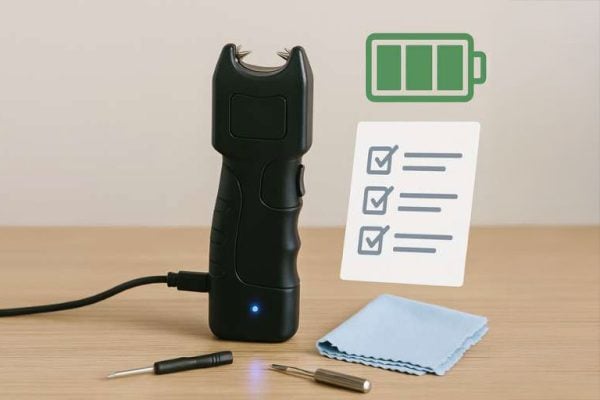
Stun Guns
Stun guns require direct contact with an attacker – you have to touch them with the device. For seniors, this is problematic. It means you’re already too close for comfort, and it requires getting even closer. If you have limited mobility or slower reflexes, closing distance with someone who means you harm is not a good strategy. Add to that the fact that stun guns often don’t work well through heavy clothing, and you’ve got a tool that sounds good in theory but presents significant problems in practice.
Firearms
Now, this is a sensitive subject, and I’ll tread carefully. I’m not anti-gun. Plenty of responsible people own firearms for home protection. But for seniors, particularly those living alone, there are serious considerations. Guns require strength to handle properly, good vision to aim accurately, and quick reflexes to use safely. They require regular practice to maintain proficiency. They present a risk if you have memory issues or take medications that affect judgment. And if someone breaks into your home, a gun in your nightstand is potentially a gun they can use against you.
If you already own firearms and are trained and comfortable with them, that’s your business. But I wouldn’t recommend that a 75-year-old person start their self-defense journey with a handgun. There are simpler, safer options that don’t carry the same risks.
Complex Martial Arts or Self-Defense Techniques
YouTube is full of videos showing elaborate self-defense moves – wrist locks, pressure points, complicated sequences that look impressive. The problem is they require strength, flexibility, speed, and extensive practice. Under stress, you’ll forget everything except what you’ve practiced hundreds of times. For most seniors, complex physical techniques are not practical options. Simple is better. Distance is better. Making noise and getting help is better.
Fake Cameras or “Dummy” Security Systems
Some folks put up fake security cameras to save money. This strikes me as foolish economy. Professional criminals can spot fakes, and even amateur ones often figure it out. If you’re going to have security, have real security. If you can’t afford a full system, one real camera is better than ten fake ones.
| Device | Why Seniors Should Avoid | Better Alternative |
|---|---|---|
| Stun Guns | Requires close contact, strength, precise application | Pepper spray gel (works at distance) |
| Kubotans/Palm Sticks | Requires physical contact, strength, training | Tactical flashlight (dual purpose, no training needed) |
| Complex Self-Defense Moves | Requires flexibility, speed, extensive practice | Personal alarm (no physical confrontation) |
| Fake Security Devices | Easily spotted by criminals, provides false sense of security | Real but simple devices (window alarms, door bars) |
The theme here is simple: avoid anything that requires you to be younger, stronger, or faster than you are. Work with your capabilities, not against them.
All the pepper spray and personal alarms in the world won’t help if you don’t see trouble coming. Awareness – the simple act of paying attention to your surroundings – is your first and best defense. And it’s completely free.
My Aunt Flo had what she called her “street sense.” She’d notice things. The car that drove by twice. The person at the store who seemed too interested in whether she was alone. The solicitor at the door whose story didn’t quite add up. She paid attention, and that attention kept her safe through nine decades of living.
Here’s what awareness looks like in practice:
Trust Your Instincts
If something feels wrong, it probably is wrong. Don’t talk yourself out of your own good judgment. That voice in your head that says “this doesn’t seem right” is worth listening to. You’ve lived long enough to have good instincts. Use them.
Know the Common Scams
Criminals targeting seniors often use scams rather than force. The “grandparent scam” where someone claims to be your grandchild in trouble. The fake utility worker who needs to check your meter. The contractor who spots problems with your roof that don’t exist. Knowing these patterns helps you recognize them when they occur.
Maintain Routines But Vary Routes
Routines are comforting, but predictability can be dangerous. If you walk the same route at the same time every day, you’re easy to target. Vary your schedule a bit when you can. Take different paths to familiar destinations. Keep potential observers guessing.
Stay Connected
Isolation makes you vulnerable. Stay in touch with family, friends, neighbors. Have people who check on you regularly. Join community groups. Criminals look for isolated targets. Don’t be one.
Keep Learning
The world changes, and threats change with it. Technology scams that didn’t exist five years ago are common now. Stay informed about new schemes targeting seniors. Your local police department often offers free seminars on elder safety. Take advantage of them.
There’s a balance to strike here. You don’t want to become paranoid, seeing threats around every corner and afraid to leave your house. That’s no way to live. But you also don’t want to be naive, assuming that bad things only happen to other people. They don’t.
The goal is confident caution. You’re aware of potential risks, you’ve taken reasonable precautions, and you go about your life with the quiet confidence that comes from being prepared. That’s different from being afraid.
Well, I’ve covered quite a bit of ground here, and if you’ve read this far, I appreciate your patience. Let me bring it all together with a few simple thoughts.
Personal protection for seniors isn’t about turning yourself into a ninja warrior or living in fear. It’s about taking sensible precautions that let you live your life with confidence and peace of mind. It’s about tools that work with your capabilities, not against them. And it’s about awareness – that priceless quality that comes from decades of observing human nature and trusting your own good judgment.
If I were making recommendations to my own mother or aunt, here’s what I’d suggest:
None of this is foolproof. Nothing is. But these steps significantly improve your odds, and in matters of personal safety, improving your odds is about all anyone can reasonably do.
My Aunt Flo made it to 94, living on her own terms, in her own home, maintaining her independence and dignity right to the end. That’s what these tools and techniques are meant to preserve – not just safety, but the independence and quality of life that our elders have earned through decades of living. They deserve to feel secure in their homes and confident in their daily activities.
The world has changed since Aunt Flo’s time. Hat pins and stern expressions aren’t quite enough anymore. But the principle remains the same: take sensible precautions, stay alert, trust your judgment, and go about your life with the quiet confidence of someone who’s prepared for trouble but not expecting it.
That seems about right to me.
Explore Senior-Friendly Self-Defense Options and Safety Equipment
Disclaimer: This article provides general information about personal safety options for educational purposes and should not be considered professional security advice or medical guidance. Always check local laws regarding self-defense tools before purchasing. Consult with your doctor about any physical limitations that might affect your ability to use self-defense devices. No safety tool guarantees protection in all situations.

Frank Masters knows the self-defense industry from the ground up. Twenty years ago, he made the leap that changed everything—leaving the corporate world behind after spending his weekends at gun shows, discovering his passion for helping people protect themselves. What started as a side hustle quickly became his calling.
For the first five years, Frank crisscrossed the country, setting up at gun shows and trade shows, meeting customers face-to-face and learning exactly what they needed to feel safe. Fifteen years ago, he took his expertise online, launching his own website to reach even more people seeking reliable self-defense solutions.
Today, Frank combines decades of hands-on experience with genuine enthusiasm for what he does. He's not just selling products—he's sharing the knowledge he's gained from thousands of conversations with customers who, like you, want practical ways to protect themselves and their loved ones. And after all these years? He's still loving every minute of it.